
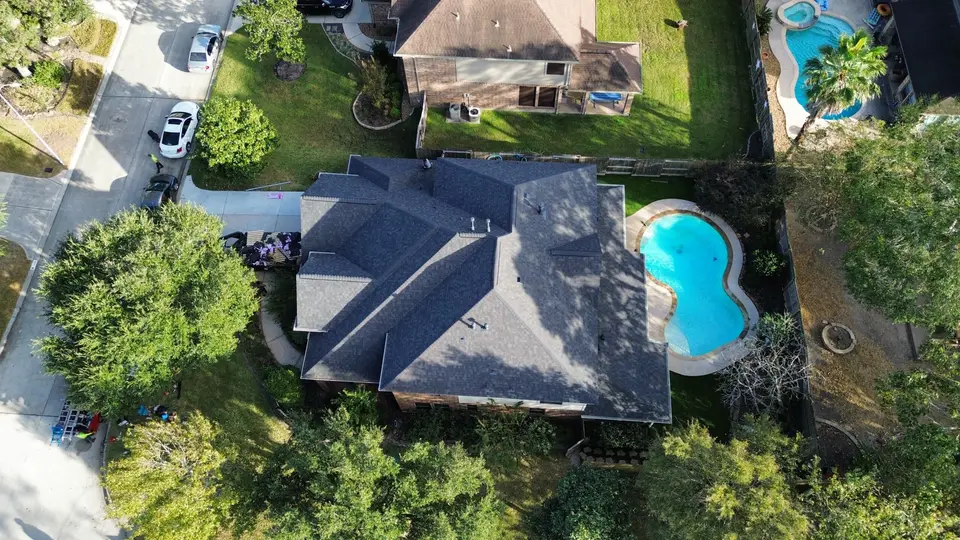

Bigger gutters can carry more water, but size alone does not solve a drainage problem. Roof area, pitch, valley concentration, gutter slope, outlet size, downspout count, debris, and discharge location determine how the system behaves in a Houston downpour.
A responsible recommendation requires measurement. This guide explains the decision factors without prescribing one size for every home.
Key point: Bigger gutters can carry more water, but size alone does not solve a drainage problem. Roof area, pitch, valley concentration, gutter slope, outlet size, downspout count, debris, and discharge location determine how the system behaves in a Houston downpour.
Start With the Roof, Not the Trough
Map each roof plane and where valleys discharge. A small section below a steep valley may receive more concentrated flow than a long straight eave. Overflow marks, erosion, stained fascia, and water behind gutters help identify trouble locations.
Where 5-Inch Gutters May Fit
Five-inch K-style systems are common on many residences and may work where roof area, pitch, outlet spacing, and rainfall flow are within the designed capacity. Proper hangers, slope, sealed joints, and adequate downspouts are still essential.
Where 6-Inch Gutters May Be Considered
Six-inch systems may be considered for larger or steeper roof planes, high-volume valleys, long runs, tile or metal roofs with faster runoff, or recurring overflow after maintenance problems are ruled out. Larger downspouts and outlets often accompany the system.
Downspouts Control the Exit
A large trough with too few or undersized outlets can still overflow. Count downspouts, review elbow restrictions, keep openings clear, and confirm that discharge can move away without creating erosion or sending water toward foundations and neighboring properties.
Appearance and Attachment
Six-inch gutters create a stronger visual line and add weight when full. Fascia condition, hanger type, spacing, corners, roof edge, drip edge, and access must support the selected system. Color and profile should coordinate with trim.
Questions for a Gutter Quote
Ask how roof area and valleys were measured, why a size is recommended, which outlet and downspout dimensions are included, how slope and hangers are handled, whether fascia repair is excluded, where water will discharge, and what maintenance remains necessary.
Frequently Asked Questions
Are 6-inch gutters always better in Houston?
No. They carry more water, but roof layout, outlets, downspouts, slope, debris, and discharge design still control performance.
Can I keep my existing downspouts with larger gutters?
Possibly, but the outlet and downspout capacity should be evaluated with the new trough and roof flow.
Will gutter guards stop overflow?
Guards manage debris; they do not correct undersized drainage, poor slope, blocked outlets, or concentrated valley flow.