
The “Drip” That Keeps You Up at Night
I remember a homeowner in Austin—let’s call him Sarah’s neighbor—who called me last spring after one of those classic Hill Country thunderstorms. He was standing in his hallway, staring at a small, tea-colored stain on his ceiling. He’d ignored a few missing shingles after a hail storm the year before, thinking it was just a cosmetic thing.
“How much is this going to hurt?” he asked, pointing at the ceiling. He was terrified he was looking at a $15,000 bill.
The truth is, roof repair costs in Texas aren’t one-size-fits-all. In 2026, a simple fix might be the price of a nice dinner out, while ignoring it can lead to a bill that looks more like a car down payment. If you’re hearing a mystery drip or seeing granules piling up like coffee grounds in your downspouts, you’re likely in the same boat. Let’s pull back the curtain on what these repairs actually cost across the Lone Star State.
The Reality of Texas Roof Wear and Tear
Living in Texas is a unique challenge for a roof. Between the sun baking your shingles at 105°F and the wind trying to peel them off like a banana, our roofs age in “dog years.”
Most homeowners I talk to aren’t looking for a whole new roof; they just want to stop a leak or fix some wind damage. In 2026, the average shingle roof repair in Texas ranges from $350 to $1,500, with most typical middle-of-the-road fixes landing right around $850.
But that’s a broad range. To understand where you land, we have to look at what’s actually broken.
1. The Small Fixes (Minor Repairs)
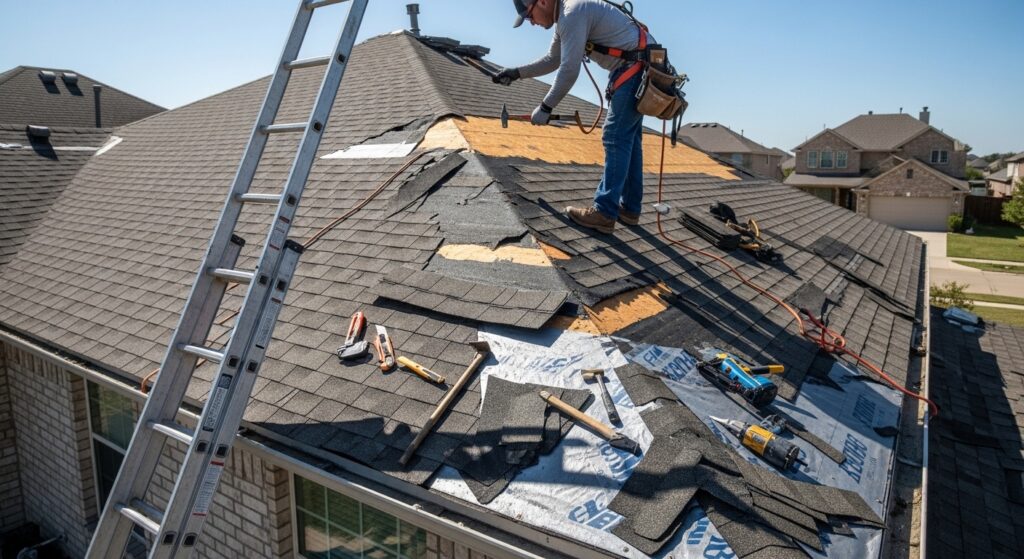
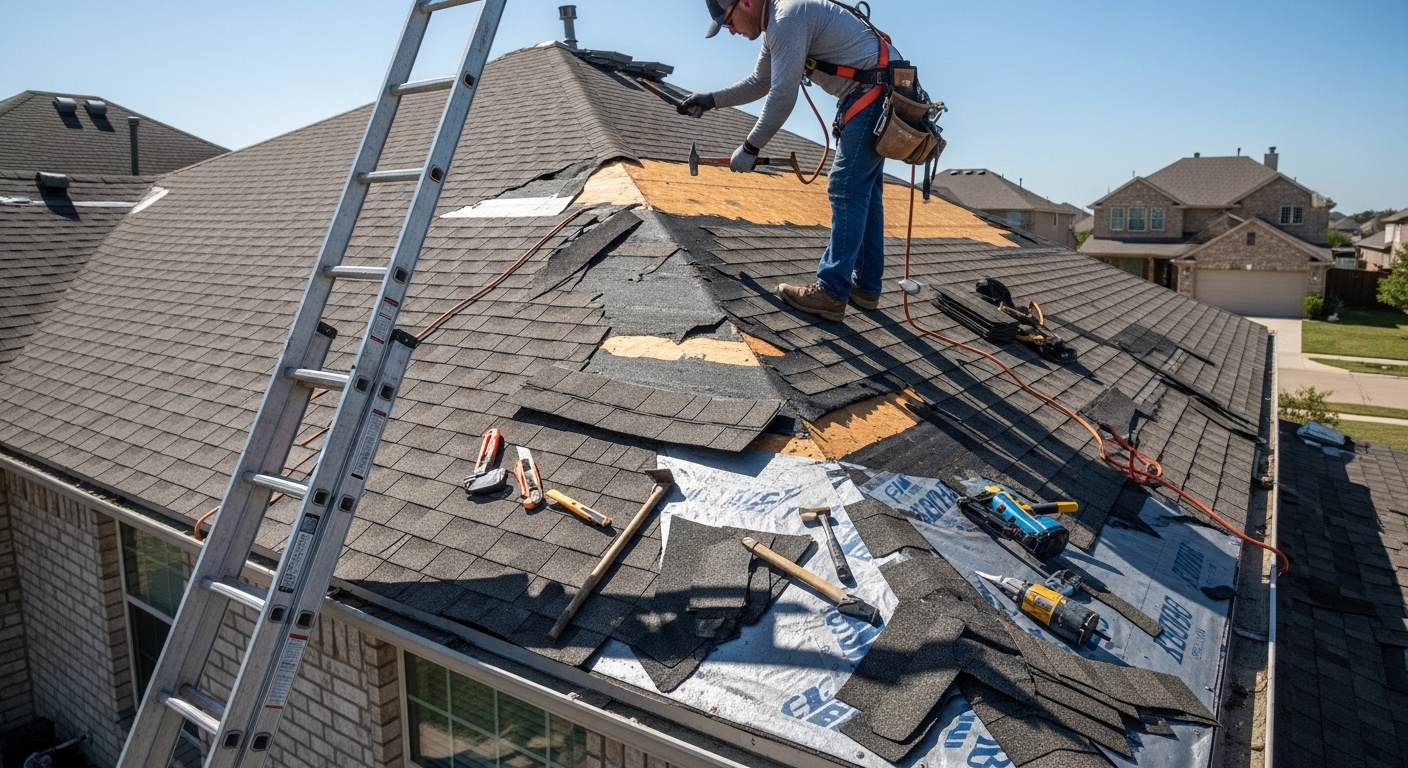
Average Cost: $150 – $600 These are your “quick wins.” Think replacing a handful of shingles that blew off in a high wind, resealing some popped nails, or fixing a cracked pipe boot.
- The Pipe Boot Trap: I see this all the time. Those rubber collars around your vent pipes dry out and crack long before the shingles do. It looks like a major roof leak, but it’s often just a $200 repair.
2. The Mid-Range Repairs (Common Issues)
Average Cost: $600 – $1,200 This is where most Texas repairs live. We’re talking about fixing a leaking valley (where two roof sections meet), replacing a square or two of shingles, or repairing damaged flashing around a chimney.
- Valley Woes: Valleys handle the most water. If the underlayment there is compromised, it takes more labor to peel back the shingles and fix it right.
3. Major Repairs (Structural or Storm Damage)
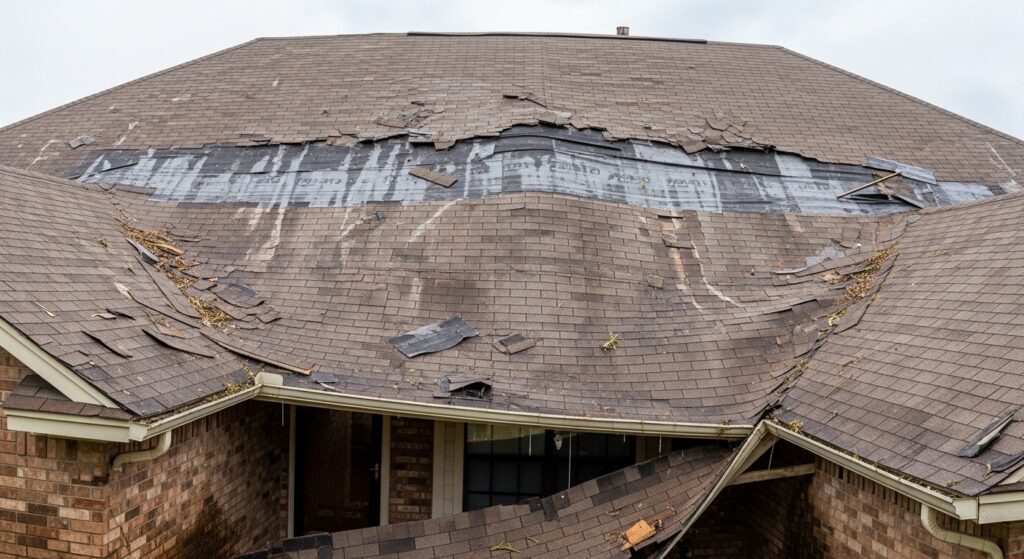
Average Cost: $1,200 – $3,500+ If a storm was particularly nasty or you’ve let a leak go for a while, you might be looking at rotted wood decking or “spongy” spots. Replacing a few sheets of plywood decking and the shingles on top gets pricey because it’s labor-intensive.
Expert Insights: Why the Price Moves
I’ve been on enough Texas roofs to know that two identical-looking leaks can have two very different prices. Here’s what’s actually driving that 2026 quote:
- Pitch and Height: If your roof is so steep we have to use ropes and harnesses (what we call a “steep charge”), the labor cost goes up. It’s a safety thing.
- Layer Count: If you’re one of the many Texans who has a “second layer” of shingles over an old one, repairs are trickier and take longer.
- Material Matching: If you have high-end architectural shingles or those impact-resistant Class 4 shingles, the materials cost more than basic 3-tabs.
- The “Texas Heat” Factor: Labor rates often spike in the summer months because crews can only work half-days before the shingles (and the people) start to melt.
Practical Application: What You Can Do Now
If you suspect you have damage, don’t wait for the next “frog-strangler” storm. Here is how you can handle it like a pro:
- Do a Ground Check: Grab some binoculars. Look for “bald” shingles (where the granules are gone) or edges that are curling or cracking.
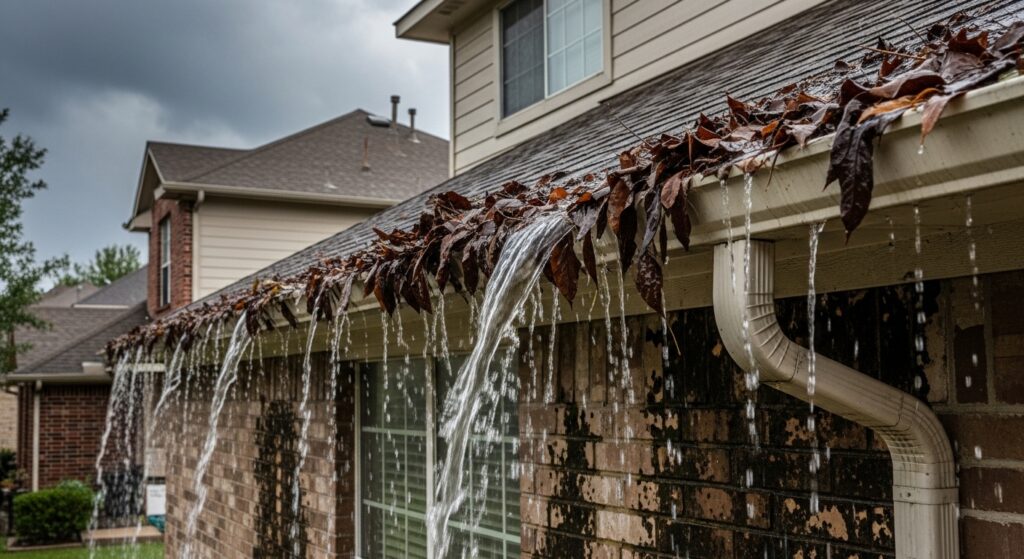
- Check the “Evidence”: Look in your gutters. If they’re full of shingle “sand,” your roof is shedding its protection.
- The Attic Audit: Go up there with a flashlight during a rainstorm. If you see damp wood or hear a drip, you’ve found the source.
- Know Your Deductible: If the damage is from a recent storm, it might be covered by insurance. But with many Texas deductibles being 1% or 2% of the home’s value, a $1,000 repair might actually be cheaper to pay out of pocket than filing a claim.
FAQ Section
Q: Is it ever worth patching an old roof? Honestly? If your roof is over 15–18 years old and has widespread damage, a $1,500 repair is often “throwing good money after bad.” At that point, you’re just waiting for the next leak. But if the roof is young, a patch is a great way to squeeze another decade out of it.
Q: How much does it cost per shingle? We don’t really charge by the shingle. You’re mostly paying for the “trip charge”—the labor, the ladder setup, and the expertise. Replacing one shingle or ten shingles usually costs the same minimum labor rate (around $350–$450).
Q: Why is my quote higher than my neighbor’s? It might be your flashing. Chimneys, skylights, and complex rooflines require more detail-oriented labor. A simple “up and over” roof is always cheaper to fix than a house with six gables.
Conclusion: Don’t Let the “Drip” Win
Remember Sarah’s neighbor? We caught his leak early. It turned out to be a failed chimney flashing and a few wind-damaged shingles. We fixed it for about $800. If he’d waited another six months, that rotted wood and ceiling repair would have easily tripled that cost.
In Texas, your roof is your first line of defense. It takes the brunt of the heat so you can stay cool. If it’s asking for a little help, listen to it.
Need a straight answer on your roof? Don’t guess at the damage. If you’re seeing signs of trouble, get a professional roof inspection today. We’ll give you an honest look at what’s going on up there—no sales fluff, just the facts on what it’ll take to keep your home dry through the next Texas storm.
You’ve got enough to worry about; a leaky roof shouldn’t be one of them. Let’s get it fixed.