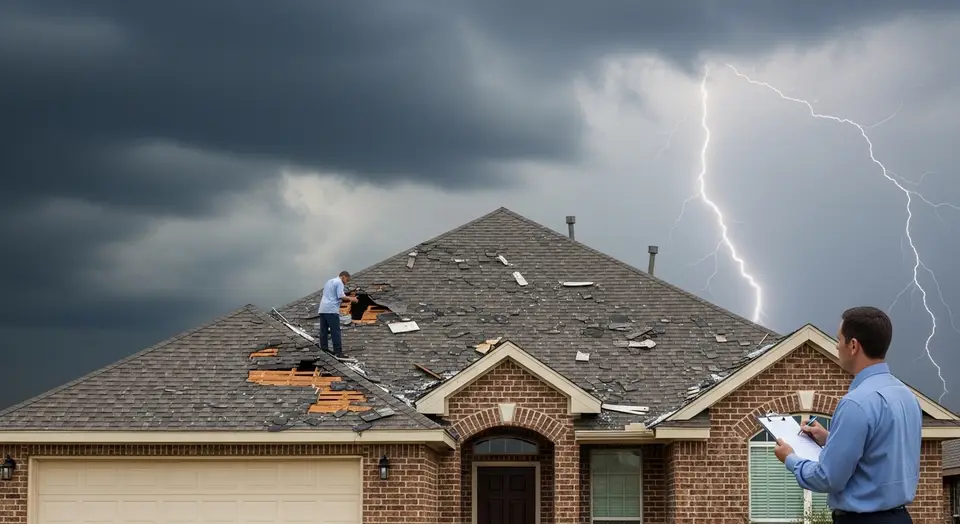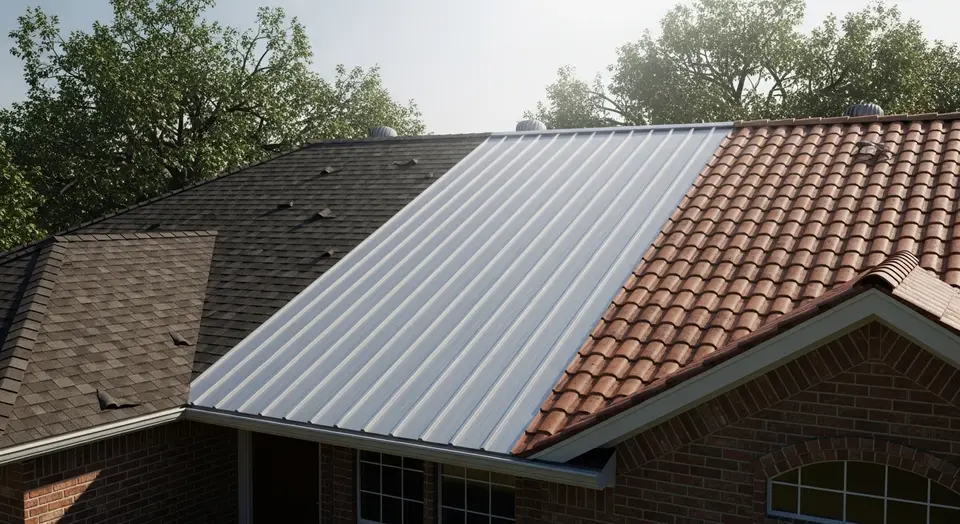
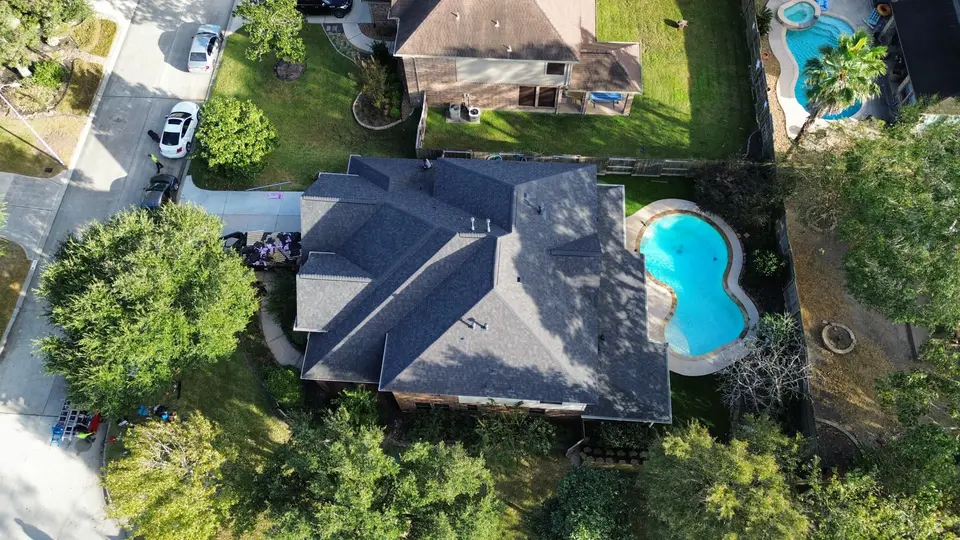
If you can choose the month for a Houston roof replacement, late fall is usually the most practical window. October and November are milder than July, and they sit ahead of spring, when hail inspections fill local schedules. Hurricane season stays open through November 30, and October is not a dry month, so “best” does not mean a clear sky. It means you can plan around a dry deck instead of around a leaking ceiling.
That is the best time to replace a roof in Houston when you are deciding, not reacting. A roof that is already letting water in, shedding shingles, or showing daylight in the attic should be repaired or replaced on the next workable day. Season is a planning tool. It is not a reason to wait while a stain spreads across a ceiling.
This guide is about asphalt shingles. Tile, metal, and flat membranes follow their own temperature rules. The month still matters, but the product instructions matter more than advice written for a northern winter.
Why the month changes the job
A replacement is short, and several steps cannot get wet. The old roof comes off, the deck has to be dry enough to fasten to, underlayment goes down, and the new shingles have to lie flat and seal. Three Houston patterns matter more than a generic “do it in September” tip:
- Heat. July and August afternoons average in the mid-90s. Shingles soften, scuff underfoot, and can fuse if a bundle sits in the sun.
- Rain. One stormy afternoon is workable. A week of showers stalls a tear-off, because an open deck cannot sit wet.
- Storm season. Hail most often hits Southeast Texas in spring. The Atlantic hurricane season still runs through November 30.
What the Houston climate record actually says
Houston is not the national average those “best month” articles describe. The figures below are 1991–2020 climate normals for Houston Intercontinental Airport, from the National Weather Service Houston/Galveston office.
| Season | IAH normals, 1991–2020 | On a roof |
| Oct–Nov | Oct high 82.8°F, 5.46 in rain. Nov high 72.6°F, 3.87 in rain. | Best planning window. October is still wet, so work between storms. |
| Dec–Feb | January high 63.8°F, low 43.7°F. | Usually workable. Watch cold, cloudy stretches. |
| Mar–May | Mild days between fronts. Peak time for severe storms and hail. | Good weather, crowded schedules after hail. |
| Jun–Aug | June 6.00 in rain. July high 94.5°F. August high 94.9°F. | Common after spring claims. Harder on shingles and crews. |
October’s 5.46 inches is second only to June, so fall is milder, not dry. The November summary lists a normal of 7.6 days with at least 0.01 inch of rain.
Late fall is the planning window
If the roof is stable and you are choosing a start date, this is the stretch to circle. A fall roof replacement gives you milder shingles, crews that are not buried in hail claims, and enough warmth for the sealant strip to work on a sunny afternoon.
October
By late October, highs have fallen out of the mid-90s, so shingles are less likely to bruise underfoot. Rain is still the constraint. Ask how an open deck gets covered if a storm builds in the afternoon, and expect the tear-off to be staged so a large bare area is not left exposed. October is also still hurricane season. A quiet week is not a promise. If a system is aimed at the upper Texas coast, the start date moves.
November
Highs around the low 70s are warm enough for shingles to relax and for the sealant strip to see sun, and normal rainfall is lower than October’s. The official season still runs through November 30. A November start also beats the harder cold fronts of December and January, and it beats spring, when one hail event can fill schedules across Harris County.
Winter roof installation is normal here
Winter roofing rules written for weeks below freezing travel badly. A winter roof installation in Houston is ordinary work: a typical January afternoon is in the low 60s. The limit is the sealant strip on the back of an asphalt shingle, which needs warmth to bond each course. On a sunny week it usually sets. After a cold, gray front it can sit unsealed, and wind can lift an edge.
GAF’s Timberline HDZ notes say the shingles can go on year-round if the crew respects the extremes. In the cold, store bundles above 70°F the day before so they stay flexible, and hand-seal with roofing cement when the factory strip will not activate. Follow that shingle’s pattern. Too much cement bleeds or blisters. Hand-sealing does not replace a dry deck.
Before a winter week, ask where the bundles spend the night and whether a cold, cloudy front means hand-sealing. Schedules are often more open than in the weeks after hail. Price still depends on the roof, not the month. A planned winter week is a real window in Houston and the rest of Harris County. A leak does not get safer because a chart looks milder.
Spring fills the schedule
March through May can be excellent roofing weather, and it is when Southeast Texas most often sees hail. After a widespread event, inspections spike and crews get pulled onto emergency calls. If the roof is already failing, do not wait for a calmer month. If it is simply old, booking before that rush is kinder to your timeline. Condition says whether. Season says when. The warning signs that a Texas roof needs replacement cover granule loss, curling, soft decking, and stains that keep returning.
Ask what happens if hail falls during your week. Afterward, update the recorded roof age with your insurer while the invoice is handy. If a storm started the job, how homeowners insurance treats roof damage in Texas matters more than the calendar. Claim steps follow the policy.
Summer work is common, and harder
Many Houston roofs are replaced in the months after spring storms. If water is getting in, waiting for October is the wrong trade. When you can choose, borrow GAF’s hot-weather notes: store bundles in the shade, and use soft-soled shoes so granules are not scraped off. June is the wettest month in the normals, at 6.00 inches, so keep each opened section small enough to dry in before an afternoon storm, and protect the pool, the beds, and the driveway from nails.
How to choose a date for your house
If water is already inside
Stop optimizing the calendar. An active leak, a soft deck, or shingles missing to the underlayment needs the next dry day. A pipe boot or flashing fix is roof repair in Houston. Granule loss across whole slopes usually means the roof is done. Storm damage repair in Houston is the path when a recent storm is why the ceiling is wet.
Not every stain is the roof. Wind can push rain through a window or a wall. If the leak only shows up from one direction, start with how to tell wind-driven rain from a roof leak before you order a tear-off.
If you are planning ahead
How long a roof lasts in Houston depends on the material, the attic, the shade, and whether hail has already bruised it. Then use a short list:
- Confirm replacement, not a repair. Start with a ground-level roof inspection, then have a roofer check what you cannot see safely.
- Clear cars, protect plants against the house, and be reachable while the deck is open.
- Pick a dry stretch in the forecast, not a month that only looks good on a chart.
- If solar is a possibility, do the roof first. Replacing the roof before solar panels avoids a later removal.
- Choose materials for Houston’s climate, and make sure shingle installation follows that product’s nailing and sealing rules.
What to settle while the roof is open
New drip edge should empty into the gutter, not behind it. Packed or undersized gutters still soak the fascia, so include gutter and downspout work in the same visit. A hot attic also shortens shingle life: soffit intake and ridge exhaust have to work together, and vents buried in insulation should be opened before the new shingles go on.
Pipe boots, sidewall flashing, and skylight curbs are where leaks start. Leaving a cracked boot wastes a new field of shingles. What a roof replacement involves, from tear-off to cleanup, shows the steps you should be able to see. Bring in siding replacement in Harris County or window and door replacement only when those parts are on the same water path, so the flashing is done once.
Questions worth asking before you book
- Who stops a tear-off when rain would leave the deck open?
- Where do shingles sit overnight in cold weather, and will the crew hand-seal if the strip will not set?
- Who pulls any required permit, and who is on the roof while the deck is open?
- What is the manufacturer warranty, what is the workmanship warranty, and what is in writing?
- Who protects the driveway, pool, and beds, and who sweeps nails in the yard?
The same climate covers the rest of Harris County. If the roof is part of a larger project, our Houston exterior services page is the place to separate what the inspection found from what can wait.
A practical way to decide
In late October, hurricane season is still open, October’s rainfall normal is higher than people expect, and November is milder with less rain in the climate record. A stable roof can take a dry stretch in the next few weeks, with a backup day. A leaking roof takes the next workable day.
When you want that call made on your roof, request a free estimate or call 832-691-1917. We will tell you whether you are looking at a repair, a new roof installation in Houston, or a job that should wait for a better week. If replacement is the right scope, our roof replacement in Houston crew can schedule the kind of week this page describes.
Frequently Asked Questions
What is the best time to replace a roof in Houston?
Late fall, if you are planning rather than chasing a leak. October is still wet, so you need a dry deck and a gap in the forecast. November is often easier. Winter works in Houston. Summer is common when a leak or a claim sets the date.
Can you replace a roof in Houston during winter?
Yes. January afternoons average in the low 60s, warm enough for most asphalt shingles. The limit is a cold, cloudy stretch when the sealant strip will not bond. Store bundles warm and hand-seal where the instructions require it.
Should I wait until hurricane season ends to replace my roof?
Only if the roof is stable. The Atlantic season runs June 1 through November 30, so a storm is still possible. If water is already getting in, do not wait for December. Move the day if a system aims at the upper Texas coast.
Is summer a bad time for a Houston roof replacement?
Harder, not forbidden. July and August highs average in the mid-90s, and June is the wettest month in the local normals. Crews still replace roofs all summer. A milder month is easier when you have a choice.
What if my roof is leaking right now?
Treat the leak as the schedule. Catch water and have the roof looked at on the next dry day. Some leaks are a boot or flashing repair. Others mean the roof is finished. Do not wait out a spreading stain for a preferred month.
Will a fall replacement use different shingles than a spring one?
No. Choose the shingle for Houston heat, humidity, and wind. The month changes handling: shade and soft soles in extreme heat, warm storage and hand-sealing when the sealant will not set.