
Why Roof Shingles Curl or Crack | 7 Causes & Fixes | Tekton Exteriors Texas
Quick Answer
Roof shingles curl or crack due to age, poor attic ventilation, moisture damage, improper installation, prolonged heat exposure, manufacturing defects, or storm damage. These issues can weaken roof performance and lead to leaks or structural problems. If 20% or more of shingles are affected, schedule a professional roof inspection to determine whether repairs or replacement may be needed.
You pull into your driveway, look up at your house, and notice something unsettling. Your roof, which used to look flat and uniform, is starting to look textured—and not in a good way. The edges of the shingles are turning up, or the centers are humped.
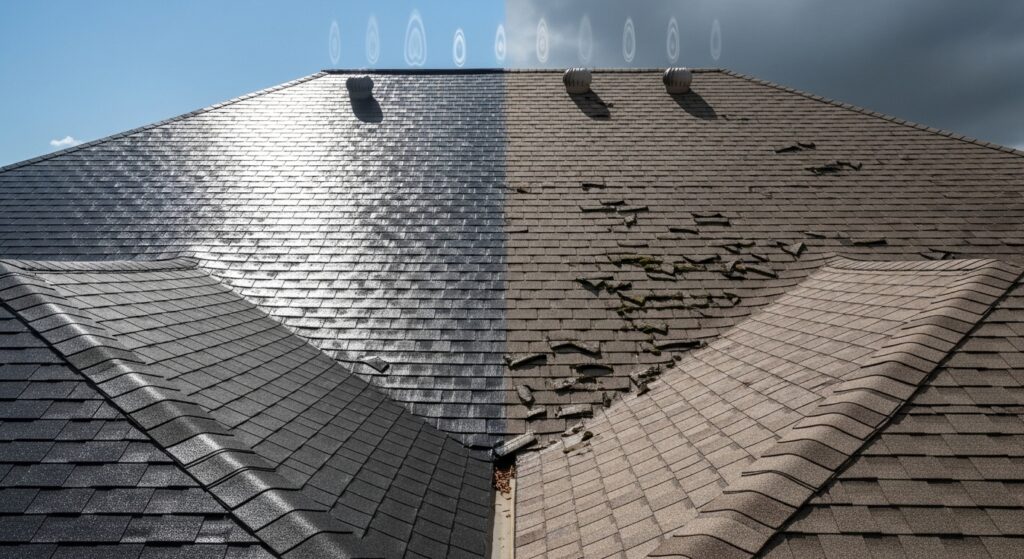
Curling and cracking shingles are the roofing equivalent of wrinkles; they are a sign of aging, stress, and environmental wear. But unlike wrinkles, you can’t just use a good moisturizer to fix them. Understanding why this happens is the first step in deciding whether you need a repair or a full replacement.
Roof shingles curl or crack due to age, poor attic ventilation, moisture damage, improper installation, heat exposure, manufacturing defects, or storm damage. If 20%+ of shingles are affected, schedule a professional inspection.
The Anatomy of Curling
First, let’s get the terminology right. There are two main ways shingles distort:
- Cupping: This happens when the edges of the shingle turn upward, creating a cup-like shape. This exposes the edges to wind and rain.
- Clawing: This is the opposite. The middle of the shingle bubbles up while the edges stay flat or curl under.
Both are bad news. They mean the shingle is no longer lying flat, which compromises the water-shedding ability of the roof.
7 Reasons Roof Shingles Curl or Crack
-
Age & Normal Weathering
Over time, shingles naturally deteriorate due to prolonged exposure to sun, wind, and rain. You’ll notice curling edges, fading color, and brittle texture. The best solution is replacing aging shingles before they start leaking. -
Poor Attic Ventilation
Inadequate airflow traps heat and moisture in the attic, causing shingles to overheat and warp. This often appears as widespread curling or uneven aging. Installing proper ventilation systems can prevent further damage. -
Moisture & Water Damage
Trapped moisture from leaks or humidity weakens shingles and leads to curling or cracking. Signs include soft spots and mold growth. Addressing leaks and improving drainage is critical. -
Improper Installation
Poor nailing, misalignment, or lack of underlayment can cause shingles to lift and curl prematurely. This often appears in patterns across the roof. A professional reinstallation may be required. -
Texas Heat Exposure
Extreme heat can dry out shingles, making them brittle and prone to cracking. You’ll often see curling edges and surface fractures. Heat-resistant materials help prevent this. -
Manufacturing Defects
Defective shingles may fail earlier than expected, showing unusual cracking or curling. This damage may be covered under warranty, so documentation and inspection are important. -
Storm & Hail Damage
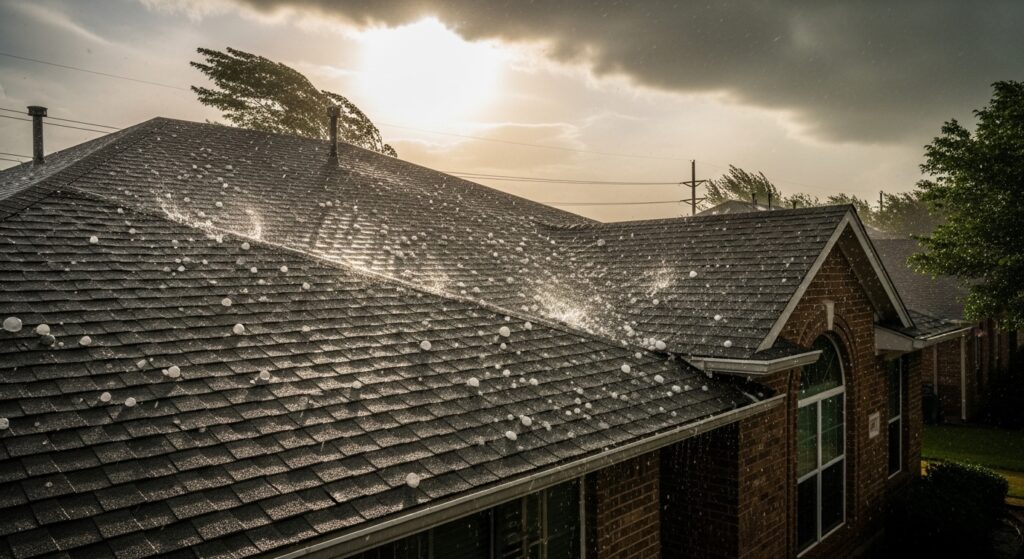
Hail and strong winds can crack shingles or knock off protective granules. Damage may not always be visible from the ground. A roof inspection is recommended after storms.
Cause #1: Poor Attic Ventilation
This is, without a doubt, the most common culprit. Your attic needs to breathe. It requires intake vents (usually at the soffits) and exhaust vents (at the ridge or roof face) to cycle air through.
If your attic is poorly ventilated, heat and moisture get trapped. In the Texas summer, attic temperatures can soar to 150°F or higher. This intense heat bakes the shingles from the bottom up. Over time, the asphalt dries out and shrinks, causing the edges to curl. If you are unsure about your ventilation, checking it is a key part of our roof repair services in Katy, TX.
How to Diagnose Your Shingle Problem
- Cupping (edges curl up) — Caused by heat or poor ventilation; Medium urgency.
- Clawing (middle buckles up) — Usually due to aging or moisture; High urgency.
- Cracking across the tab — Result of brittleness or storm damage; High urgency.
- Missing granules — Indicates wear or hail impact; Medium to high urgency.
- Brittle breakage — Severe aging or heat damage; Immediate attention needed.
Cause #2: Improper Installation
Sometimes, the problem starts the day the roof is nailed down.
☑ High Nailing: If the installer places the nails too high on the shingle, the bottom edge isn’t secure. Over time, wind and thermal cycles will cause it to lift and curl.
☑ Misaligned Tar Lines: Shingles have a strip of adhesive tar that seals them to the row below. If this doesn’t line up correctly, the bond fails, and the shingle is free to move and warp.
Cause #3: The Phenomenon of “Thermal Shock”
roofs go through extreme temperature cycles. In the morning, they might be cool. By 2 p.m., they are scorching hot. Then a summer thunderstorm rolls in, dumping cold rain on the hot asphalt. This rapid cooling causes the material to contract quickly.
Over years of expanding and contracting, the structural integrity of the asphalt mix breaks down. The shingles lose their flexibility and begin to crack or curl under the stress. This is one reason understanding the average lifespan of an asphalt shingle roof is important; eventually, physics just wins.
Can Curled Shingles Be Repaired or Do They Need Replacing?
Whether curled shingles can be repaired or require full replacement depends on the extent of the damage.
As a general rule, if the problem is isolated and affects less than 20% of the roof, targeted repairs
can often resolve the issue. This may include replacing individual shingles, resealing areas, or fixing
ventilation problems causing the damage.
However, if curling or cracking is widespread across large sections of the roof, it is usually a sign
of systemic failure due to age, poor installation, or prolonged heat exposure. In these cases, a full
roof replacement is the more cost-effective and reliable solution.
If the damage is caused by storms or hail, your homeowner’s insurance may cover repairs or replacement.
A professional inspection can help determine the cause and provide documentation for potential claims.
Cause #4: Layering (Reroofing over Old Shingles)
To save money, some homeowners opt to install a new layer of shingles directly over the old one. While legal in some jurisdictions, it is rarely a good idea for longevity. The second layer doesn’t seal as well as the first, and it traps even more heat. The added heat stress almost guarantees the new top layer will curl and crack faster than if you had done a complete tear-off.
Cause #5: Defective Materials
While less common today, there have been historical batches of “organic” shingles (made with a cellulose mat rather than fiberglass) that were notorious for absorbing moisture and curling prematurely. If your roof was installed roughly 15-20 years ago, you might be a victim of inferior manufacturing standards from that era.
Can You Fix Curled Shingles?
This is the million-dollar question.
- The hard truth: Once a shingle has curled, it cannot be flattened back out. The material has physically deformed.
- The solution: If the curling is limited to a small area (perhaps near a vent where heat escapes), you can replace just those specific shingles.
- The reality: If the curling is widespread across the roof, it is a systemic failure. The shingles are brittle and will likely break if you try to manipulate them.
If you see widespread curling, your roof has lost its ability to waterproof your home effectively. It is time to look into a new roof installation in Houston, TX before the water starts coming in.
FAQ
How do I know if my shingles need replacing?
If you see widespread curling, cracking, missing granules, or leaks, it’s likely time for replacement.
Does insurance cover curling shingles in Texas?
Insurance typically covers damage caused by storms or hail, but not normal wear and tear or aging.
Can I repair curling shingles myself?
Minor repairs are possible, but professional repairs are recommended to ensure safety and long-term results.
How much does shingle repair cost in Texas?
Repairs usually range from $150 to $1,000 depending on the extent of the damage.
How long do roof shingles last in Texas heat?
Most shingles last 15–25 years, though extreme heat can shorten their lifespan without proper maintenance.