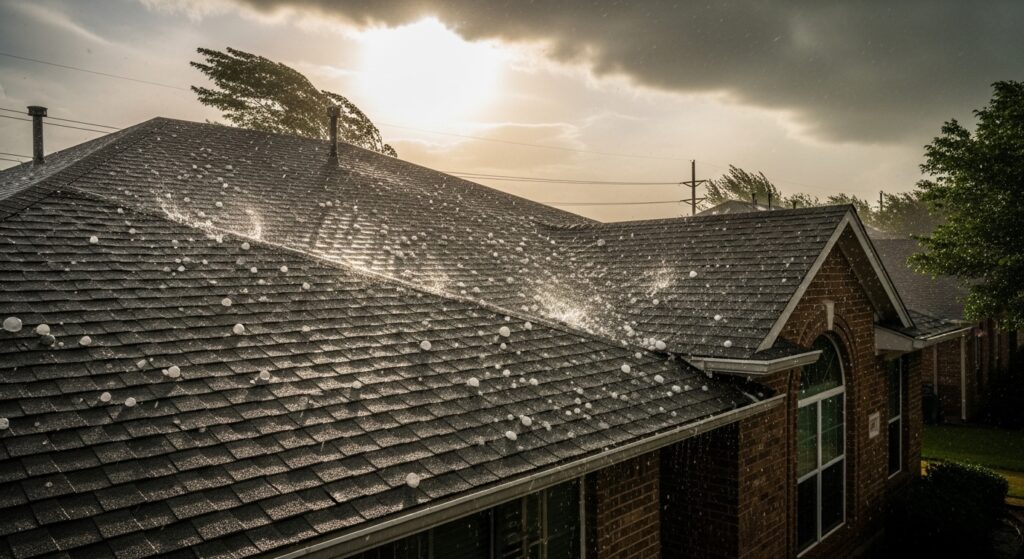

For residents of the Gulf Coast, June 1st isn’t just the start of summer; it’s the start of “watching the tropics.” Hurricane season in Texas is a serious matter. We have seen what storms like Harvey, Ike, and Nicholas can do. While we stock up on water and batteries, the most important shield we have—our roof—often gets overlooked until the wind starts howling.
Preparing your roof before a storm is named is the single most effective way to minimize damage. Waiting until the news puts a “Cone of Uncertainty” over Galveston is too late.
Why Preparation Matters
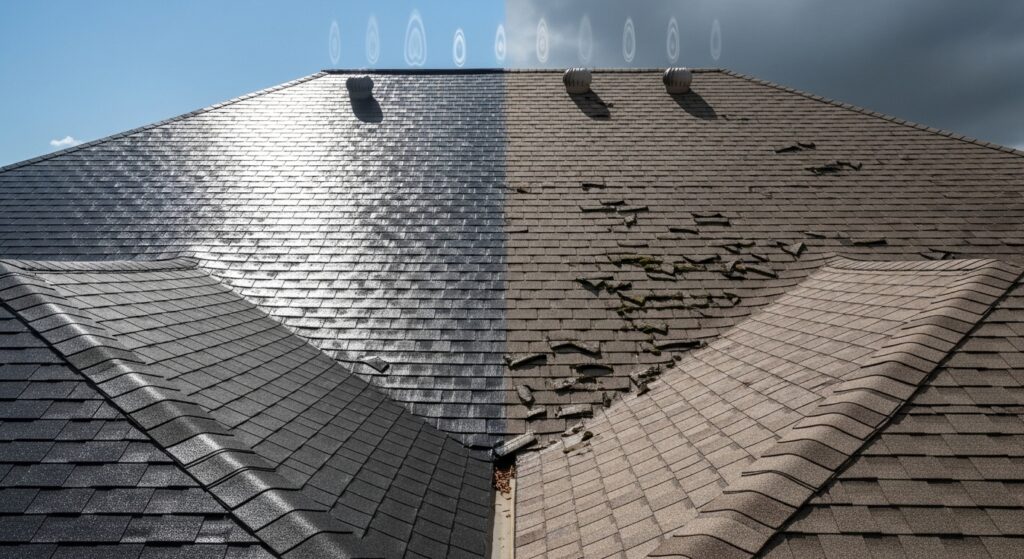
Your roof is designed to withstand wind, but it functions as a system. If one part fails—a loose shingle, a rusted flashing, a clogged gutter—the integrity of the whole system is compromised. High winds will find the weakest point and exploit it, potentially peeling back your roof like a banana.
Here is your essential checklist to get your home ready.
1. The “Ground-Level” Inspection
You don’t need a ladder to start. Walk around your property and look up.
☑ Look for Lifted Shingles: Using binoculars, scan the edges of your roof. Are any tabs flapping in the breeze?
☑ Check for Debris: Are there piles of leaves in the valleys (where two roof slopes meet)? Debris holds water and prevents proper drainage during torrential rains.
☑ Inspect Metal Flashings: Look at the metal around your chimney. If it looks loose or rusted, strong winds could rip it off, leaving a gaping hole for water.
If you spot anything suspicious, schedule a professional check-up. Refer to our roof inspection maintenance guide for more on what pros look for.
2. Trim Those Trees
Trees are beautiful, but in a hurricane, they are potential missiles.
- Overhanging Branches: Any branch hanging over your roof should be trimmed back. During a storm, these whip around violently and can scour the granules off your shingles or puncture the deck.
- Dead Limbs: Look for dead branches higher up in the canopy. Wind will snap these easily, and gravity will bring them straight down onto your home.
3. Clear the Gutters and Downspouts
Hurricanes bring massive amounts of rain. Your gutters are the highway that moves this water away from your foundation and roof edges.
- Clean them out: Remove all leaves, mud, and grit.
- Test the flow: Run a hose through them to ensure the downspouts aren’t clogged.
- Secure them: Make sure the gutters are tightly fastened to the fascia board. Heavy, water-filled gutters can rip away from the house if the fasteners are loose.
4. Secure Rooftop Accessories
Do you have a satellite dish, solar panels, or skylights?
☑ Check bolts and screws: Ensure everything is tightened down.
☑ Inspect skylight seals: A skylight is a common leak point during horizontal rains. Ensure the flashing around it is secure.
5. Review Your Insurance Policy
This isn’t physical labor, but it is crucial. Do you know your deductible? Do you have windstorm coverage? Take photos of your roof now, while it is in good condition. Having a “before” photo is incredibly helpful if you need to file a claim later. If the worst happens, know that we offer insurance claim assistance in Texas to help you navigate the paperwork.
6. Plan for the Worst
If a storm is imminent and you know your roof has weak spots that you didn’t have time to fix, buy a few heavy-duty tarps and 2x4s. Do not try to tarp your roof during a storm. This is for post-storm emergency mitigation only.
After the Storm
Once the winds die down and it is safe to go outside, do a visual check again. If you see missing shingles or suspect damage, do not wait. Roofers get booked up instantly after a major storm. Contacting a local expert for storm damage emergency repairs in Galveston immediately can save your home from secondary water damage.
Preparation is power. By taking these steps now, you are giving your home the best fighting chance against whatever the Gulf throws our way.