
Galveston Island is a paradise, but it comes with a price: we are the first line of defense against the Gulf’s angriest weather. For homeowners here, “hurricane prep” isn’t just about boarding up windows; it’s about ensuring the roof over your head doesn’t end up two blocks away.
The salt air and constant humidity already accelerate wear and tear, so when June 1st rolls around, your roof needs specific attention that mainland homes might not require. Here is your island-specific guide to securing your roof.
1. The Salt Air Corrosion Check
Salt is corrosive. It eats away at metal faster than you can imagine. Before the season heats up, get up close to your flashing—the metal strips around your chimney, vents, and valleys.
- What to look for: Rust, pitting, or thinning metal.
- The Fix: If you see rust, the metal is weak. In a hurricane, weak flashing rips open, allowing water to pour into your walls. We recommend replacing rusted flashing with marine-grade aluminum or copper for better longevity.
2. Windstorm Inspection & Certification
In Galveston, insurance is a different ballgame. You likely deal with TWIA (Texas Windstorm Insurance Association).
- Documentation: Ensure your roof has a current WPI-8 certificate if it has been repaired or replaced recently. Without this, your insurance claim could be denied.
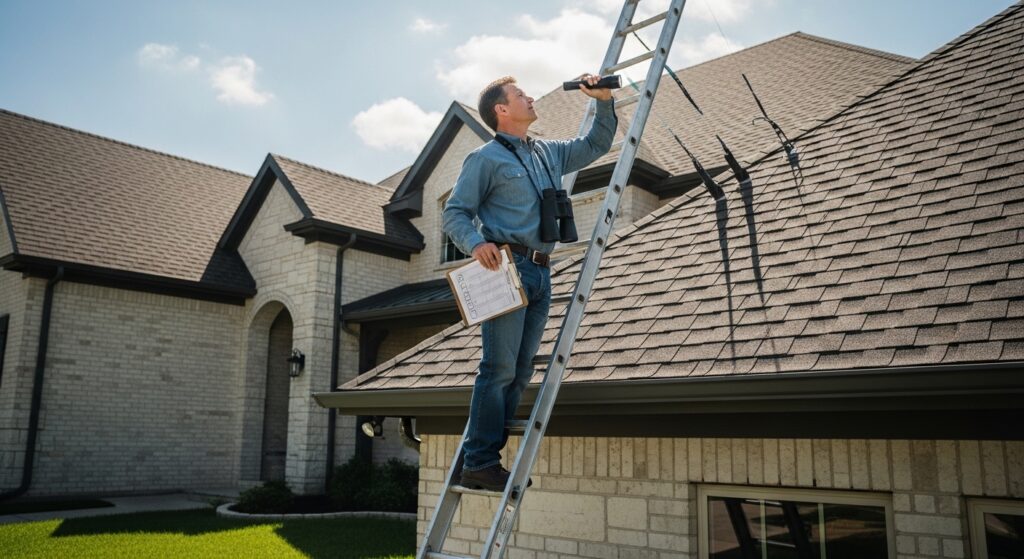
- Loose Shingles: The constant sea breeze often loosens the adhesive seal on shingles. A professional inspection can identify these “fluttering” shingles and re-seal them before a storm turns them into projectiles. If you need a certified check-up, our roof repairs in Galveston are thorough and code-compliant.
3. Secure Your Soffits
This is a common failure point in coastal storms. Strong winds hitting the side of your house are pushed upward into the soffits (the underside of your roof overhang).
- The Risk: If soffits aren’t securely fastened, the wind blows them open, enters the attic, and pressurizes the house like a balloon. This pressure can literally blow the roof deck off from the inside out.
- The Action: Check that all soffit panels are screwed in tight, not just stapled.
4. Clear the Debris—Aggressively
On the mainland, a clogged gutter causes a leak. In Galveston, a clogged gutter during a hurricane adds massive weight to the roof edge. Combined with 100 mph winds, this weight can rip the fascia board right off the house.
- Clean gutters thoroughly.
- Trim palm fronds and tree limbs at least 6-10 feet back from the roofline to prevent whipping damage.
5. Check Your Seals
The horizontal rain in a hurricane moves sideways, not down. It seeks out tiny cracks in caulking around windows, skylights, and pipe jacks.
- Re-caulk: Use a high-quality, UV-resistant exterior sealant on any gap you find. It’s a cheap fix that saves thousands in water damage.
Don’t Wait for the Watch
Once a Tropical Storm Watch is issued, it is often too safe to do major roof work. The time to act is now. If you are unsure if your roof is ready for the season, schedule an evaluation. We offer specialized storm damage emergency repairs in Galveston if the worst happens, but we would much rather help you weather the storm safely with preventative care.