Written by Yasir, Lead Exterior Specialist at Tekton Exteriors, with 10+ years of experience painting and protecting Texas homes. Yasir specializes in exterior coatings, climate-resistant finishes, and residential painting solutions built for Texas weather. Updated: April 2026.
You know that feeling when you pull into your driveway after a long week? That split second where you look at your house and either feel a sense of relief—or a tiny pang of annoyance?
Maybe the beige is looking a little too… beige. Or that grey you picked five years ago feels a bit cold now.
We’ve all been there. It’s arguably the biggest commitment you make as a homeowner outside of buying the place. Choosing an interior color is low stakes; if you hate the bathroom wall, you can repaint it on a Saturday for fifty bucks. But the exterior? That’s the face your home shows the world. It’s expensive to change, and everyone sees it.
And honestly, looking at paint chips is overwhelming. You stand there in the hardware store aisle, staring at forty shades of “White Dove,” wondering if your neighbors will think you’re crazy for considering a dark navy.
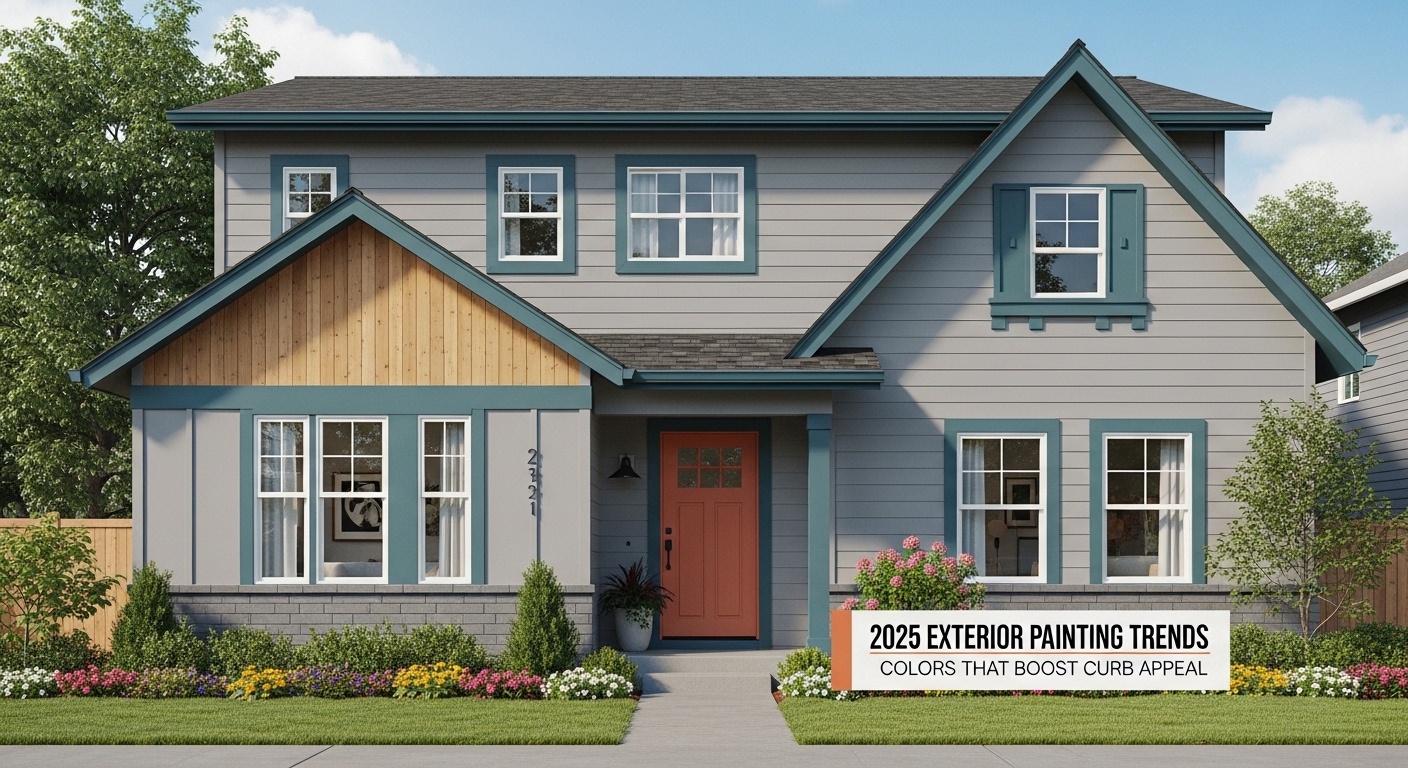
The good news is that as we look toward 2026, exterior painting trends are shifting in a really healthy direction. We’re moving away from the “flip house” look and back toward homes that feel grounded, warm, and personal.
Let’s talk about what’s changing, why it matters, and how you can pick a color that you won’t hate in three years.
The Problem: The “Safe” Trap
Here’s the thing about exterior paint. For the last decade, we’ve been paralyzed by the fear of resale value.
You’ve seen it. Entire neighborhoods painted in “Agreeable Gray” or stark, blinding white with black trim. It looks clean, sure. But it also looks a little bit like a xerox of a xerox.
The problem isn’t that these colors are ugly. It’s that they lack personality. And paradoxically, when everyone plays it safe, your home stops standing out. It blends into the background noise.
When you paint your house just to please a hypothetical future buyer, you rob yourself of the joy of living there now. Plus, trends move faster than mortgages. That “modern farmhouse” look that was cutting edge in 2020? It’s starting to feel a little dated already.
So, the challenge is finding that sweet spot: a color palette that feels current and fresh for 2026, but timeless enough that you aren’t scrambling to repaint when the trends shift again.
Top 7 Exterior Paint Colors Trending in Texas Homes (2026)
-
Sherwin-Williams Alabaster SW 7008 — #F2EDE6
Warm off-white with soft undertones.
Best for: Modern farmhouses and stucco homes. -
Benjamin Moore Hale Navy HC-154 — #2F3E4E
Deep, timeless navy with strong curb appeal.
Best for: Brick homes and accent siding. -
Behr Cracked Pepper PPU18-01 — #3A3A3A
Bold modern charcoal black tone.
Best for: Contemporary and minimalist exteriors. -
Sherwin-Williams Evergreen Fog SW 9130 — #94998D
Soft green-gray with natural earthy feel.
Best for: Suburban and nature-inspired homes. -
Benjamin Moore Revere Pewter HC-172 — #CCC7B8
Warm greige with balanced neutral tone.
Best for: Ranch-style homes and mixed materials. -
Behr Swiss Coffee 12 — #F1EDE0
Creamy white with subtle warmth.
Best for: Traditional and Mediterranean homes. -
Sherwin-Williams Iron Ore SW 7069 — #434341
Deep near-black gray with strong contrast.
Best for: Trim, doors, and modern accents.
The Deep Dive: Why Warmth is Winning
If there is one word that defines where we are headed, it’s warmth.
We are collectively tired of the cold, sterile grays. We want our homes to feel like sanctuaries. This is why we’re seeing a massive shift toward “biophilic” design—which is just a fancy way of saying “colors that actually exist in nature.”
Think about the environment around your home. The trees, the soil, the stone, the sky. The best exterior colors for 2026 are the ones that play nice with those elements rather than trying to dominate them.
We’re seeing deep forest greens, rich terracottas, warm creamy whites, and even dark, moody charcoals that have brown undertones rather than blue ones.
This isn’t just about aesthetics; it’s about psychology. We want our homes to feel like a hug, not a hospital.
Most Popular Exterior Paint Finishes for 2026
In 2026, exterior paint finishes are focused on durability, weather resistance, and long-term appearance
in harsh climates like Texas. Satin finishes remain the most popular choice because they offer a strong
balance of durability and subtle shine, making them ideal for siding and exterior walls. Eggshell finishes
provide a softer, more natural look but are slightly less resistant to heavy rain and humidity.
Flat finishes are still used for modern designs but are less common due to their vulnerability to dirt
and moisture. Semi-gloss finishes are typically reserved for trim, doors, and architectural accents because
of their high durability and easy cleaning. For Texas heat and humidity, satin is generally the best overall
option as it resists fading, handles moisture well, and maintains a clean appearance longer than most other finishes.
The Top Trends for 2026
Let’s get specific. If you’re planning a refresh, here are the directions we’re seeing the market move toward.
1. The “Dark Academia” Exterior
This is my personal favorite. For years, people were terrified of dark houses. They thought it would look gloomy or absorb too much heat. But with modern reflective paint technology, the heat issue is manageable, and the look is stunning.
I’m talking about deep, saturated colors. Iron Ore. Midnight Blue. Forest Black.
When you paint a house a dark color, something magical happens: the house seems to recede into the landscape. The greenery around it pops. If you have a home with a lot of mature trees—like we often see with exterior services in The Woodlands—a dark exterior makes the trees look greener and the architecture look sharper.
It feels sophisticated and expensive. Just make sure you balance it with natural wood accents (like a cedar door or columns) to keep it from looking like a haunted house.
2. Cream is the New White
The stark, bright white is fading out. It’s hard to keep clean, and in the bright sun, it can be blinding.
In its place, we’re seeing creamy, off-whites. Think of colors like “Greek Villa” or “Swiss Coffee.” These shades have yellow or brown undertones that soften the look. They look aged (in a good way) and established.
A creamy exterior pairs beautifully with brick or stone. It doesn’t fight the natural materials; it highlights them. If you’re looking to update siding installation in Katy, pairing a creamy Hardie board with dark bronze windows is a look that isn’t going out of style anytime soon.
3. Earthy Greens and Puttys
Green is technically a cool color, but the greens of 2026 are warm. We’re moving away from the teal/blue-greens and toward olive, moss, and sage.
These colors are fantastic for ranch-style homes or bungalows. They ground the house. A putty-colored house (a mix of gray, beige, and green) sounds boring on paper, but in person? It looks incredibly high-end. It suggests that the home is built from natural materials.
4. The Monochromatic “Drench”
This is a trend for the bold. Traditionally, you paint the siding one color and the trim a contrasting color. The new school of thought is “color drenching.”
You paint the siding, the trim, the gutters, and the soffits all the same color. Maybe you change the sheen (flat on the siding, satin on the trim), but the color remains the same.
This makes small houses look bigger because your eye isn’t stopped by contrasting lines. It creates a seamless, modern silhouette. If you check out our gallery, you’ll see how this technique can make a standard suburban home look like a custom build.
Most Popular Exterior Paint Finishes for 2026
Choosing the right paint finish is just as important as color, especially in Texas heat and humidity. Satin finishes are the most popular due to their durability and slight sheen, making them easy to clean and resistant to moisture. Eggshell offers a softer look with moderate durability, ideal for siding. Flat finishes provide a smooth, modern appearance but are less resistant to dirt and moisture. Semi-gloss is best used for trim, doors, and accents due to its high durability and shine. For Texas homes, satin is generally the best overall choice for long-lasting performance.
Don’t Forget the Roof
Here is the biggest mistake I see homeowners make: they pick a paint color without looking up.
Your roof is a massive percentage of your home’s visual surface area. If you have a reddish-brown roof and you paint your house a cool blue-gray, it’s going to clash. It just will.
- Black/Charcoal Roofs: You have the most freedom here. You can go white, blue, green, or grey.
- Brown/Tan Roofs: You need to stick to warm colors. Creams, beiges, warm greens, or warm whites.
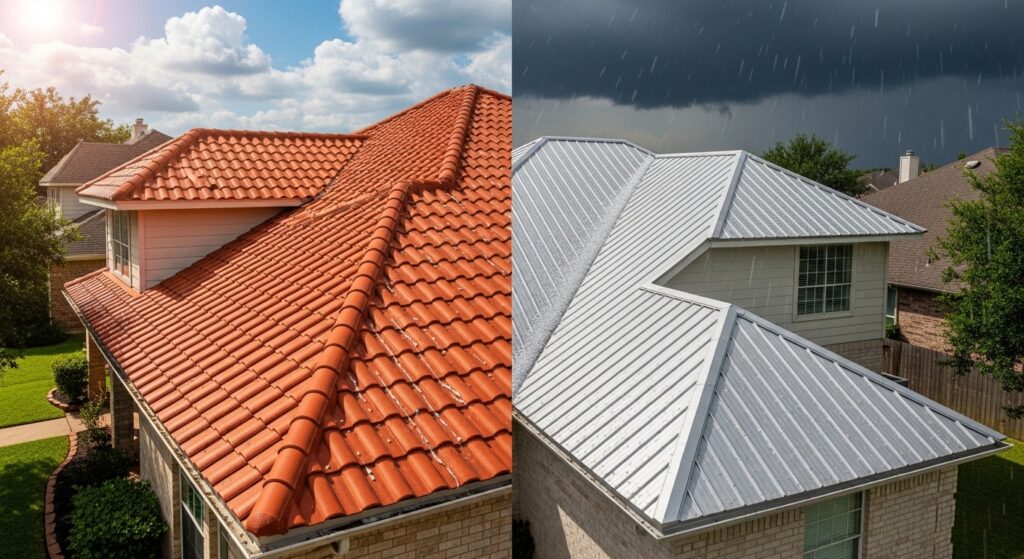
- Red/Terracotta Roofs: Look to Mediterranean palettes. Warm whites, golds, or earth tones.
If your roof is looking rough, painting the siding is like putting lipstick on a pig. You might need to consider the whole envelope. If you’re upgrading to premium roofing shingles in Bacliff or anywhere coastal, coordinate that shingle color with your paint chips before anything gets installed.
What NOT to Paint Your House in 2026 (Fading Trends)
- Cool Gray Tones — Being replaced by warmer greige and earthy hues.
- Bright Yellow — Too bold and fades quickly in strong sun.
- Dark Brown Exteriors — Feels outdated and absorbs excessive heat.
- Pure Stark White — Lacks depth compared to warmer whites like Alabaster.
6 Actionable Tips Before You Buy
Okay, you’ve got an idea of what you want. Before you commit thousands of dollars, do these six things.
- Test It Properly: Do not, and I repeat, do not trust the little paper chip. Buy a sample pot. Paint a large square (at least 2×2 feet) on the North side of your house AND the South side.
- Watch the Sun: Look at those samples in the morning, at noon, and at sunset. A color that looks lovely at 10 AM might turn completely purple at 5 PM.
- Check the HOA: I know, it’s annoying. But nothing is worse than painting your house “Midnight Storm” only to get a letter telling you to repaint it “Suburban Beige” two weeks later.
- Consider Your Windows: If you have white vinyl windows, a dark exterior paint might make them look cheap and plasticky by contrast. Conversely, if you’re getting new window installation in Harris County, you might choose black or bronze frames to match a modern palette.
- Don’t Ignore Texture: Paint looks different on stucco than it does on wood or brick. Rough surfaces darken the paint color; smooth surfaces lighten it.
- Think About the “Fixed” Elements: You can’t change your neighbor’s house, the street pavement color, or your driveway (easily). Make sure your color plays nice with the things you can’t change.
Frequently Asked Questions
Q: Is gray completely out? Honestly? The cool, blue-based grays are definitely on the way out. But warm grays (greige) and dark charcoals are timeless. If you love gray, just warm it up.
Q: Will a dark house make my energy bills skyrocket? It used to be a huge issue, but modern insulation and reflective paint additives have changed the game. However, in super hot climates, a lighter color will always be slightly more efficient. If you go dark, ensure your attic insulation is top-tier.
Q: Should I paint my brick? This is controversial. Painted brick looks amazing, but it is a permanent decision. Once you paint brick, you are signing up for maintenance forever. Limewash is a great alternative—it allows the brick to breathe and ages beautifully without peeling.
Q: How long should an exterior paint job last? If the prep work is done right—pressure washing, scraping, priming—a high-quality acrylic latex paint should last 7–10 years. If you skimp on prep, you might be peeling in three.
Your Home, Your Vibe
At the end of the day, trends are just suggestions. They’re a way to see what’s possible, not a rulebook you have to follow.
The goal of painting your exterior isn’t to win a design award. It’s to make you smile when you pull into the driveway. It’s about pride of ownership.
If you’re ready to transform your home but feel stuck on the color or the process, we’re here to help. We’ve seen what works, what fails, and what makes a home truly shine.
Ready to boost that curb appeal? Let’s chat about your vision and make your home the best-looking one on the block.
FAQ
What exterior paint color adds the most resale value in Texas?
Neutral colors like warm whites, greige, and soft earth tones tend to attract the most buyers and offer the best resale value.
What color should I NOT paint my house in 2026?
Avoid overly bold or outdated colors like bright yellow, dark brown, and cool gray tones that are falling out of trend.
What is the most popular exterior paint brand in Texas?
Sherwin-Williams and Benjamin Moore are the most trusted brands due to their durability and performance in hot climates.
How long does exterior paint last on a Texas home?
Typically 5–10 years, depending on surface type, paint quality, and exposure to sun, heat, and humidity.