
How to Claim the Federal Tax Credit for Energy Efficient Windows in Texas (2026)
I was talking to a neighbor in Missouri City the other day who was absolutely dreading his upcoming window replacement. He knew his old single-panes were basically bleeding money into the Texas heat, but the upfront cost felt like a punch to the gut. When I asked if he was planning on claiming the $600 federal tax credit, he looked at me like I was speaking Greek.
“Wait,” he said, “The government actually wants to help me pay for my windows?”
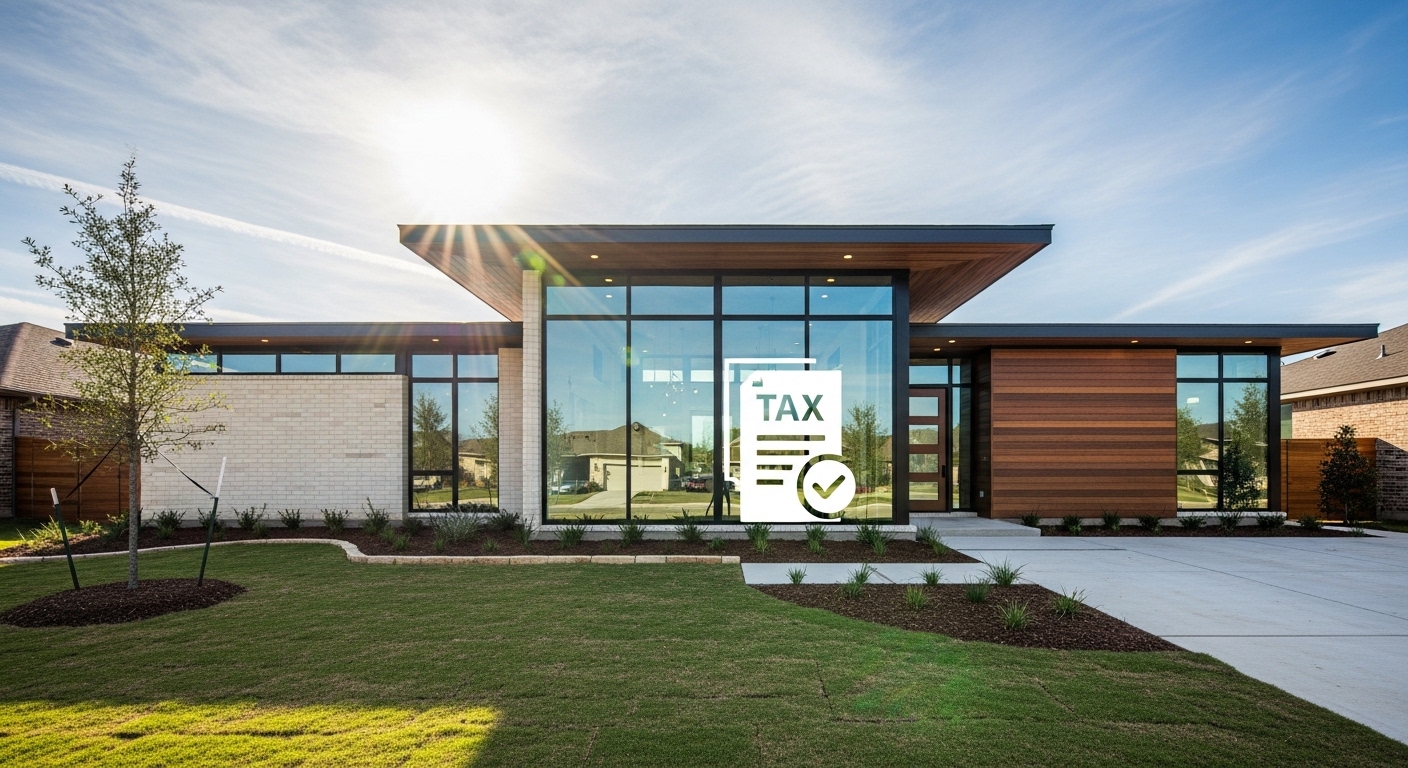
Honestly, yes. And in 2026, it’s easier than ever, but you have to play by the rules. We’re talking about the Energy Efficient Home Improvement Credit (part of the Inflation Reduction Act), and if you’re a Texas homeowner, this is basically a “thank you” from the IRS for making your house less of a burden on our power grid.
Look, I know “tax talk” usually makes eyes glaze over. But this is real money—$600 back in your pocket—that can turn an expensive upgrade into a much smarter financial move. If you’re ready to stop sweating your utility bills and start getting some of that cash back, I’ve got you covered. Let’s walk through exactly how this works.
Prerequisites: What You Need Before You Buy
Before you run out and buy the first windows you see on sale, there are a few things you have to have in place. Think of this as your “pre-flight checklist.” If you miss one of these, the IRS will likely bounce your claim, and nobody wants that.
- Ownership is Key: You have to be the owner of the home, and it has to be your primary residence. Sorry, this doesn’t apply to landlords or flippers (usually).
- The “Energy Star” Rule: Not every window counts. In 2026, the windows must meet the most recent Energy Star Most Efficient criteria for our climate zone. In Texas, that usually means a focus on high-performance energy efficient windows.
- A Tax Liability: This is a non-refundable credit. That’s a fancy way of saying it can reduce the taxes you owe, but if you don’t owe any taxes, the government won’t send you a check for the difference.
- Paperwork Patience: You’ll need to keep your receipts and the “Manufacturer’s Certification Statement” (a piece of paper that proves the windows are as good as they say they are).
Step-by-Step: Claiming Your $600 Credit
Step 1: Verify the Ratings (The “Most Efficient” Standard)
Here’s where a lot of people trip up. Just because a window says “energy efficient” on the box doesn’t mean it qualifies for the tax credit. The IRS is picky. You need to make sure the specific model you’re choosing—whether it’s the Pella 250 Series or an Energy Master unit—is certified for the 2026 tax year.
Outcome: You’ll have a window that doesn’t just look good but actually performs well enough to meet federal standards.
Step 2: Get a Professional Installation
While you can DIY your windows, I wouldn’t recommend it if you want to maximize your value. In Texas, if those windows aren’t sealed perfectly, the energy savings go right out the window (pun intended). More importantly, the tax credit covers 30% of the material costs, but having a professional new window installation ensures you get the proper itemized invoice you’ll need for your taxes.
Warning: Make sure your contractor gives you an invoice that separates the cost of the windows from the cost of the labor. The tax credit only applies to the glass and frames, not the hourly rate of the crew.
Step 3: Collect Your Manufacturer’s Certification
When your windows are delivered, or after the job is done, ask your installer for the Manufacturer’s Certification Statement. This is a signed document from the window company stating that the product meets the IRS requirements for Section 25C.
Tip: Don’t just stick this in a random junk drawer. Scan it. Email it to yourself. Keep it with your tax documents for at least three years.
Step 4: File IRS Form 5695
When tax season rolls around in early 2027, you’ll need to fill out IRS Form 5695 (Residential Energy Credits). This is where you’ll input the total amount you spent on the windows.
Expected Outcome: The form will calculate 30% of your costs, up to that $600 annual cap. That amount will then be applied to lower your tax bill.
Visualizing the Savings
It helps to see the numbers laid out. Here’s a quick breakdown of how the math usually shakes out for a typical Texas home project.
| Project Detail | Cost/Limit | Tax Credit Impact |
| Total Window Purchase | $5,000 | 30% of $5,000 = $1,500 |
| Annual Federal Credit Cap | $600 | You get $600 |
| Remaining Savings | $0 | The credit doesn’t carry over |
| Max Exterior Door Credit | $250 per door | Max $500 per year |
Note: Since the credit is capped at $600 per year for windows, some homeowners actually split their project. They might do half the house in December and the other half in January to claim $600 in two different tax years. It’s a bit “messy” for the construction schedule, but it’s a pro move for the wallet.
Troubleshooting Common Issues
- “My window company doesn’t have the certification statement.” – This is a red flag. Most reputable companies have these readily available on their website. If they can’t provide it, the windows probably don’t qualify.
- “I spent $10,000, why am I only getting $600?” – This is the most common frustration. The credit is 30% of the cost, but it is capped at $600 annually for windows. Think of it as a nice discount, not a total subsidy.
- “Does this cover my sliding glass door?” – Actually, yes! Doors have a separate cap ($250 per door, $500 total). If you’re doing sliding glass patio doors along with windows, you could potentially get up to $1,100 back total ($600 windows + $500 doors).
Expert Insights for 2026
If I were sitting across from you at a coffee shop, here is the “insider” advice I’d give you:
- Don’t wait until the end of the year. By November and December, installers are usually slammed with people trying to get their project done before the tax year ends.
- Verify the “Most Efficient” tag. ENERGY STAR updates their criteria frequently. A window that qualified in 2024 might not qualify in 2026. Always look for the specific “Most Efficient 2026” label.
- Combine with local rebates. In many parts of Texas, your local utility provider (like CenterPoint or Oncor) might have their own rebates. You can often “stack” these on top of the federal credit.
- Think about your doors. If you’re doing a custom door installation, make sure those are also Energy Star rated. It’s a separate bucket of money from the window credit.
Summary & Next Steps
Upgrading your windows in Texas is one of the few home projects that truly pays you back twice—once every month on your electric bill, and once a year on your taxes.
Recap of your plan:
- Choose windows that are “Energy Star Most Efficient 2026.”
- Get an itemized invoice that separates materials from labor.
- Secure the Manufacturer’s Certification Statement.
- File Form 5695 with your taxes.
Look, I know $600 won’t pay for the entire project, but it’s a significant chunk of change that belongs in your pocket, not the government’s. If you’re ready to get started and want to make sure you’re choosing windows that definitely qualify for the credit, contact us today. We’ve helped plenty of your neighbors navigate this, and we’d love to help you do the same.
Ready for a cooler home and a smaller tax bill? Request a free estimate and let’s get those new windows rolling. You’ll thank yourself when August hits—and again in April!