
When it comes time to re-side your home, the battle usually comes down to two heavyweights: Vinyl and Fiber Cement. Both have loyal followings, and both have improved significantly over the last two decades.
However, they are fundamentally different materials with different lifespans, costs, and performance profiles—especially in the Texas heat. Let’s break down the pros and cons to help you decide which one deserves a spot on your walls.
1. Composition: What are they made of?
- Vinyl: Made from PVC (polyvinyl chloride) plastic. It is lightweight and the color is baked through the material.
- Fiber Cement: A composite of cement, sand, and cellulose fibers. It is heavy, rigid, and mimics the look of natural wood grain and texture.
2. Durability and Heat Resistance
- Vinyl (Pros): It is flexible. It won’t rot.
- Vinyl (Cons): This is where Texas hurts vinyl. In extreme heat, vinyl expands and contracts significantly. If nailed too tightly, it buckles. Standard vinyl can melt if your neighbor’s energy-efficient windows reflect concentrated sunlight onto it. It can also crack upon impact (like from a baseball or hail).
- Fiber Cement (Pros): It is dimensionally stable. It does not expand or contract with temperature swings. It is fire-resistant and rot-proof.
- Fiber Cement (Cons): It can crack if the house foundation shifts significantly, as it is rigid.
3. Aesthetics and Curb Appeal
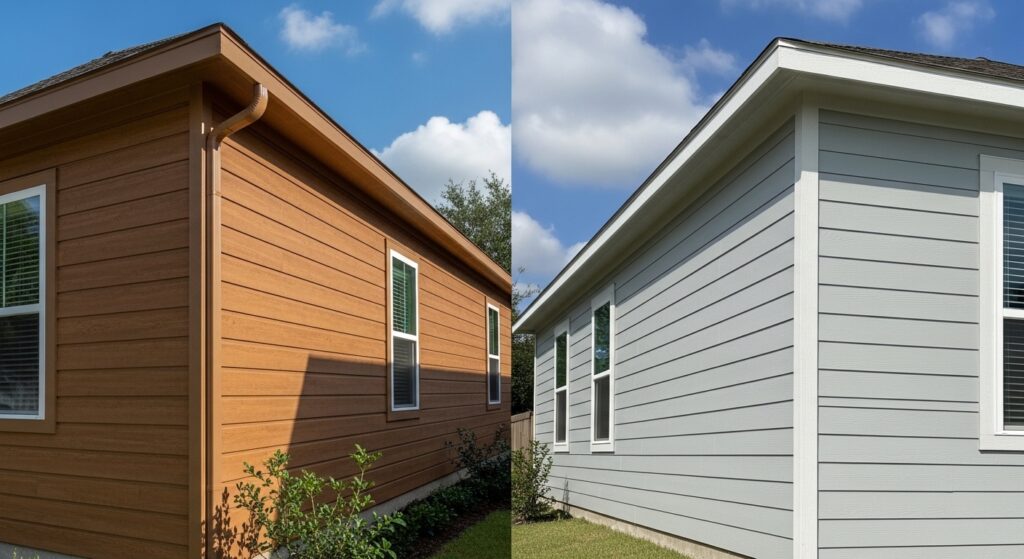
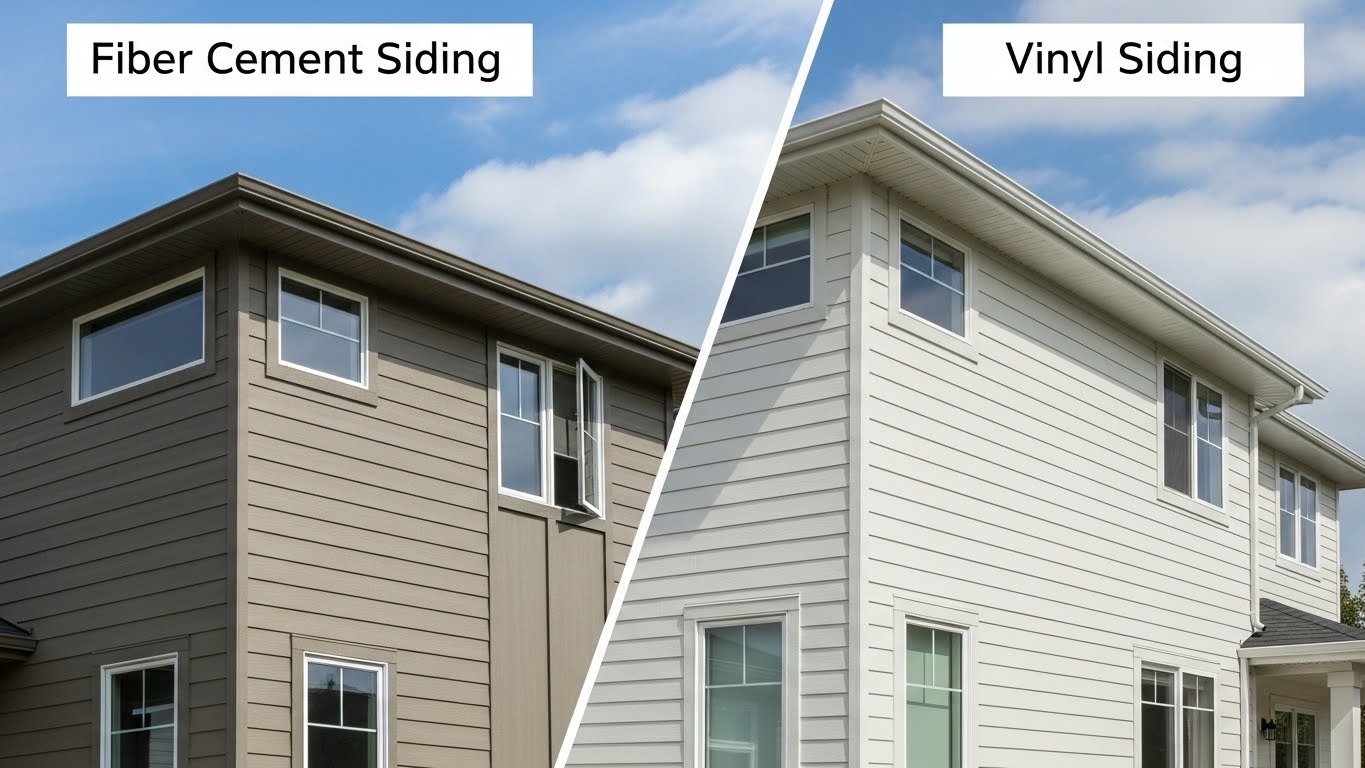
- Vinyl: It looks like… vinyl. While premium brands have better textures, the seams are usually visible where panels overlap.
- Fiber Cement: It looks remarkably like high-end wood clapboard. It is thicker, providing deeper shadow lines that architects love. It creates a more upscale, substantial appearance.
4. Maintenance
- Vinyl: The ultimate low-maintenance material. You never have to paint it. Just wash it down with a hose once a year.
- Fiber Cement: It holds paint exceptionally well (much better than wood), usually lasting 10-15 years before needing a repaint. However, it will eventually need to be painted.
5. Cost Comparison
- Vinyl: The clear winner on price. It is cheaper to buy and much faster to install, which lowers labor costs.
- Fiber Cement: It is heavier and requires specialized tools and more manpower to install. Expect to pay 30% to 50% more for fiber cement than for vinyl.
The Verdict for Texas Homeowners
If your primary goal is the lowest upfront cost and you are willing to accept a slightly “plastic” look, Vinyl is a solid choice.
However, if your goal is longevity, ROI (Return on Investment), and storm resistance, Fiber Cement is the superior choice for the Gulf Coast. It withstands our hurricanes, resists our humidity, and adds more resale value to the home.
Many homeowners we work with choose fiber cement specifically for the peace of mind during storm season. If you are interested in upgrading, we specialize in siding installation and replacement in Harris County, and we can show you samples of both to help you feel the difference.
For more community discussions on durability, you can often find homeowners sharing their long-term experiences on platforms like Reddit’s Home Improvement.