
The Ladder Struggle is Real
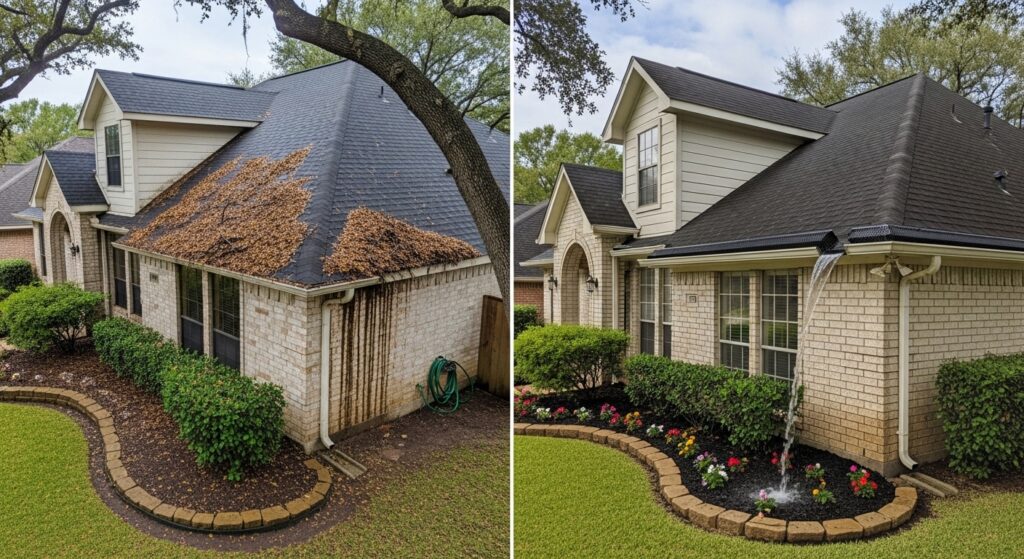
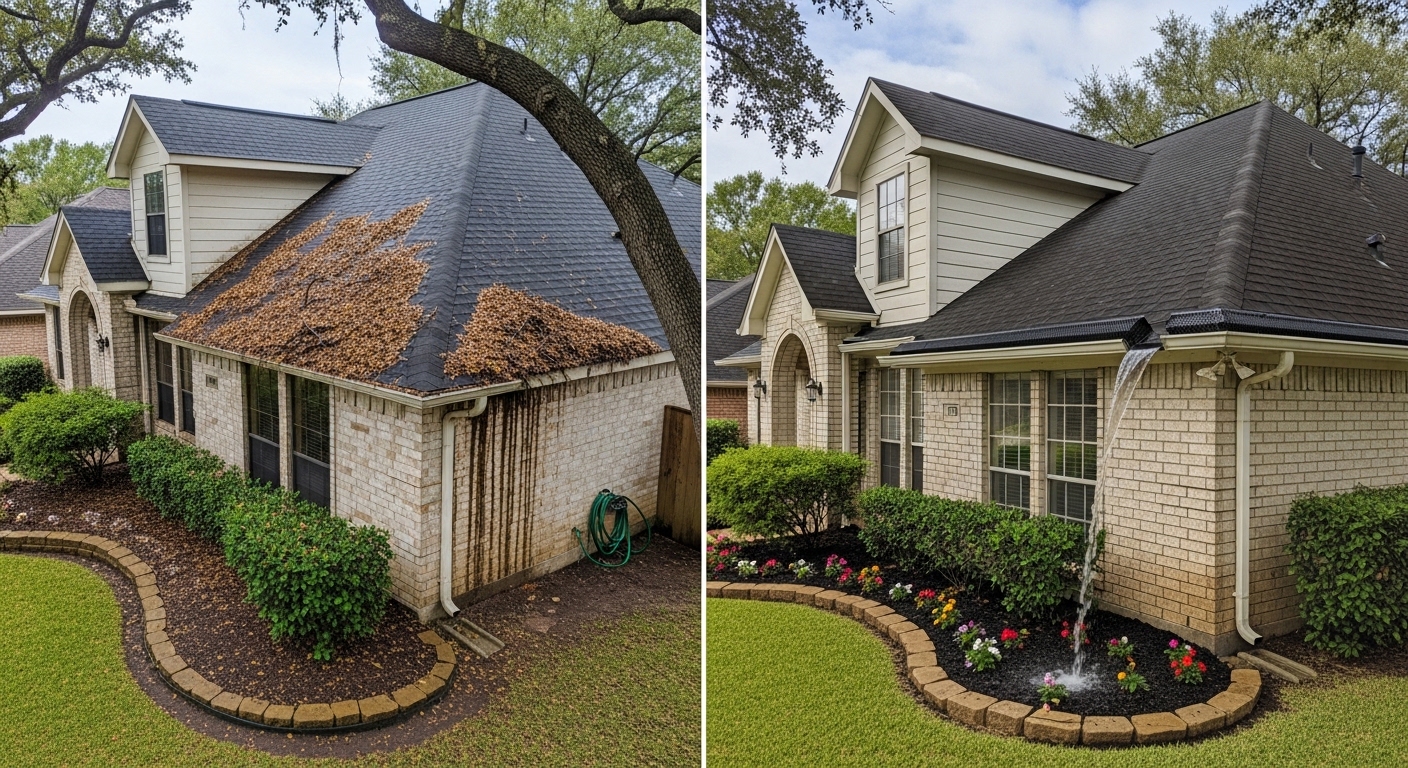
I want you to picture something for a second. It’s a Saturday morning in November. The humidity has finally dipped below “sauna” levels, and you’ve got a choice. You could be sitting on your patio with a coffee, or you could be teetering on a rickety aluminum ladder, digging handfuls of slimy, gray oak tassels and pine needles out of your gutters.
If you’re like most Houston homeowners, you’ve probably had that second thought: There has to be a better way. Between our massive live oaks and the occasional tropical deluge that turns your backyard into a small lake, gutters do a lot of heavy lifting around here. When they clog, the water doesn’t just stop; it overflows, rots your fascia boards, and eventually messes with your foundation. It’s a mess.
But are gutter guards actually the “set it and forget it” miracle the late-night commercials claim they are? Honestly, it’s complicated. Some are great, some are basically expensive plastic trash, and for some houses, they might not be necessary at all.
Before we dive into the nitty-gritty, if you’re already seeing water pouring over the sides of your house like a waterfall, you might need a pro to take a look. You can request a quote for a full gutter evaluation or repair before you spend a dime on guards.
Overview of the Options: What Are We Dealing With?
Not all guards are created equal. If you walk into a big-box store in Pasadena or Conroe, you’ll see a dizzying array of stuff. Generally, they fall into four main buckets:
- Screen Guards: These are the “OG” guards. Usually plastic or metal sheets with holes in them.
- Micro-Mesh: Think of this like a high-tech window screen for your gutters. The holes are tiny.
- Surface Tension (Reverse Curve): These look like a solid hood over your gutter with a small slit.
- Foam or Brush Inserts: Basically big sponges or “bottle brushes” that sit inside the trough.
Detailed Comparison: The Good, The Bad, and The Messy
1. Micro-Mesh Guards (The High-Performer)
These are widely considered the “gold standard” by professionals. They consist of a support frame with a very fine stainless steel mesh on top.
- Pros: They block almost everything—pine needles, oak tassels, even shingle grit. Because the mesh is so fine, nothing gets a foothold to sprout into a “gutter garden.”
- Cons: They’re the most expensive option. Also, if you don’t get the angle right during installation, heavy Houston rain can sometimes “overshoot” the gutter and spill over the front.
- Best For: Homes with heavy tree cover, especially those pesky pine needles in The Woodlands or Kingwood.
- Cost: High, but offers the best long-term value.
2. Screen Guards (The Budget Choice)
These are the most common DIY option. They either snap onto the gutter or slide under the first row of shingles.
- Pros: Very affordable and easy to find. They’ll keep the big maple leaves out without a problem.
- Cons: Small debris (like those oak “caterpillars”) gets stuck in the holes. Eventually, you’ll have to take the screens off just to clean the gunk out of the gutter anyway.
- Best For: Homeowners on a budget who only have large-leaf trees nearby.
- Cost: Low.
3. Surface Tension Guards (The Heavy Hitter)
These work on the principle of water adhesion. Water follows the curve into the gutter, while leaves are supposed to shoot off the edge.
- Pros: They are incredibly sturdy. If a heavy branch falls, these are the least likely to dent.
- Cons: Bees and wasps love building nests in the gap. Also, in a true Houston downpour, the surface tension can break, leading to water overshooting the gutter and hitting your flower beds.
- Best For: People who want a permanent, structural look and have fewer small-needle trees.
- Cost: Medium to High.
4. Foam and Brush Inserts (The “Quick Fix”)
You just shove these into the gutter. No screws, no snapping.
- Pros: Anyone can install them in an afternoon. No tools required.
- Cons: Honestly? I’m not a fan. The foam eventually traps silt and becomes a literal petri dish for weeds. The brushes trap leaves like a hairbrush traps… well, hair.
- Best For: Temporary solutions only.
- Cost: Low.
Side-by-Side Comparison for Houston Homes
| Feature | Micro-Mesh | Screen Guards | Surface Tension | Foam/Brush |
| Blocks Pine Needles | Excellent | Poor | Good | Poor |
| Handles Heavy Rain | Good | Excellent | Fair | Fair |
| Durability | High | Low | Very High | Low |
| Maintenance Need | Very Low | Medium | Low | High |
| DIY Friendly? | Hard | Easy | Professional Only | Very Easy |
Expert Recommendations: What I’ve Seen in the Field
Look, after years of looking at gutter and exterior services in Houston, I’ve developed a bit of an opinion.
If you live in an area like Memorial or the Heights with those gorgeous, massive old trees, Micro-mesh is the only way to go. Everything else will eventually clog with the small stuff.
However, if your house is in a newer development with only tiny “builder-grade” trees that are 10 feet tall, you might not need guards at all. A simple professional gutter cleaning once a year is probably cheaper than an expensive guard system.
Pro Tip: Never buy gutter guards that slide under your shingles if your roof is still under warranty. Some manufacturers will void your warranty if they find anything tucked under that first row. Always look for “fascia-mounted” options.
Decision Framework: Should You Buy?
Ask yourself these four questions:
- Can I see my roof from the ground? If you have a two-story home, cleaning gutters is dangerous. Guards are an investment in your physical safety.
- What kind of trees do I have? Pine needles = Micro-mesh. Large leaves = Screens or Surface Tension. No trees = Save your money.
- Is my foundation okay? If you already have cracks in your brick or foundation, keeping water away from the house is non-negotiable. Guards help ensure that happens.
- How long am I staying? If this is your “forever home,” get the high-quality gutter downspout services and guards. If you’re moving in a year, stick to a basic cleaning.
Frequently Asked Questions
Do gutter guards mean I never have to clean them again?
I wish I could say yes, but it’s a “no.” You’ll still need to blow off the top of the guards once in a while, and every few years, a pro should check for silt buildup inside. But instead of twice a year, it becomes once every five years.
Will they make my roof look ugly?
Most modern guards are low-profile and match your gutter color. You’ll barely notice them from the street.
Can they handle a hurricane or tropical storm?
A well-installed micro-mesh or surface tension system is very sturdy. However, no gutter on earth can handle 4 inches of rain in 30 minutes without some splashing. The goal is to manage the 95%, not the 5% “act of God” storms.
The Bottom Line
Gutter guards are like an insurance policy for your weekends. Are they “worth it”? For most Houston homeowners, yes—provided you choose the right type for your specific trees.
Don’t let a $500 gutter problem turn into a $15,000 foundation problem because you didn’t want to climb a ladder (and honestly, who can blame you?). If you’re tired of the muck and the heights, take a look at our exterior services in Harris County to see how we can help secure your home.
It’s about more than just leaves. It’s about not having to worry when the clouds turn that specific shade of Texas gray.
Would you like me to create a quick maintenance calendar so you know exactly when to check your gutters based on our local Houston seasons?