
The Invisible Weight: Survival Tips for Houston’s Humidity
If you’ve lived in Houston for more than five minutes, you know the feeling. You step outside, and it’s like walking into a warm, wet blanket. Your glasses fog up instantly, and within seconds, you’re wondering if you should’ve just stayed in the shower because you’re about that wet anyway.
But while we’re busy complaining about the “air you can wear,” our houses are quietly taking a beating. Humidity isn’t just an inconvenience for your hair; it’s a constant, relentless force acting on your home’s exterior. We often talk about hurricane winds or the occasional freak freeze, but the day-to-day moisture is what really does the heavy lifting when it comes to wear and tear.
I’ve spent years looking at homes from Sugar Land to The Woodlands, and I can tell you: humidity is the slow-motion disaster. It sneaks into the cracks, feeds the mold, and warps the wood. Understanding how Houston’s humidity affects your roof, siding, and windows is the first step to making sure your home stays a sanctuary and doesn’t turn into a science project.
If you’re already seeing some fuzzy green stuff on your shingles or your windows are looking a bit foggy, don’t panic. You might just need some reliable roof repairs in Texas to get things back on track. Let’s break down exactly what this moisture is doing to your home.
1. The Shingle Struggle: Granule Loss and Algae
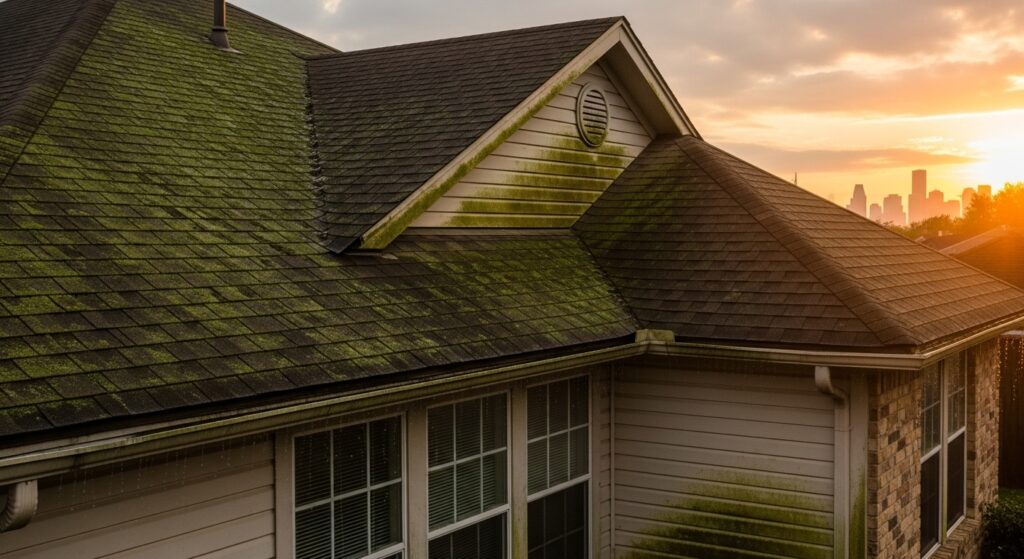
Your roof is the first line of defense, but it’s also the most exposed. In Houston, the high humidity combined with intense UV rays creates a “pressure cooker” effect. Constant moisture softens the asphalt in your shingles, making it easier for the protective granules to wash away. Once those granules are gone, your roof is basically sunbathing without sunscreen.
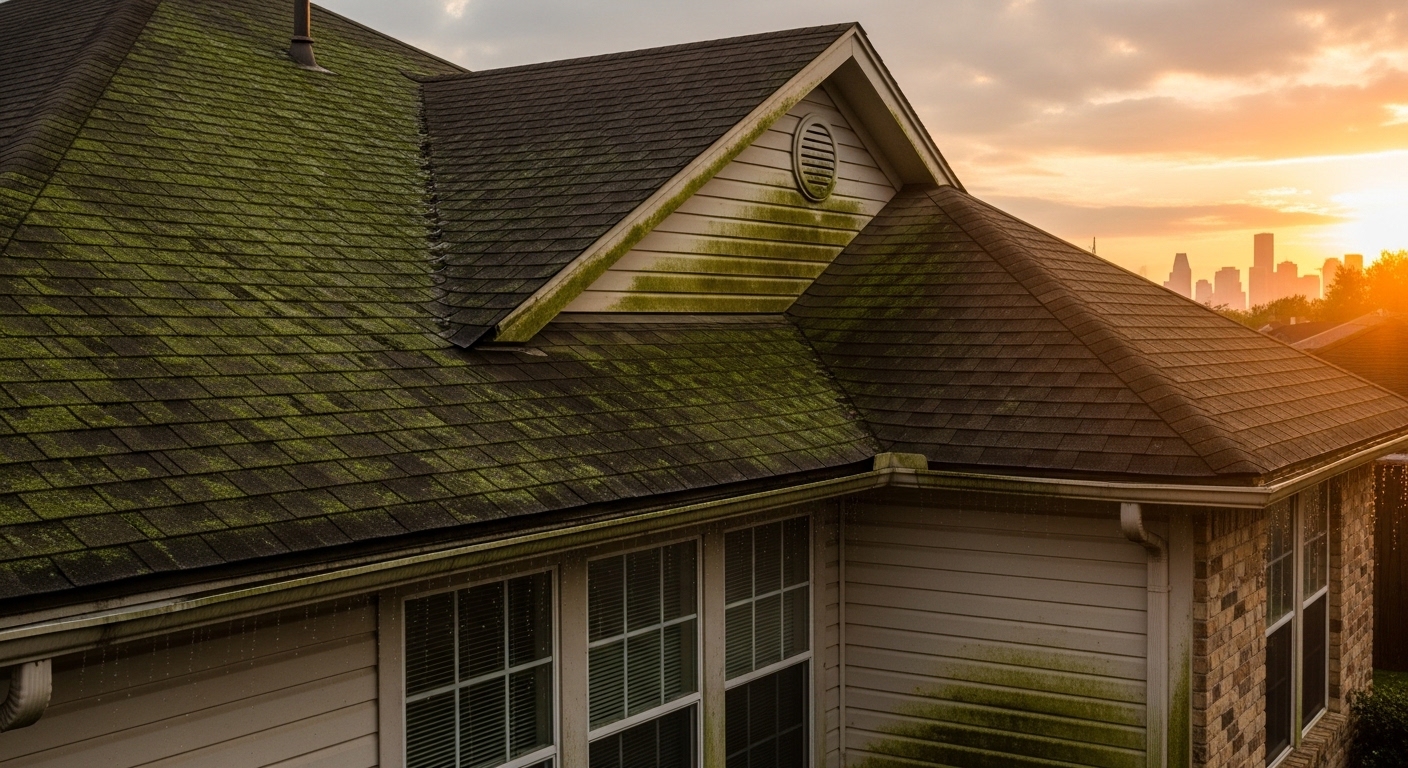
Then there’s the Gloeocapsa magma. Sounds like a space monster, right? It’s actually that black, streaky algae you see on so many roofs around Harris County. It thrives in our humid air and literally eats the limestone filler in your shingles.
Real-World Scenario: I once walked a roof in Pasadena where the homeowner thought they had “burn marks” from the sun. It turned out to be deep-seated algae that had been holding moisture against the shingles for years, leading to premature rot in the decking underneath.
Quick Insight: Those black streaks aren’t just an “aesthetic issue.” They are a living organism that’s actively shortening the lifespan of your roof.
2. Siding Stress: Expansion and The “Green Wall”
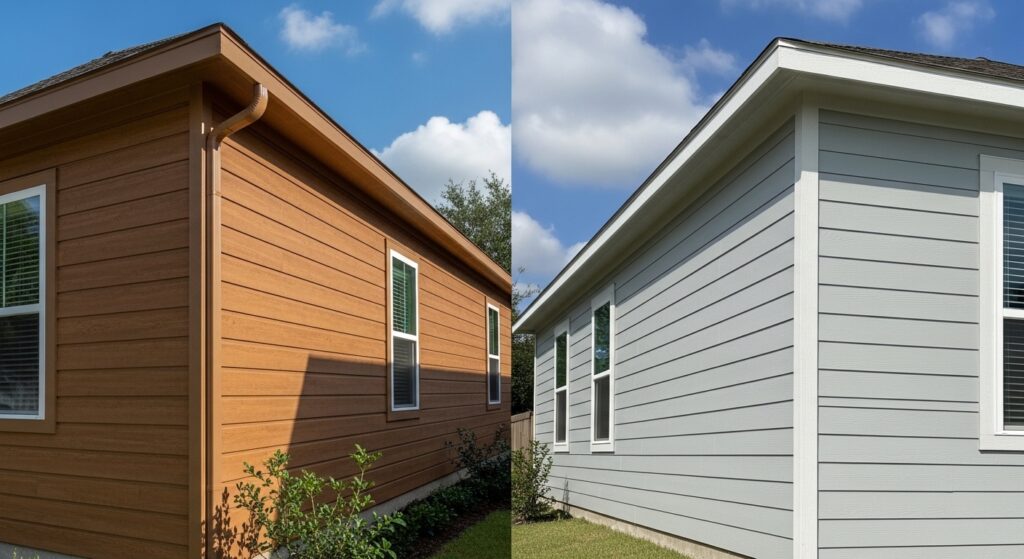
Whether you have wood, vinyl, or even fiber cement, humidity is trying to find a way in. Wood siding is the most vulnerable; it breathes, which means it expands when it’s wet and contracts when it (rarely) dries out. This constant movement pulls at the nails and cracks the paint.
Once the paint cracks, Houston’s humidity moves in like an unwanted houseguest. You’ll start seeing mold and mildew—that classic “green wall” effect—especially on the north side of the house where the sun doesn’t reach. If you’re seeing significant warping, it might be time to look into siding installation in Texas using materials that handle moisture better.
Real-World Scenario: Think about a sponge. When it’s wet, it’s soft and big. When it dries, it’s hard and small. Now imagine your house doing that every single day for ten years. Eventually, things just stop fitting together correctly.
Pro Tip: Keep your bushes trimmed at least 12 inches away from your siding. Airflow is the natural enemy of humidity-induced mold.
3. Window Woes: Seal Failure and Fog
Humidity is a master at finding the weakest link, and in many homes, that’s the window seals. Modern double-pane windows have a “spacer” filled with gas. In Houston, the extreme temperature difference between your 72°F living room and the 95°F, 90% humidity patio creates massive “vapor pressure.”
This pressure forces moisture into the space between the panes. If you see fog or water droplets inside the glass that you can’t wipe away, your seal has failed. At that point, your window is no longer “energy efficient”—it’s just a blurry hole in your wall.
Real-World Scenario: I’ve seen homeowners in Pearland try to “drill” holes in their windows to let the moisture out. Honestly? Don’t do that. It doesn’t work and ruins the window. If the seal is gone, you’re better off looking at new window installation in Harris County.
Quick Insight: Failed seals don’t just look bad; they increase your AC bill because the window has lost its insulating power.
4. Attic Ventilation: The “Indoor Rain” Phenomenon
Here is the part most people miss: humidity isn’t just outside. If your attic isn’t vented properly, all that humid air gets trapped up there. When the sun goes down and the temperature drops, that moisture condenses on the underside of your roof deck.
It literally starts “raining” in your attic. This leads to rusted nails, moldy insulation, and eventually, a call for a full roof replacement in Texas because the plywood has turned into mush.
Real-World Scenario: I’ve been in attics in Baytown where the humidity was so high you could see water dripping from the roofing nails like tiny stalactites. The homeowner thought they had a leak, but it was actually just a ventilation problem.
Pro Tip: Make sure your soffit vents (the ones under your eaves) aren’t blocked by insulation. They are the “intake” for your attic’s breathing system.
Comparison: How Different Materials Handle Humidity
| Component | Common Issue | Humidity Resistance | Best Solution |
| Asphalt Shingles | Algae & Granule Loss | Moderate | Algae-resistant shingles |
| Wood Siding | Rotting & Warping | Low | Regular painting or replacement |
| Fiber Cement | Minimal | High | James Hardie or LP SmartSide |
| Vinyl Windows | Seal Failure | High (Frame) | High-quality Low-E glass |
| Metal Gutters | Rust (if steel) | Moderate | Seamless Aluminum |
Key Takeaways for Houston Homeowners
- Airflow is King: Whether it’s your attic or your landscaping, keeping air moving helps dry out moisture before it causes damage.
- Don’t Ignore the Green: Mold and algae are warning signs. Clean them early, but be careful with high-pressure washing on shingles!
- The “Fog” is Real: Foggy windows aren’t just a nuisance; they are a sign of total component failure.
- Inspect Semi-Annually: Check your exterior in the spring and fall. Look for peeling paint, soft wood, or black streaks on the roof.
- Check the Ventilation: Ensure your roof has adequate ridge and soffit vents to prevent “attic rain.”
Wrapping It Up
Look, we love Houston for the food, the people, and the lack of snow shoveling. But the humidity is the price we pay. It’s a silent, constant worker that never takes a day off. By staying on top of small repairs and choosing moisture-resistant materials when it’s time for an upgrade, you can keep your home dry and sturdy for decades.
Think of your home’s exterior as its “skin.” If you don’t take care of it in this climate, it’s going to age a lot faster than it should. But with a little bit of vigilance—and the right local pros in your corner—you can beat the swamp.
Not sure if your home is winning the battle?
We’ve seen it all, and we know exactly where the humidity likes to hide. If you’re worried about a soft spot on your roof or a foggy window, let’s take a look. You can request a quote today, and we’ll give you an honest assessment of how your home is holding up.
Would you like me to look up the current recommendations for the best algae-resistant shingle brands available in the Houston market for 2026?