
Roof Lifespan in The Woodlands
If you’ve lived in The Woodlands for more than a few months, you know the deal. Our “forest” is beautiful, but the climate is basically a persistent assault on your house. One day it’s 100 degrees with humidity that makes you feel like you’re breathing soup, and the next, we’re tracking a tropical disturbance in the Gulf or ducking for cover from a spring hail storm.
I’ve had so many coffee-table chats with neighbors in Cochran’s Crossing and Sterling Ridge who ask the same thing: “My shingle warranty says 30 years… why is my roof falling apart at year 15?”
Honestly, it’s because those laboratory “warranty” numbers don’t account for the Montgomery County reality. Here’s the truth: your roof’s lifespan isn’t a fixed number; it’s a countdown that speeds up or slows down based on how you treat it. Today, we’re going to walk through how to estimate your roof’s remaining life and, more importantly, how to stretch that time as long as humanly possible.
If you’re already seeing shingles in your yard after a windy night, don’t panic—just reach out for a reliable roof repair before a small leak becomes a major renovation project.
Prerequisites: What You Need to Know First
Before we get into the nitty-gritty, you need to have a few facts on hand. Think of this as the “medical history” for your house:
- Installation Date: If you bought your home recently and aren’t sure, check your inspection report or the local building permit records.
- Material Type: Are you rocking standard asphalt, premium architectural shingles, or metal?
- The “Tree Factor”: Look up. Are there pine branches hanging directly over your roof? (In The Woodlands, the answer is almost always “yes.”)
- Recent Storm History: Have we had a documented hail event in your specific village in the last 24 months?
Step-by-Step: Evaluating and Extending Your Roof’s Life
Step 1: Identify Your Baseline Lifespan
Not all roofs are created equal. In our specific humid subtropical climate, here is what we actually see on the ground (regardless of what the brochure says):
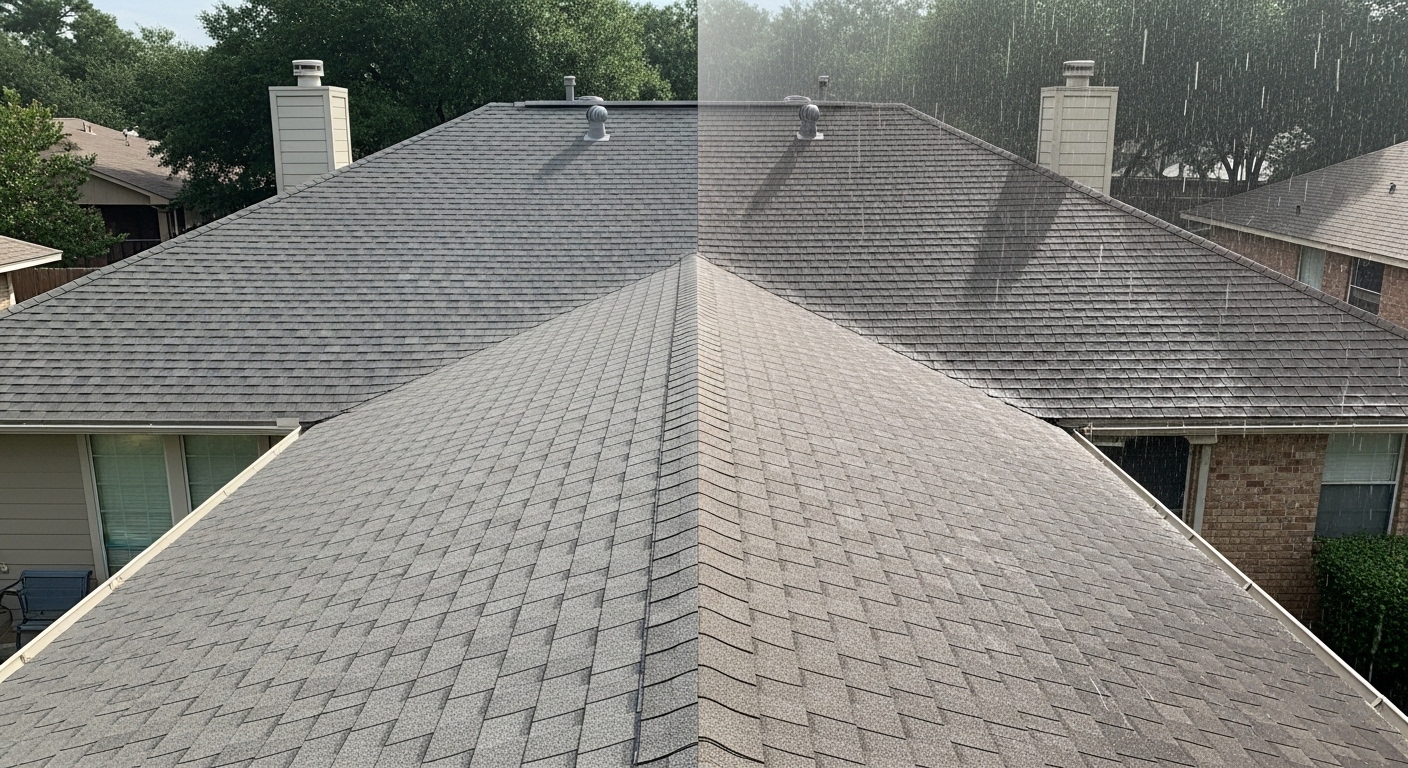
- 3-Tab Asphalt Shingles: Expect 12–15 years. They are thin and the Texas sun eats them for breakfast.
- Architectural Shingles: Usually 18–22 years. They’re the “Goldilocks” choice for our area.
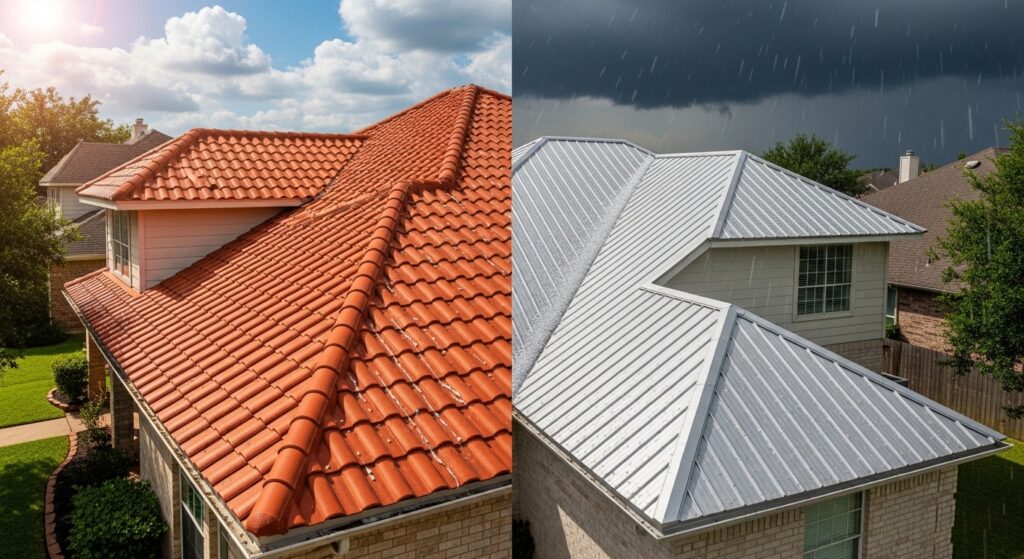
- Metal Roofing: These can easily go 40–50+ years. They’re basically the tanks of the roofing world.
- Clay/Concrete Tile: Expect 30–50 years, though the underlayment (the waterproof stuff underneath) usually fails around year 20.
The “Woodlands Warning”: If you have zero shade and your attic isn’t vented properly, shave 20% off those numbers. Heat is the silent killer of roofing adhesives.
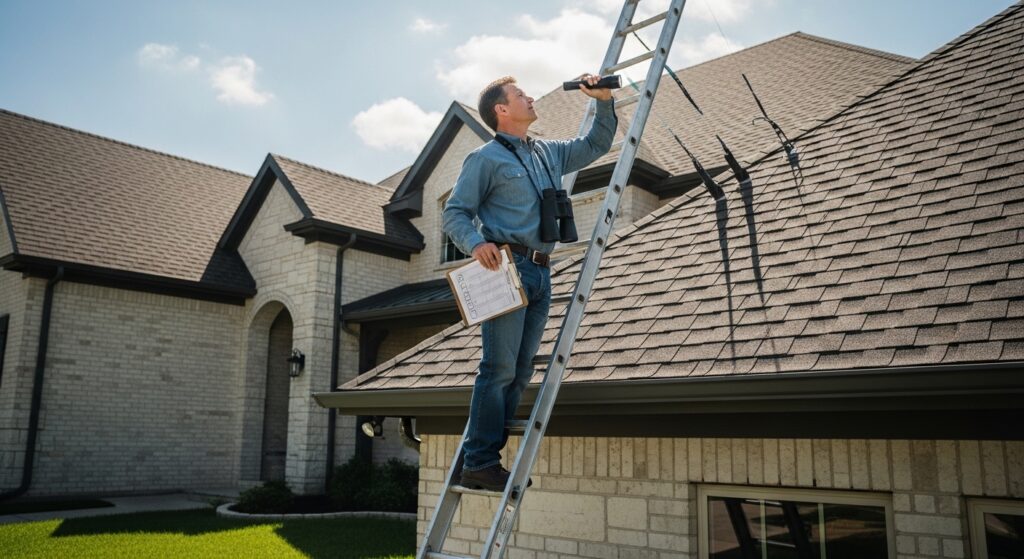
Step 2: The “Binocular Inspection” (Safety First!)
You don’t necessarily need to climb a ladder to see the warning signs. Grab a pair of binoculars and stand in your driveway. Look for:
- Granule Loss: Does the roof look “bald” or shiny in spots?
- Curling/Cupping: Do the edges of the shingles look like they’re trying to peel away from the roof?
- The “Valley” Check: Look where two roof sections meet. Is there a pile of pine needles? That’s a rot-factory waiting to happen.
Expected Outcome: You’ll have a clear idea if your roof is “aging gracefully” or “failing fast.” If the shingles look like burnt toast, it’s time to talk about a roof replacement.
Step 3: Manage the “Micro-Climate” Around Your Home
This is where you actually take control. The “Woodlands” part of our name is the biggest threat to our roofs.
- Trim the Canopy: Keep branches at least 6–10 feet away from the roofline. Squirrels use them as highways, and branches provide shade that prevents the roof from drying out, which leads to…
- Fight the Algae: Those black streaks you see? That’s Gloeocapsa magma. It’s an algae that feeds on the limestone in your shingles. It’s not just ugly; it’s literally eating your roof.
- Clean the Gutters: If water backs up under your shingles because the gutter and downspout system is clogged with pine needles, you’re going to get rot. Period.
Step 4: Audit Your Attic Ventilation
I can’t stress this enough: Your roof is a system. If your attic is hitting 140°F in July, it’s cooking your shingles from the inside out.
- Check that your soffit vents aren’t blocked by insulation.
- Make sure your ridge vent is clear of debris.
- If your upstairs is always 10 degrees hotter than your downstairs, your roof lifespan is currently being cut short.
Troubleshooting: Common Lifespan “Short-Circuits”
Sometimes, a roof fails way before its time. Here’s why that usually happens in our area:
- The Problem: Black mold or moss growth.
- The Fix: Professional soft-wash (never pressure wash shingles!) and trimming trees to let in more sunlight.
- The Problem: “Popped” nails (shingles lifting up in a small bump).
- The Fix: This usually means the roof was installed in the dead of winter or by a crew that rushed the job. You need a pro to re-secure those before wind catches them.
- The Problem: Frequent minor leaks after storm damage.
- The Fix: Get a specialized inspection. Sometimes it’s just the flashing around the chimney or a pipe boot that has dry-rotted in the sun.
Expert Tips for Better Results
Look, I’ve seen it all. If you want to be the person who gets 25 years out of a 20-year roof, do these three things:
- Annual “Check-Ups”: Have a roofer come out once a year—ideally after the spring storms. A $200 tune-up (caulking pipe boots, clearing valleys) can save you a $15,000 replacement for an extra 5 years.
- Don’t Ignore the “Black Streaks”: As soon as you see them, treat them. Once the algae takes hold, the damage to the shingle structure is permanent.
- Document Everything: Keep a folder of every repair and every inspection. If a big storm hits, having proof that your roof was in great shape makes the insurance claim assistance process a breeze.
Summary & Next Steps
So, how long does a roof last in The Woodlands? Honestly, most asphalt roofs here give up the ghost between 15 and 20 years. If you’re past the 15-year mark, you’re in the “red zone.”
But remember:
- Heat and Humidity are your roof’s biggest enemies.
- Maintenance (cleaning gutters, trimming trees) is your best defense.
- Ventilation is the secret sauce for a long-lasting shingle.
Don’t wait until you see a brown circle on your guest room ceiling. It’s always cheaper to be proactive. If you’re not sure where your roof stands, why not have a local expert take a look? We’d be happy to give you an honest assessment—no sales breath, just facts. Get started today and let’s make sure your home stays as dry as it is beautiful.
How old is your current roof? Have you noticed any of those black algae streaks starting to form? Let’s talk about it in the comments—I’m always around to answer questions!
Factors That Change Roof Service Life
Homes near Cochran’s Crossing may have different shade and canopy exposure than properties in Sterling Ridge or College Park. Evaluate the installed system and observed condition rather than relying on age alone.
| Factor | What to review |
|---|---|
| Material and installation | System components, flashing, fastening, manufacturer requirements, and workmanship |
| Ventilation and moisture | Intake and exhaust balance, condensation signs, and trapped heat or moisture |
| Trees and drainage | Branch contact, debris buildup, valleys, gutters, and drying conditions |
| Weather history | Wind, hail, falling debris, repairs, and when symptoms first appeared |
For next steps, visit the Woodlands roofing contractor hub, use the Woodlands roof maintenance checklist, and compare new-roof estimate factors.
Roof Lifespan FAQs
Why can two roofs of the same age be in different condition?
Material, installation, ventilation, drainage, shade, storm exposure, maintenance, roof geometry, and prior repairs can affect how two roofs age.
Does a manufacturer warranty predict the exact roof lifespan?
No. Warranty terms describe specific coverage and exclusions; they do not guarantee that every roof will remain in the same condition for the full stated period.
What signs justify a professional roof inspection?
Recurring leaks, missing or displaced material, damaged flashing, widespread surface change, sagging, storm impact, or uncertainty about safe roof access justify a professional assessment.
Can maintenance extend the useful life of a roof?
Timely debris removal, drainage care, tree management, ventilation review, and repair of confirmed problems can reduce avoidable stress, but maintenance cannot reverse material aging or extensive damage.