
A Tale of Two Thermostats
I remember visiting a client in Sugar Land a few years back. Let’s call him Mike. Mike had a beautiful home, great curb appeal, and a backyard that was basically a tropical oasis. But inside? Mike was living in what he called “the dark ages.”
He had these massive, heavy blackout curtains pulled shut over every single window in the house. In the middle of a Tuesday afternoon, his living room felt like a movie theater. When I asked him why, he just laughed—the kind of laugh that sounds a bit like a sob—and said, “Look, if I open those, my AC won’t stop running until October. I’m choosing between a view and a $500 electric bill.”
Mike had “double pane” windows. He thought he was protected. But here’s the thing: his double panes were just two sheets of glass with some air in the middle. In the Texas sun, that air was heating up like an oven, and that heat was seeping right into his living room.
It’s a frustration I hear all the time. You spend money on what you think is a solution, only to realize the “technology” you bought wasn’t quite up to the task of a Texas July. If you’ve ever felt like your windows were basically just heaters with a view, you’re not alone. We’re going to dig into why there’s a massive difference between “double pane” and “Low-E,” and which one actually wins the fight against our humidity and heat. (By the way, if you’re already tired of the heat and just want a pro to take a look, you can always request a quote and we’ll come do the heavy lifting for you.)
Connecting the Dots: It’s Not “Either/Or”
When people ask me, “Which is better, Low-E or Double Pane?” I usually have to start with a bit of a “gotcha” answer. Honestly, it’s like asking if a car is better than an engine. You kind of need both to get anywhere.
But the confusion is real because of how these things are marketed. Let’s peel back the curtain (pun intended) on what these terms actually mean for your home.
Double Pane: The Structural Base
Shutterstock
The goal here is to slow down the conduction of heat. Think of it like a coffee thermos. The air gap acts as a buffer so the heat outside has a harder time “touching” the air inside. For most of the country, this was the gold standard for decades. But in Texas? Plain double pane glass is like bringing a knife to a gunfight.
Low-E: The Invisible Shield
Low-E stands for “low-emissivity.” This isn’t a type of window; it’s a microscopic, metallic coating applied to the glass. It’s thinner than a human hair—you can’t even see it—but its job is totally different from the double pane structure.
While the double pane stops conduction (heat moving through touch), Low-E stops radiation (heat moving through light). It reflects infrared light (heat) back where it came from while letting visible light pass through.
Why Texas Homes Break the “Standard” Rules
Here is the cold, hard truth: In Texas, a double pane window without a Low-E coating is almost useless.
Our primary problem isn’t the air temperature outside; it’s the sun. The sun’s rays hit your glass, turn into heat, and get trapped inside. If you only have double pane windows, you’ve basically built a high-tech greenhouse. The heat gets in, and the double pane insulation actually prevents it from escaping.
Common Challenges I See Every Day
- The “Toaster” Effect: This is what Mike was dealing with. Even if his AC was pushing 60-degree air, the windows were radiating 90-degree heat directly onto his skin.
- Blown Seals: In the Texas heat, windows expand and contract like crazy. Lower-quality double panes lose their seal, the insulating gas leaks out, and suddenly you have foggy glass and zero insulation.
- Fading Furniture: Plain double pane glass lets in UV rays. I’ve seen beautiful hardwood floors and expensive leather sofas bleached white because the windows didn’t have a Low-E “sunscreen.”
Expert Insights: What You Actually Need to Look For
If you’re looking at new window installation, don’t get distracted by the fancy sales brochures. There are three things that actually matter for a Texas home.
1. The SHGC (Solar Heat Gain Coefficient)
This is the only number you should truly care about. It measures how much of the sun’s heat comes through the glass. In the North, they want a high number to help heat the house in winter. In Texas, we want it as low as possible. I usually recommend looking for an SHGC of 0.25 or lower.
2. Spectrally Selective Coatings
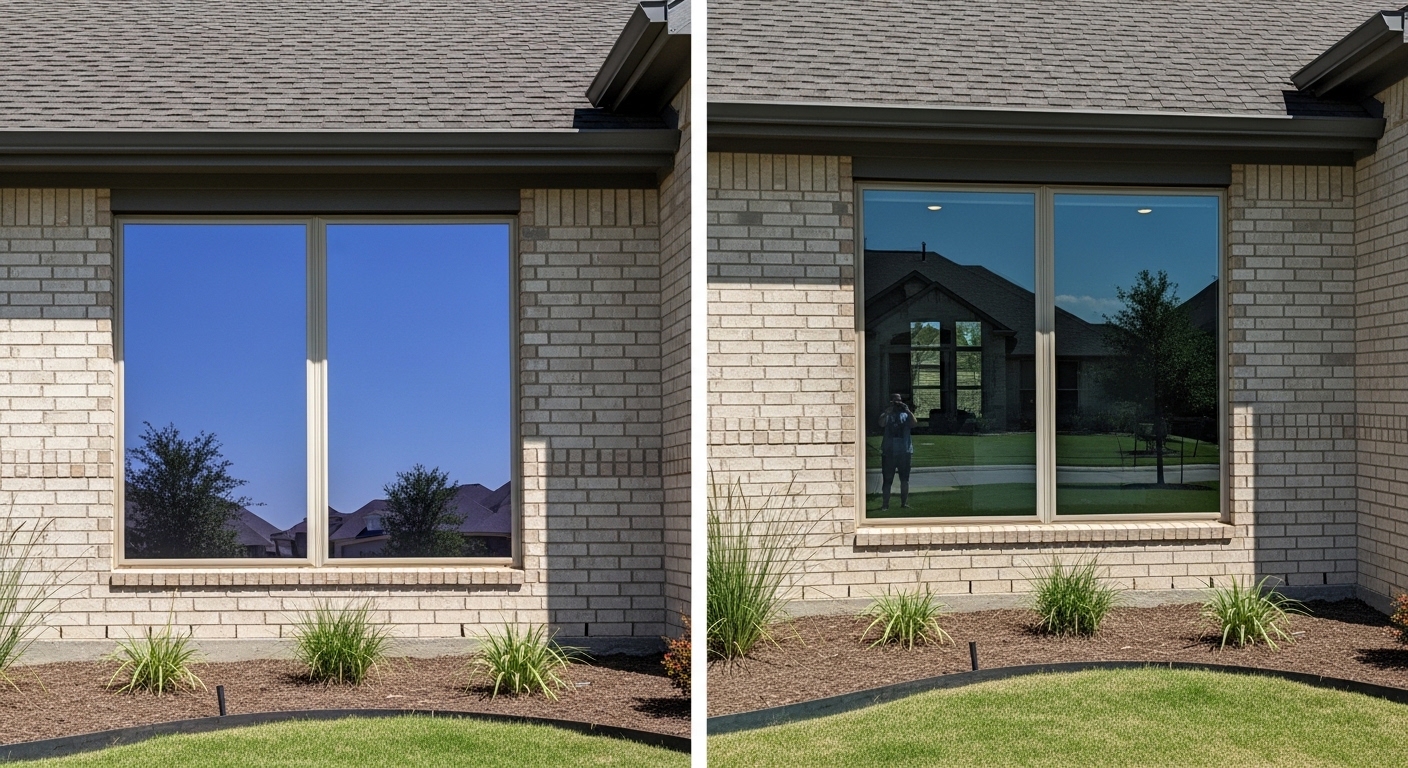
Not all Low-E is the same. Some “cheap” coatings make your windows look like a green tinted mirror from the 90s. You want “spectrally selective” coatings. They are engineered to block the heat-heavy parts of the spectrum while keeping your view crystal clear. High-quality options like the Pella 250 Series do this incredibly well.
3. Argon Gas Fill
Since you’re getting double panes anyway, make sure the gap is filled with Argon gas. It’s denser than air and provides much better insulation. It’s essentially the “stuffing” in your home’s winter coat, except it works to keep the cool air in during our 10-month summers.
How to Apply This to Your Home
So, what do you actually do with this info? If you’re starting to plan a window replacement in Harris County, here’s my “boots on the ground” advice:
- Audit the “Sun Side”: You don’t always have to do the whole house at once. If your budget is tight, prioritize the windows that face South and West. That’s where the sun does the most damage to your electric bill.
- Check Your Current Glass: Go stand by a window at 3:00 PM today. If the glass feels hot to the touch on the inside, you don’t have Low-E. If there is fog between the panes, your double pane has failed.
- Look for the Energy Star Label: It sounds basic, but in 2026, the Energy Star requirements for the Southern Zone are actually quite strict. If a window meets those, it’s a safe bet for Texas.
FAQ: Clearing Up the Fog
1. Is Low-E glass worth the extra cost? Honestly? Yes. Every single time. In Texas, the “payback” period through energy savings is much faster than in milder climates. You’re typically looking at a 20-30% drop in cooling costs.
2. Can I just add a Low-E film to my current windows? You can, but I’m not a fan. After-market films can trap heat inside the glass unit and cause the seal to fail or the glass to crack. It’s a “band-aid” fix that often creates a bigger bill later.
3. Does Low-E glass look dark or tinted? The modern stuff? Not at all. There’s a very slight tint if you hold it up against a white sheet of paper, but once it’s in your wall, you’ll never notice it. Your plants will still be happy, too!
4. Why did my double pane window start fogging up? That’s called a “seal failure.” The seal that keeps the insulating gas in has broken. Once that happens, the window has lost most of its R-value, and the only real fix is to replace the glass or the unit.
Bringing it All Back Home
Remember Mike? He finally decided to bite the bullet and replaced those old double panes with high-performance energy efficient windows.
A few weeks later, I stopped by to see how it was going. The curtains were wide open. The sun was streaming in, but the living room felt like a crisp 72 degrees. He told me his AC was actually “resting” for the first time in years. He got his view back, and he got his comfort back.
That’s what this is really about. It’s not about “u-factors” or “emissivity ratings.” It’s about being able to live in your own house without fighting the weather.
If you’re ready to stop living in the dark and start saving some real money on those utility bills, let’s talk. Whether you’re looking at home remodeling in Houston or just need to fix a few leaky windows in The Woodlands, we’re here to help you get it right the first time.
Don’t let another Texas summer drain your wallet. Contact Tekton Exteriors today and let’s find a solution that actually works for your home.