If you have been researching siding options for more than five minutes, you have likely heard the name “James Hardie” or “HardiePlank.” It is the Kleenex of the siding world—a brand name so dominant that it has become synonymous with the product itself.
But what exactly is it? Is it wood? Is it plastic? And why do over 8 million homeowners in North America swear by it? For Texas residents, understanding the hype behind this material is crucial because it happens to be uniquely suited to our challenging climate.
The Science Behind the Board
James Hardie siding is a premium brand of fiber cement siding. Unlike vinyl (which is plastic) or traditional wood, fiber cement is a composite material made from a simple but durable recipe:
- Portland Cement: Provides strength and durability.
- Sand: Adds resilience against the elements.
- Water: Dissolves the wood pulp to activate the cement.
- Cellulose Fiber: Acts as a binder to keep the board from cracking.
This mixture is pressed into molds to create boards that mimic the texture of real wood grain, smooth stucco, or cedar shakes, but with the toughness of concrete.
Reason #1: The “HardieZone” Engineering
One of the biggest reasons for its popularity is that James Hardie doesn’t sell the exact same board in Maine that they sell in Texas. They created the HardieZone System.
- HZ5 (Northern climates): Engineered to resist freezing temperatures and snow.
- HZ10 (Southern climates): This is what we use in Houston and the Gulf Coast. It is specifically formulated to resist blistering heat, crushing humidity, and intense UV radiation.
This climate-specific engineering prevents the cracking and swelling that often plagues generic siding products.
Reason #2: It is Virtually Indestructible
In the Gulf Coast, we have three natural enemies: Fire, Water, and Bugs.
- Fire Resistance: James Hardie siding is non-combustible. It will not ignite when exposed to a direct flame, which can lead to insurance discounts.
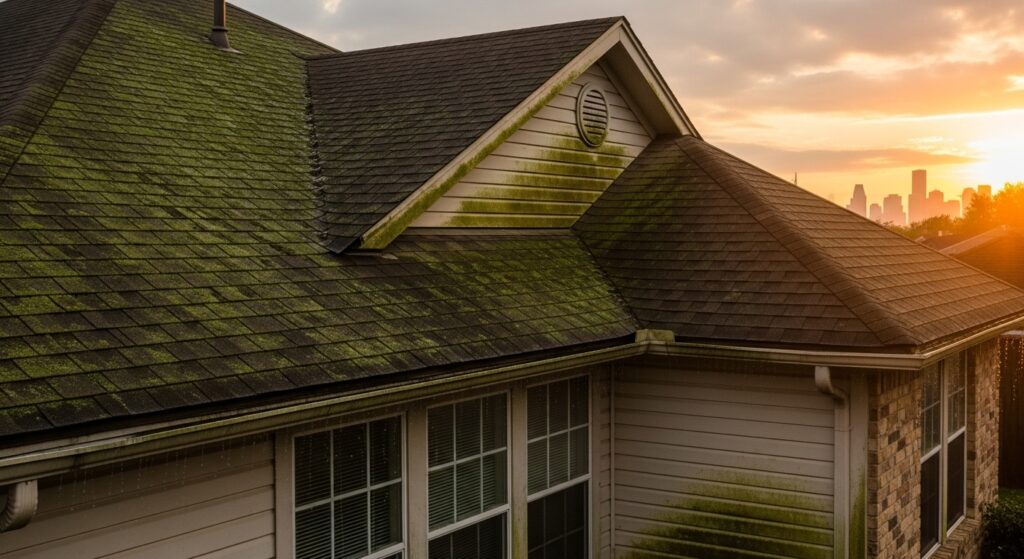
- Water Resistance: It is engineered to prevent moisture damage. Unlike wood, which swells and rots, or vinyl, which can trap mold behind it, Hardie board stands firm against rain.
- Pest Resistance: Termites and carpenter ants love wood. They cannot eat cement. Installing Hardie siding essentially puts up a “Closed for Business” sign to pests.
Reason #3: ColorPlus Technology
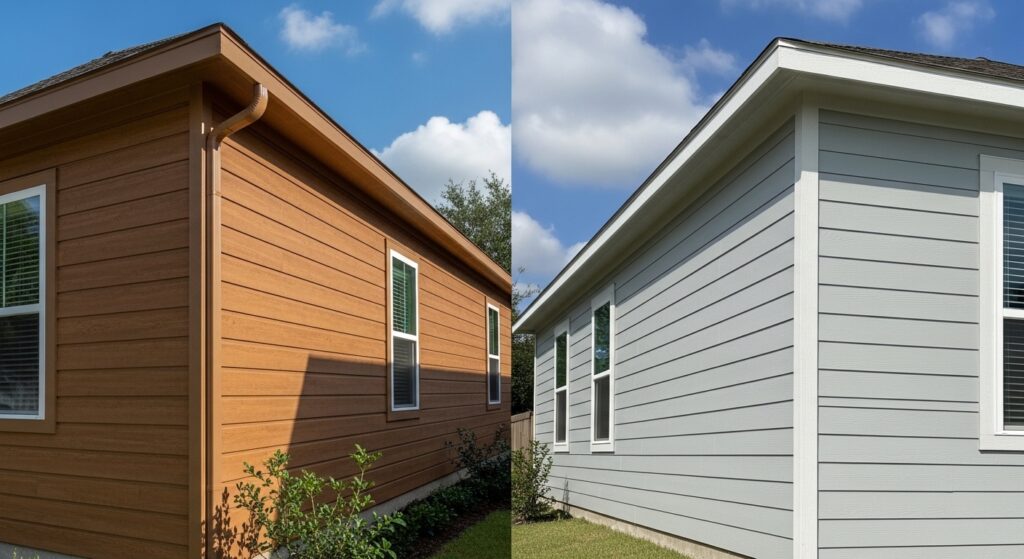
Standard siding needs to be painted every few years. Vinyl siding fades in the sun. James Hardie offers ColorPlus Technology, a factory-applied color system that is baked onto the board.
- It resists fading from UV rays.
- It lasts longer than a typical paint job.
- It comes with a 15-year warranty just on the finish.
Reason #4: ROI (Return on Investment)
While James Hardie siding is more expensive upfront than vinyl, it consistently ranks as one of the best home improvement projects for ROI. According to Remodeling Magazine’s “Cost vs. Value” report, re-siding with fiber cement often recoups a significant portion of its cost upon resale because buyers know it is a low-maintenance, high-quality material.
Is It Right for You?
If you are looking for the cheapest option to flip a house, vinyl might be your answer. But if you are looking for a “forever” solution that protects your home from hurricanes and heatwaves, James Hardie is the clear winner.
We specialize in high-quality installations and can walk you through the design options. If you are considering an upgrade, check out our siding installation services in Texas to see examples of HardiePlank in action.
For more technical details on the manufacturing process, you can visit the James Hardie official site or read about fiber cement history on Wikipedia.