

A leak that appears only when rain blows from one direction is still a water-intrusion problem, but the entry point may not be directly above the stain. Wind can push water beneath laps, against flashing, through vents, around windows, or into wall transitions.
Stay off the roof during rain, wind, lightning, or when surfaces are wet. Homeowner observations help diagnosis; they do not replace a safe professional inspection.
Key point: A leak that appears only when rain blows from one direction is still a water-intrusion problem, but the entry point may not be directly above the stain. Wind can push water beneath laps, against flashing, through vents, around windows, or into wall transitions.
Look for a Weather Pattern
Record storm date, wind direction if known, rainfall intensity, when the stain began, and whether it stops soon after the wind changes. Compare several events. A repeatable direction or intensity pattern is more useful than guessing from one storm.
Common Roof Entry Points
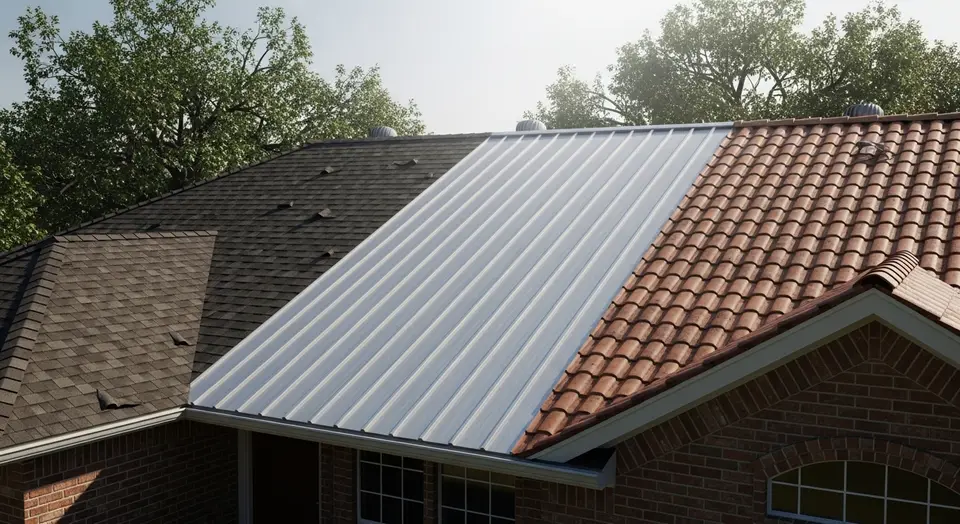
Damaged shingles, lifted edges, flashing, valleys, roof-to-wall intersections, chimneys, skylights, vents, pipe boots, fasteners, and edge details can admit driven rain. Water may travel along decking, rafters, underlayment, or insulation before becoming visible.
Walls and Windows Can Mimic Roof Leaks
Water around upper windows, siding joints, penetrations, trim, and wall flashing can move downward and appear at a ceiling edge. Check whether stains align with windows or exterior transitions, especially when the roof above looks intact.
Safe Checks From Indoors
If the attic is safely accessible without contacting wet electrical components or unstable surfaces, use a flashlight from a secure walkway and photograph staining, damp insulation, and the underside of the deck. Do not step between framing members or disturb suspected hazardous material.
Temporary Mitigation
Protect belongings, place containers, dry accessible surfaces, and document damage. Do not climb onto the roof or apply interior sealant that traps water. Emergency tarping should be performed only when conditions are safe by qualified personnel.
When to Call
Call promptly for active dripping near electrical fixtures, sagging ceilings, repeated stains, visible storm damage, missing roof material, or water entering multiple rooms. A professional can trace roof, wall, and opening details and recommend repair after the source is confirmed.
Frequently Asked Questions
Can rain enter even if shingles are not missing?
Yes. Flashing, vents, laps, fasteners, walls, windows, and wind direction can create paths without obvious missing shingles.
Should I go into the attic during a storm?
Only if access is safe and dry. Avoid wet electrical areas, unstable ceilings, and unwalkable framing; otherwise wait for a professional.
Will exterior caulk fix wind-driven rain?
Only if a compatible sealant belongs at the confirmed failed joint. Random caulking can hide symptoms or block drainage paths.