
The “After-Storm” Anxiety: Will They Pay or Won’t They?
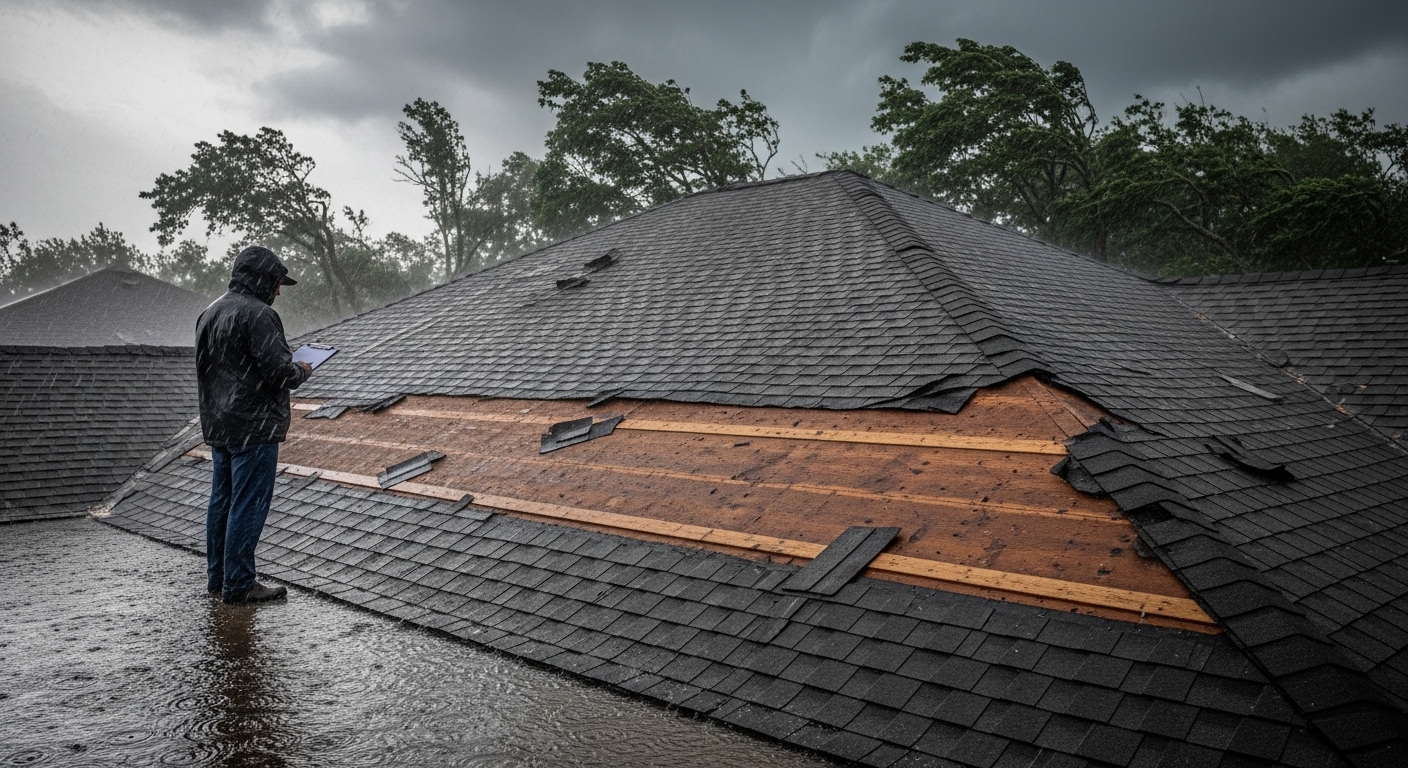
You know that feeling when a Texas thunderstorm rolls through—the kind that makes the windows rattle and the sky turn a weird shade of bruised purple? You’re sitting on the couch, hearing those heavy thunks on the roof, and your first thought isn’t about the rain. It’s: “Is my insurance actually going to cover this, or am I about to eat a $15,000 bill?”
Honestly, it’s a valid fear. Insurance policies can feel like they were written by people who want to make sure you never actually understand them. And in Texas, where the weather is basically a contact sport, knowing if you’re covered isn’t just “good to know”—it’s a financial survival skill.
But here’s the thing: not all coverage is created equal. Depending on the words buried in your policy’s fine print, you could be looking at a brand-new roof for the cost of a deductible, or you could be getting a check that barely covers the cost of a few bundles of shingles. Let’s pull back the curtain on how Does Homeowner Insurance Cover Roof Damage from Texas Storms? actually works in the real world.
The Three Main Ways Your Roof is Covered (or Not)
When it comes to storm damage, your insurance usually falls into one of three buckets. Think of these like different tiers of a safety net. Some are made of steel, and some are… well, more like old fishing line.
1. RCV (Replacement Cost Value)
This is the gold standard. If a hail storm shreds your shingles, RCV coverage pays for what it costs to buy a new roof at today’s prices.
- Key Characteristics: It ignores “depreciation.” It doesn’t care that your roof was 12 years old; it cares about the cost of a new one.
- Pros: You get a full roof replacement for just the cost of your deductible. It’s the ultimate peace of mind.
- Cons: These policies have higher monthly premiums.
- Best Use Case: Anyone who wants to protect their home’s value without a massive surprise bill.
2. ACV (Actual Cash Value)
This is the “budget” option, but it can be a trap. ACV pays you what your roof was worth the moment before the storm hit.
- Key Characteristics: It factors in age and wear. If your roof is halfway through its life, the insurance company might only pay 50% of the cost.
- Pros: Lower monthly premiums.
- Cons: You’ll likely have to pay thousands of dollars out of pocket to finish the job.
- Best Use Case: Rarely recommended for Texas homes because our storms are so frequent and severe.
3. Roof Surface Endorsements
Lately, I’ve seen more insurance companies in Texas sneak these in. They might cover the house fine, but they put a special “hail and wind” limitation on the roof specifically.
- Key Characteristics: Often limits coverage to “functional” damage only. If it looks ugly but doesn’t leak yet, they might say “no.”
- Pros: Keeps the policy affordable.
- Cons: You might get denied for “cosmetic” hail damage that will eventually lead to leaks.
- Best Use Case: High-risk areas where full coverage is almost impossible to get.
Detailed Comparison: Which Safety Net Are You Holding?
Detailed Look at RCV
If you have an RCV policy, you’re in a strong position. I’ve seen homeowners in places like Harris County get their entire exterior—roof, gutters, and siding—replaced after one bad hail storm.
- The Pro Move: Make sure your contractor knows it’s an RCV claim. They can help you ensure the insurance company doesn’t try to skimp on the high-quality premium roofing shingles you’re entitled to.
- Cost: You pay more every month, but you save $10,000+ when the sky falls.
Detailed Look at ACV
Honestly? ACV is tough. I’ve sat at kitchen tables with folks who were handed a check for $4,000 for a roof that cost $12,000 to fix. It’s heartbreaking.
- The Reality: If your roof is 15 years old, the insurance company will deduct 15 years of “life” from your check.
- Cost: Cheap premiums, but potentially devastating out-of-pocket costs. If you have an ACV policy, you need to be saving a “roof fund” every month.
Side-by-Side: The Decision Framework
| Feature | RCV Policy | ACV Policy | Endorsement/Limited |
| Payout Basis | Cost of NEW materials | Current “used” value | Functional damage only |
| Out-of-Pocket | Just your deductible | Deductible + Depreciation | Deductible + Exclusions |
| Monthly Premium | Highest | Lowest | Mid-range |
| Texas Suitability | Excellent | Risky | Use with caution |
Expert Recommendations: What I’d Tell My Neighbor
Look, I’m not an insurance agent, but I’ve been on thousands of roofs after storms. Here is my “straight-talk” recommendation based on what I’ve lived through:
- If your roof is 10+ years old: Switch to RCV if you can. An ACV check for an old roof won’t even cover the labor costs in today’s market.
- Beware the “Cosmetic” Clause: In Texas, hail damage often starts as “cosmetic” (bruises you can’t see from the ground) but turns into a leak two years later. If your policy has a cosmetic exclusion, you’re basically uninsured for hail.
- Know your Deductible: In Texas, we often have a separate “Wind/Hail” deductible that is a percentage of the home’s value (usually 1% or 2%). If your house is worth $400k, a 2% deductible is $8,000. You need to know that number before the storm hits.
Pro Tip: If you’re unsure what’s in your policy, ask for insurance claim assistance. A pro can look at your “Dec Page” and tell you exactly what kind of trouble (or triumph) you’re in for.
How to Choose (Your Personal Decision Framework)
Are you trying to figure out if your current coverage is enough? Ask yourself these three questions:
- Could I pay $10,000 tomorrow if a storm hit? If the answer is no, you absolutely need RCV coverage. It shifts the risk to the insurance company.
- Is my roof already aging? If your shingles are already showing normal roof wear, ACV will pay you almost nothing.
- Do I live in a high-hail zone? If you’re in North or Central Texas, hail isn’t an “if,” it’s a “when.” Don’t skimp on coverage here.
Frequently Asked Questions
Q: Does insurance cover a roof leak if there wasn’t a “storm”?
A: Usually, no. Insurance covers “sudden and accidental” damage. If your roof leaks because it’s 30 years old and the shingles are rotting, that’s considered maintenance. Maintenance is on you.
Q: Can I just get a roof repair instead of a full replacement?
A: Sometimes! If the damage is localized (like one tree limb fell), insurance might just pay for a repair. But if hail hit the whole house, a repair usually won’t cut it.
Q: What if my insurance company denies my claim?
A: Don’t panic. You have the right to appeal or ask for a re-inspection. This is when having a contractor meet the adjuster is a game-changer. They can point out things the adjuster might have “missed.”
Final Thoughts: Don’t Wait for the Clouds to Turn Purple
At the end of the day, homeowner’s insurance is there to protect your peace of mind. But it only works if you know how to use it. If you’re sitting there right now wondering what kind of shape your roof is actually in, don’t wait for the next “Texas-sized” storm to find out.
Get a pro to take a look. Whether you need a simple check-up or a full new roof installation, knowing where you stand is the only way to sleep through the next thunderstorm.
If you’re worried about your coverage or think you might have storm damage from a recent blast, we’re here to help. We’ve been through these storms with our neighbors all over Texas. You can request a quote for a free inspection, or just give us a shout. We’ll look at your roof, look at your situation, and give you the honest truth.
Stay safe, and keep your eyes on the sky.