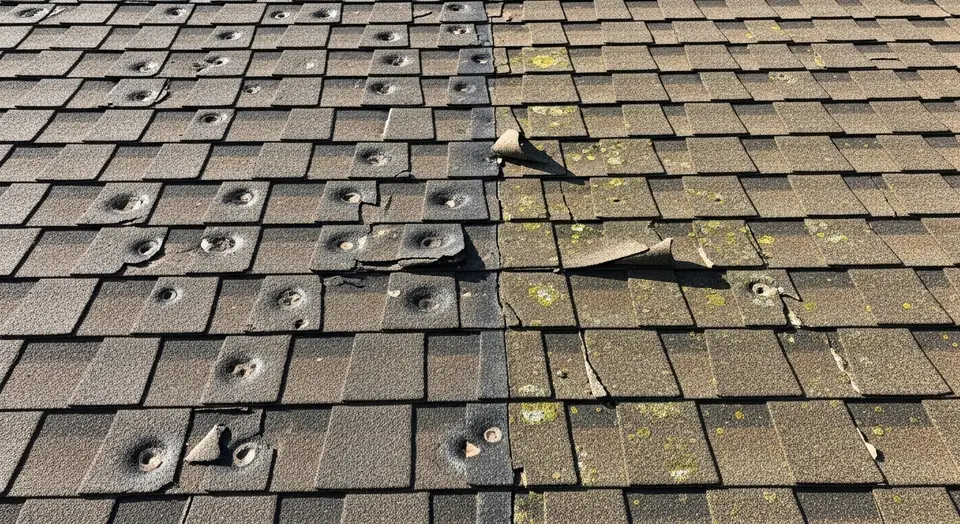
The “Is it Broken or Just Old?” Dilemma
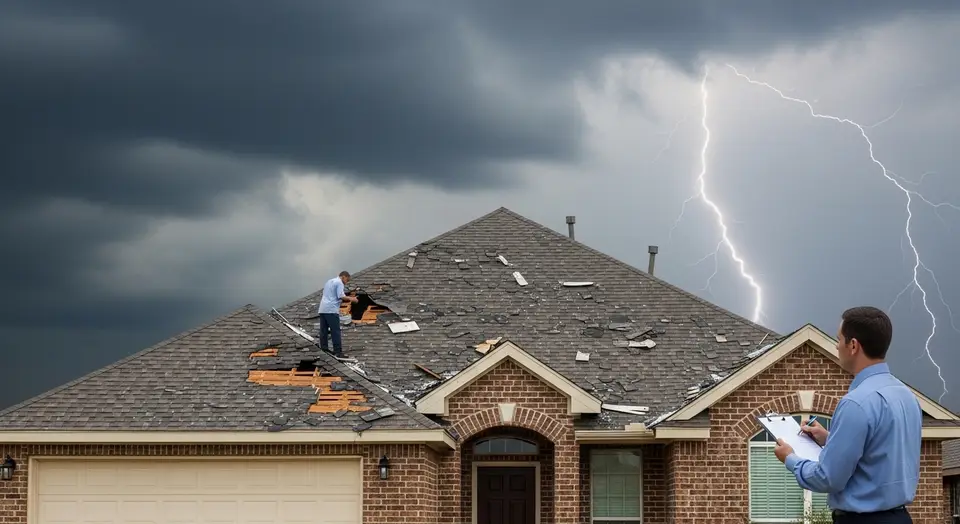
We’ve all been there. A nasty storm rolls through at 3:00 AM, the kind that makes the dog hide under the bed and the windows rattle in their frames. The next morning, you’re standing in your driveway, squinting up at the shingles, wondering: Is that a new dent, or has it always looked like that?
Honestly, it’s a stressful spot to be in. Your roof is basically the helmet for your house, and if it’s compromised, everything underneath—your family, your memories, that expensive new couch—is at risk. But here’s the rub: insurance companies aren’t in the business of buying you a new roof just because yours is getting some gray hairs. You need to know if you’re looking at Hail Damage vs. Normal Roof Wear before you start the whole insurance claim assistance process.
In this guide, I’m going to show you exactly how to tell the difference like a pro. We’ll look for the subtle signs that mean “call a contractor” versus the ones that just mean “keep an eye on it.” If you’re worried about your roof right now, take a breath. We’ll figure this out together.
What You’ll Need Before You Look Up
You don’t need to be a structural engineer to do a basic “ground-level” inspection. In fact, I usually tell people to stay off the ladder if they can help it—roofs are slick, and a fall is way more expensive than a contractor.
Here’s your “inspector” kit:
- A pair of binoculars: These are a lifesaver. You can see granule loss from the safety of the sidewalk.
- A high-quality camera (your phone is fine): To document everything for later.
- A chalk or a crayon: If you do safely get on a low-slope area, you can circle spots to see them better in photos.
- Knowledge of your roof’s age: A 20-year-old roof is going to look “messy” even without a storm.
Step-by-Step: Hunting for Hail Damage
Step 1: Check the “Collateral” Damage First
Before you even look at a shingle, look at everything else. Hail doesn’t just hit the roof; it hits everything.
Look at your gutters. Are there fresh dings in the metal? Check your AC unit—those thin cooling fins are like a diary for hail storms. If they’re smashed in, you definitely had a major event.
The “Real World” Sign: Check your mailbox and your siding. If there are chips in the paint or dents in the plastic, it’s a high-probability sign that your roof took a beating too.
Step 2: Spotting the “Bruise” (The Hail Mark)
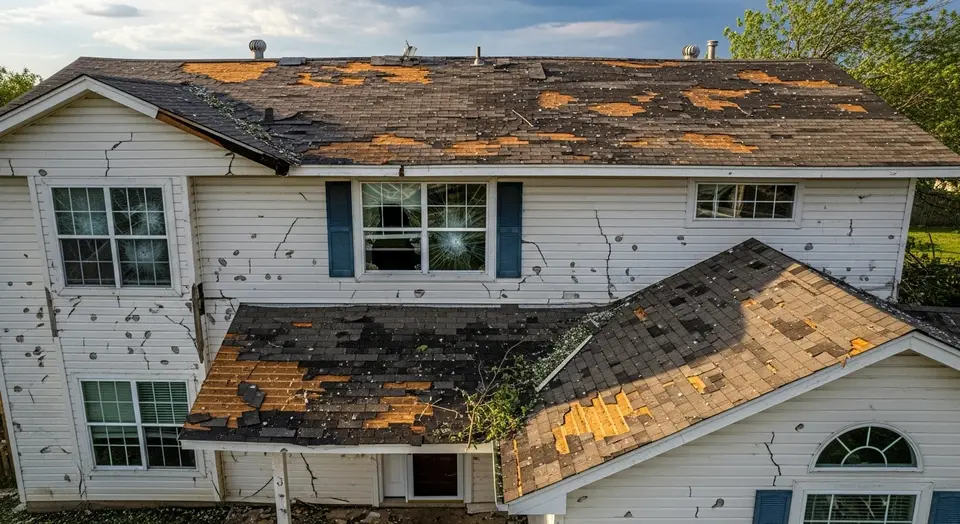
True hail damage on an asphalt shingle looks like a bruise. It’s a dark spot where the granules (those little colorful rocks) have been knocked off, exposing the black felt or fiberglass underneath.
What to look for:
- Random patterns: Hail doesn’t fall in a straight line.
- Softness: If you touch the dark spot and it feels “mushy” like a bruised apple, that’s hail. The impact actually broke the internal mat of the shingle.
- Freshness: The exposed area will look “newly black” or shiny, not dusty and gray.
Step 3: Identifying “Normal Wear” (The Aging Process)
Everything ages, and roofs are no exception. Normal wear is often mistaken for storm damage by homeowners who are (understandably) looking for a reason to get a replacement.
Signs of an aging roof:
- Brittle shingles: If the edges are curling up like a dry leaf, that’s just time and sun doing their thing.
- Uniform granule loss: If the shingles look bald everywhere, rather than in specific circular spots, that’s old age.
- Cracking/Crazing: Small, hairline cracks across the surface usually mean the oils in the asphalt have dried out.
Step 4: Distinguishing “Blistering” from Hail
This is the one that trips everyone up. Blisters happen when moisture gets trapped in the shingle during manufacturing. Eventually, they “pop” and look like little pits.
The difference: A blister will usually have a “rim” around it and won’t feel soft to the touch. It’s a manufacturing flaw or a ventilation issue, not a storm issue.
Troubleshooting Common Confusions
| If you see this… | It’s likely… | Why? |
| Circular, dark, soft spots | Hail Damage | The impact crushed the fibers. |
| Curled edges/Frayed corners | Normal Wear | Years of Texas sun drying out the asphalt. |
| Straight-line cracks | Structural Stress | The house shifting or shingles expanding/contracting. |
| Small, hard “pits” with rims | Blistering | Poor attic ventilation or manufacturing heat. |
Expert Tips for the Savvy Homeowner
Look, I’ve seen a lot of people try to “game” the system, and honestly? It usually backfires. Here are some real-talk insights I want you to have:
- Granules in the gutters aren’t always a crisis. If you just got a new roof installation, you’re going to see a lot of “slough-off.” It’s normal. If your roof is 15 years old and the gutters are full of rocks, you’re just nearing the end of your roof’s life.
- The “Shadow” Test: If you’re inspecting on a sunny day, the shadows can make old age look like dents. Try to look at the roof when the sun is overhead or on an overcast day to see the true texture.
- Don’t ignore the “small” leaks. Sometimes hail damage doesn’t cause a leak immediately. It takes 6 months for the sun to bake that “bruise” until it cracks. This is why getting a professional roof repair inspection after a storm is so vital, even if you don’t see water in the kitchen yet.
- Check your ventilation. I can’t tell you how many “hail claims” are actually just roofs being cooked from the inside out because the attic is 140°C. Improving your skylight installation or ridge vents can add years to your next roof.
Summary & Next Steps
So, what did we learn?
- Hail is a “soft” impact—it leaves bruises and random dark spots.
- Wear is a “hard” process—it leaves curls, cracks, and uniform baldness.
- Context matters—if your car is dented and your gutters are smashed, your roof is likely hurt too.
Your Action Plan:
If you went through this list and noticed those soft, dark bruises, your next move is to document them with photos. Don’t wait. The longer you wait, the more “old” that damage looks, and the harder it is to convince an insurance adjuster.
If you’re still not sure—and honestly, it can be really hard to tell when you’re looking up from the driveway—don’t sweat it. It’s better to be safe. You can always request a quote for a professional inspection. We’ll come out, get on the roof for you, and give you the straight-up truth about whether you’re looking at a storm claim or just a roof that’s ready for retirement.
At the end of the day, it’s about peace of mind. Whether you need a simple patch-up or a full roof replacement, knowing the truth is the first step to keeping your home dry and your family safe.
Stay dry out there, Texas.