
The “Fading Glory” of the Texas Curb Appeal
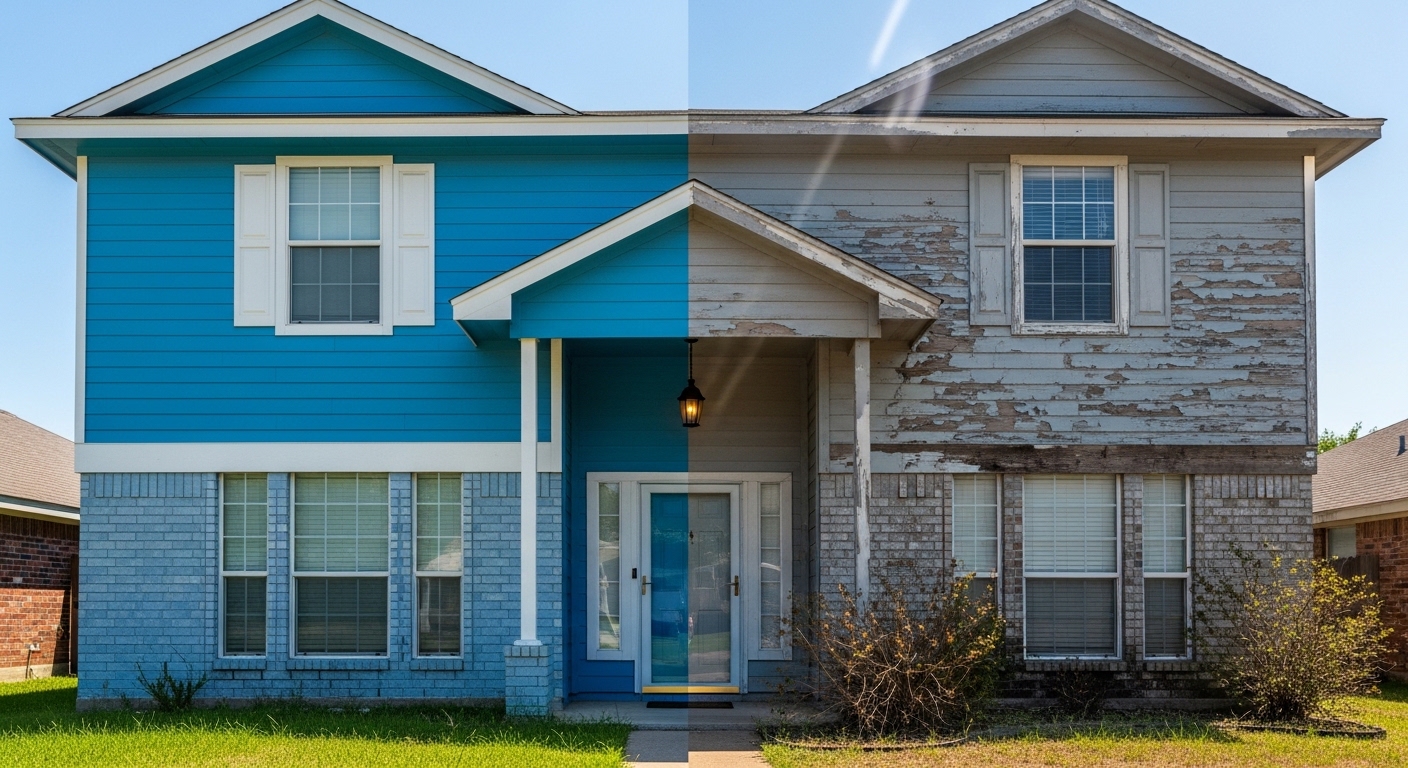
You know that feeling when you pull into your driveway, look at your house, and realize it just doesn’t… pop anymore? Maybe the vibrant blue has turned into a dusty navy, or that crisp white trim is looking a little more like “smoggy beige.” Honestly, it happens to the best of us. In Texas, we don’t just have weather; we have an endurance test for building materials.
The question I get asked most often at kitchen tables from Sugar Land to Conroe is: “How long is this paint job actually going to last?” It’s a fair question. Painting your house is a big investment of time and money. You want to know if you’re buying a ten-year shield or a three-year band-aid. But here’s the thing—the answer depends entirely on what you’re putting on your walls and how those walls are treated. We’re going to compare the heavy hitters of the paint world and give you a real-world decision framework so you aren’t guessing.
The Contenders: Comparing Exterior Finishes
When it comes to protecting your Texas home, you generally have three directions you can go. Each one handles our 100-degree summers and “swamp-level” humidity differently.
1. Standard Acrylic Latex Paint
This is what most people think of when they talk about “house paint.” It’s water-based, flexible, and widely available.
- Key Characteristics: It breathes well, which is vital in humid climates. It expands and contracts with your house as the temperature swings from a 30-degree morning to an 80-degree afternoon.
- Pros: Easy to apply, dries fast, and is generally the most affordable option upfront.
- Cons: It’s susceptible to fading under intense UV rays. Lower-grade versions can “chalk” (turn into a fine powder) within 3-4 years.
- Best Use Case: Most Texas home remodeling projects where a balance of cost and quality is needed.
2. Premium Elastomeric Coatings
Think of this like a thick, rubberized “skin” for your house. It’s much thicker than standard paint.
- Key Characteristics: It’s incredibly waterproof and excellent at bridging small cracks in stucco or masonry.
- Pros: Superior durability against driving rain and wind. It can last 10-12 years if applied correctly.
- Cons: It’s expensive and heavy. If moisture gets behind it (from a roof repair issue, for example), it can trap that water and cause wood rot because it doesn’t “breathe” as well as latex.
- Best Use Case: Stucco homes or older masonry that needs a heavy-duty moisture barrier.
3. Ceramic-Infused Paints
The “new tech” on the block. These paints contain tiny ceramic beads that reflect heat.
- Key Characteristics: High solar reflectance. It’s designed to keep the surface temperature of your walls lower.
- Pros: Outstanding fade resistance and energy-saving potential. It’s tough as nails against the Texas sun.
- Cons: High price point per gallon and requires very specific application techniques.
- Best Use Case: Homes with direct, unshaded southern exposure that get “baked” all summer long.
Side-by-Side: The Longevity Breakdown
| Feature | Standard Latex | Premium Elastomeric | Ceramic-Infused |
| Average Lifespan | 5 – 7 Years | 10 – 12 Years | 12 – 15 Years |
| Texas Heat Rating | Moderate | High | Extreme |
| Breathability | Excellent | Low | Moderate |
| Upfront Cost | $ | $$$ | |
| Maintenance Need | Low | High (if peeling) | Low |
Expert Recommendations: The “Boots on the Ground” Truth
I’ve seen a lot of paint fail in my time. And look, it’s rarely because the paint was “bad.” It’s usually because the choice didn’t match the environment. Here’s what I’d tell a friend over coffee:
- The 5-Year Rule: In Texas, if you use a “builder-grade” paint, expect to be repainting in five years. The sun is just too aggressive. If you want to hit that 10-year mark, you must move into the premium lines.
- Prep is 90% of Longevity: You can buy $150-a-gallon paint, but if you put it over a dirty, chalky surface or failing siding installation, it will peel in eighteen months. Washing and scraping are non-negotiable.
- Color Matters: Darker colors absorb more heat and fade faster. If you want your paint job to last longer, go with lighter, “earthier” tones. A deep navy might look great on Day 1, but by Year 3, the side facing the afternoon sun will look like a completely different color.
Decision Framework: Which Should You Choose?
Still not sure? Let’s narrow it down based on your specific situation.
Situation A: You’re Planning to Sell in 2 Years
Recommendation: High-quality Acrylic Latex.
- Why: It gives you the best “curb appeal” bang for your buck. It looks beautiful, protects the home, and you won’t have to pay the premium for ceramic or elastomeric coatings that the next owner will benefit from.
Situation B: This is Your “Forever Home”
Recommendation: Ceramic-Infused or Top-Tier Premium Acrylic.
- Why: You want the longest cycle possible between repaints. The energy savings from heat-reflective ceramic can actually pay for the price difference over a decade of Texas summers.
Situation C: Your Stucco is Showing Hairline Cracks
Recommendation: Elastomeric Coating.
- Why: Standard paint won’t hide those cracks. Elastomeric will stretch over them and keep the water out of your walls. Just make sure your gutters and downspouts are in good shape so water isn’t getting behind the coating.
Frequently Asked Questions
Q: Does humidity affect how long paint lasts?
A: Absolutely. If paint is applied during a 90% humidity day, it might not bond correctly. Once it’s dry, high humidity can encourage mildew growth. Look for paints with high antimicrobial ratings if you live near the coast.
Q: Can I extend the life of my current paint?
A: Yes! A gentle power wash once a year to remove salt (if you’re near Galveston) and dirt can prevent the finish from breaking down prematurely.
Q: Why is my paint peeling even though it’s only 3 years old?
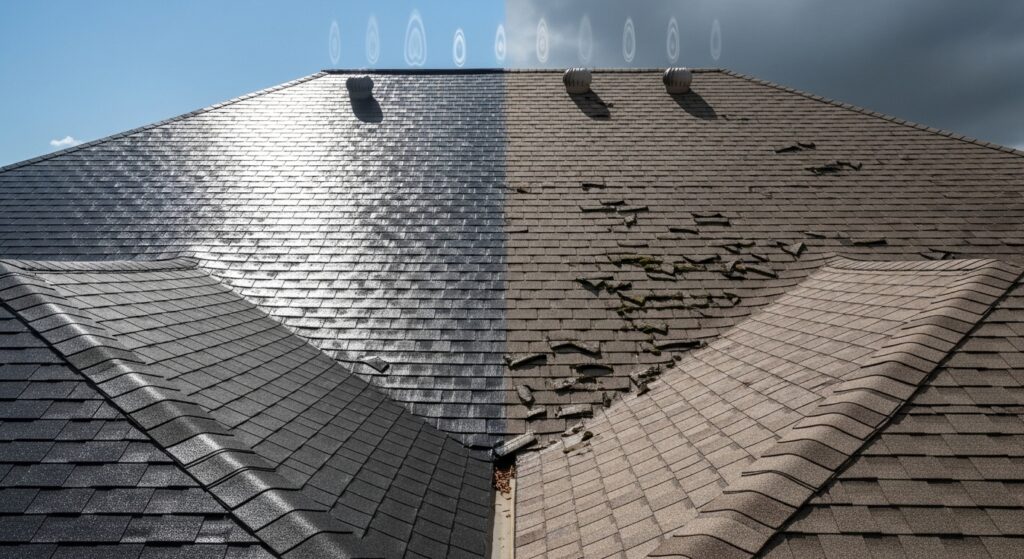
A: It’s likely a moisture issue. If your skylights or roof have small leaks, moisture can travel down behind the siding and “push” the paint off from the inside out.
The Bottom Line: It’s About the Shield
At the end of the day, your home’s paint isn’t just a costume—it’s a defensive shield. In Texas, that shield is under constant fire from UV rays, torrential rain, and humidity that feels like a warm wet blanket.
Choosing the right paint means deciding how often you want to deal with the hassle of a crew in your driveway. If you pick quality materials and focus on the “unsexy” stuff like prep and caulking, you can easily double the life of your job.
If you’re standing in your yard, scratching your head and wondering if your house needs a fresh coat or a full exterior remodeling refresh, we’re here to help. We’ve seen what the Texas sun does to cheap paint, and we know how to make a home stay beautiful for the long haul.
Give us a shout or request a quote today. We’ll take a look at your siding, check for hidden issues, and help you pick a “shield” that actually lasts.
Stay bright, Texas.