
The “Oh No” Moment Under the Texas Sky
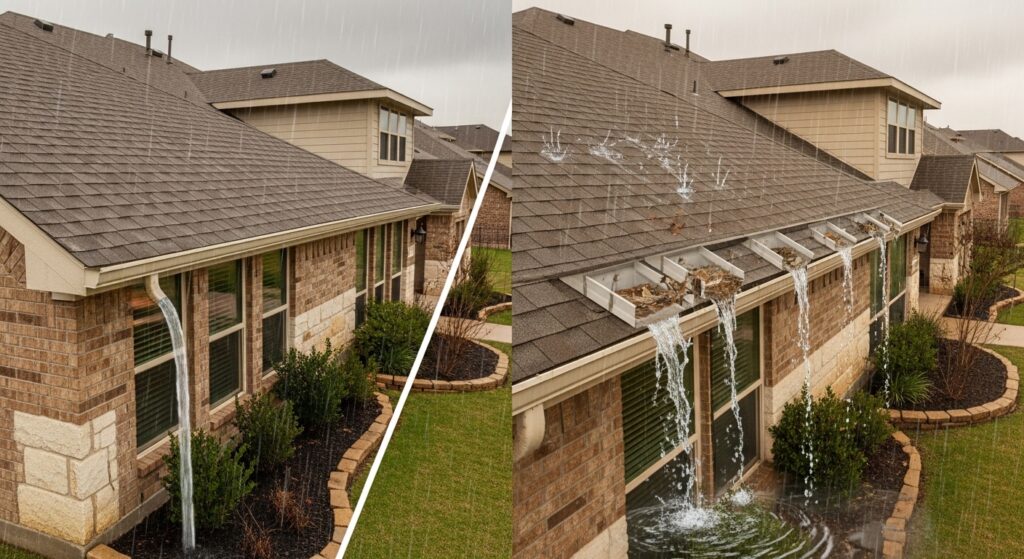
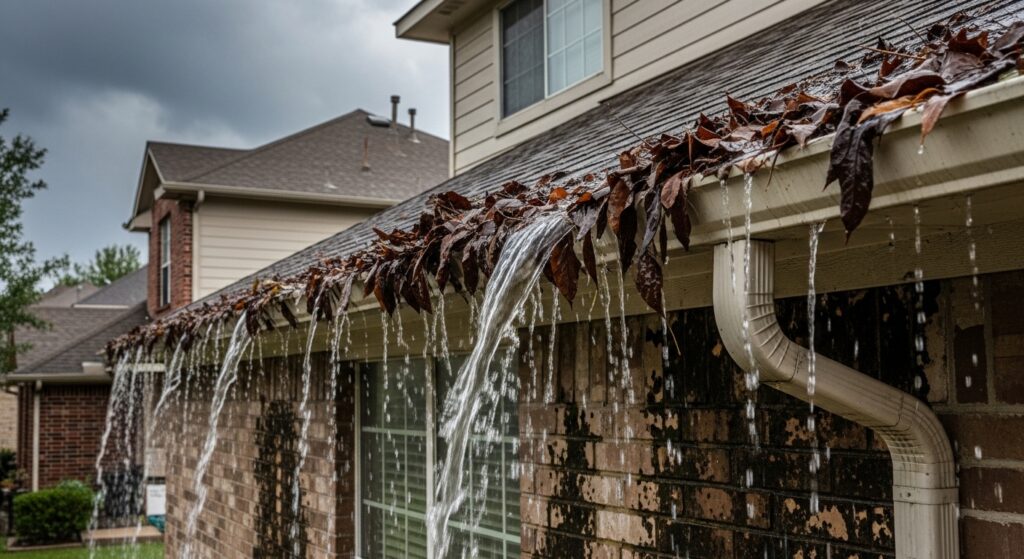
You know that feeling. It’s a Tuesday night, one of those classic Montgomery County thunderstorms is rattling the windowpanes, and suddenly you notice it—a dark, damp circle forming on the ceiling of the guest bedroom. Or maybe you’re just pulling into the driveway, the sun is hitting the shingles at just the right angle, and you realize your roof looks… well, tired. A little curled at the edges, a little “bald” in spots where the granules used to be.
The very next thought is almost always: How much is this going to set me back?
If you live in The Woodlands, you already know we live in a bit of a bubble. It’s beautiful here, but our weather is basically a combat zone for roofing materials. Between the brutal July humidity, the occasional freak hail storm, and those winds that come whipping through the pines, your roof works hard.
Honestly, I’ve sat at kitchen tables all over this area, and the anxiety is the same every time. People aren’t just worried about the money; they’re worried about getting ripped off or choosing a material that won’t last another five years. So, let’s grab a coffee and talk about what a new roof installation in The Woodlands, TX actually looks like in 2026. No corporate fluff, just the real numbers and what you need to look out for.
The Reality of 2026 Pricing: Why the “Sticker Shock” is Real
Look, I’ll be the first to say it—roofing prices aren’t what they were even three years ago. If your neighbor got a roof in 2022 for $10,000, don’t expect the same quote today. Supply chain “hiccups” became the new normal, and labor costs in Texas have climbed as the demand for skilled trades goes through the roof (pun intended, sorry).
In 2026, for a standard 2,500-square-foot home in The Woodlands, you’re generally looking at a range of $11,000 to $19,000 for high-quality asphalt shingles. If you’re eyeing metal or specialized tile? You could easily be north of $30,000.
It’s Not Just the Shingles
When people think about cost, they usually just think about the “top layer.” But here’s the thing: a roof is a system. When we talk about price, we’re talking about:
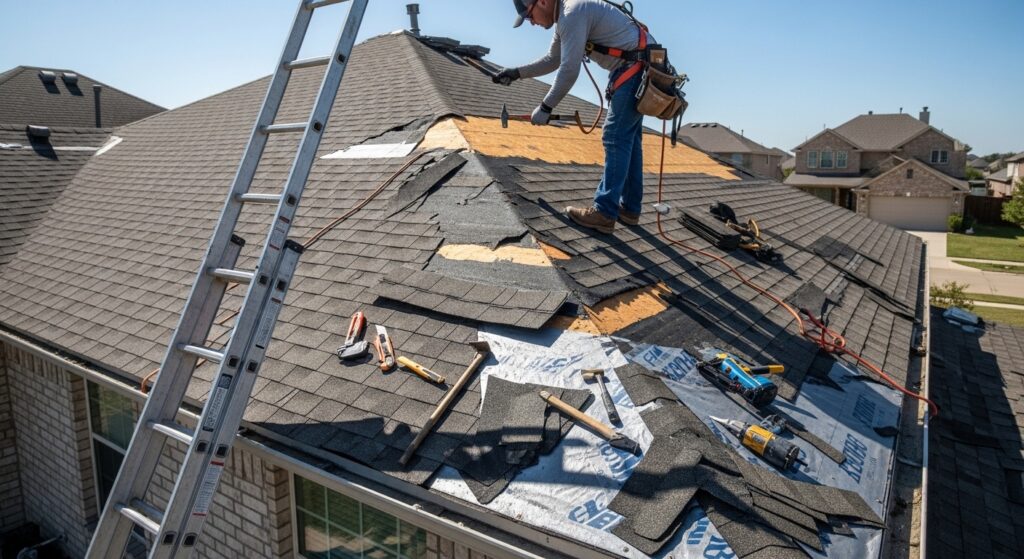
- Tearing off the old stuff: Labor isn’t cheap, and disposing of two tons of old shingles costs money.
- The “Decking”: This is the wood underneath. If the 2024 storms left you with rot, that wood has to be replaced. You can’t put a 30-year shingle on 20-year-old rotten plywood.
- Underlayment and Flashing: This is the “waterproofing” that actually keeps your attic dry.
The Factors That Move the Needle
Why does your neighbor’s quote look so different from yours? It usually boils down to three “hidden” factors that most homeowners don’t consider until the contractor is walking the roof with a tape measure.
1. The “Pitch” and Complexity
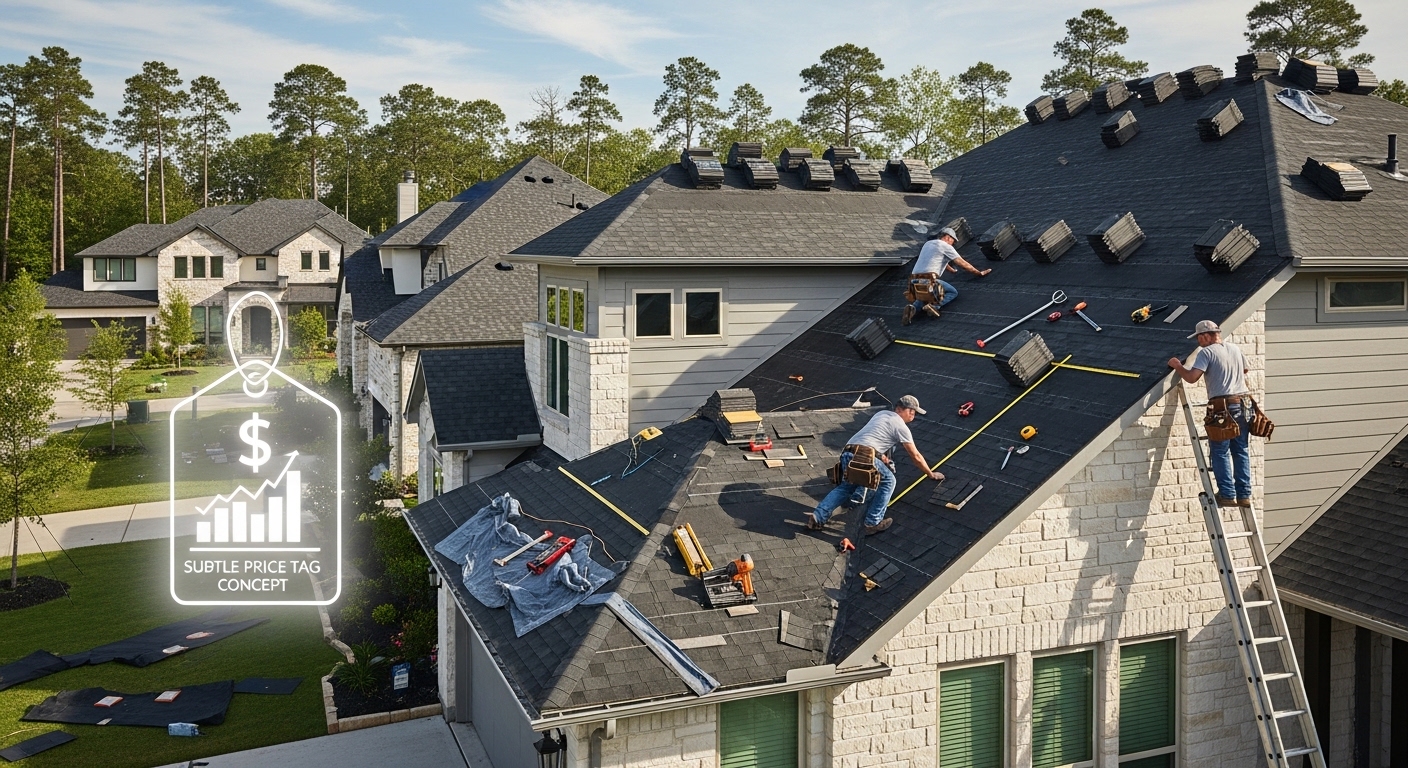
Is your roof a simple “up and over” A-frame? Or is it a series of gables, dormers, and valleys that looks like a geometric puzzle? The more “facets” (sections) a roof has, the more waste there is in materials and the more time it takes to install. Plus, if it’s steep enough that the crew needs specialized safety harnesses just to stand on it, the labor cost goes up.
2. The “Pine Needle” Factor
In The Woodlands, we have trees. Lots of them. While they keep the AC bill down, they’re hell on roofs. If you have heavy overhanging branches, your roof likely has more moisture retention and debris. This often leads to hidden deck damage. I’ve seen roofs that looked fine from the ground but were basically sponge cake underneath because of trapped moisture from needles.
3. Ventilation Needs
Texas heat is no joke. If your attic is hitting 140°F in August, it’s cooking your shingles from the inside out. Part of a proper roof replacement in 2026 involves auditing your ventilation. Sometimes adding a ridge vent or solar fans adds a bit to the upfront cost, but it’ll save you thousands in energy bills and shingle life down the road.
Breaking Down the Materials: What’s Your Flavor?
Most of us in this area go with Architectural Asphalt Shingles. They’re the “Goldilocks” choice—durable enough for the Gulf Coast winds but won’t require a second mortgage.
- Standard Shingles ($4.50 – $6.50 per sq. ft.): These are your reliable, 30-year-rated shingles. They look great and do the job.
- Designer/Luxury Shingles ($7.00 – $10.00 per sq. ft.): These are thicker, heavier, and often mimic the look of slate or wood shakes. They’re stunning, but they’re an investment.
- Metal Roofing ($12.00 – $18.00 per sq. ft.): More and more people in Texas are moving toward metal. It’s expensive upfront, but it’s basically the “forever roof.” Plus, it can actually lower your insurance premiums in some cases.
But honestly? If you’re staying in your house for 10 years or less, a high-quality architectural shingle is usually the smartest play for your wallet.
Actionable Tips: How to Not Overpay
I hate seeing people get pressured into a “sign today” deal. Here is how you actually handle a roof replacement like a pro:
- Check the “Square”: Roofing is measured in “squares” (100 square feet). If one contractor says you have 30 squares and another says 40, someone’s math is off. Ask to see the measurements.
- The Insurance Myth: Don’t just assume insurance won’t cover it. If we’ve had a recent hail event, you might only be on the hook for your deductible. It’s worth having a pro look for storm damage before you pay out of pocket.
- Local Matters: Use someone who knows The Woodlands’ specific HOA requirements. Nothing is worse than finishing a roof and getting a nasty letter from the township because the color wasn’t approved.
- Magnet Sweep: Insist on a magnetic nail sweep of your yard. You don’t want to find a roofing nail with your lawnmower—or your foot—three weeks later.
- Warranty vs. Workmanship: There’s a manufacturer warranty (on the shingles) and a workmanship warranty (on the guys who put them up). You want both. If the shingles fail because they were nailed wrong, the manufacturer won’t help you.
Frequently Asked Questions
Q: Can I just layer new shingles over my old ones to save money? A: Honestly? Don’t do it. While some codes allow it, it traps heat, adds massive weight to your home, and prevents you from seeing rotten wood underneath. It’s a “save $1,000 now, pay $5,000 later” kind of move.
Q: How long does the average replacement take? A: For most homes in our area, it’s a 1-to-2-day job. We try to get in and out so your life can get back to normal.
Q: Is 2026 a bad time to buy? A: Prices rarely go down in construction. If your roof is failing, waiting usually just leads to interior water damage, which is a much more expensive headache.
Bringing it All Together
Look, I get it. A new roof isn’t as “fun” as a new kitchen or a backyard pool. It’s a “grudge purchase”—something you have to buy but don’t really want to show off at a dinner party.
But think about it this way: everything you love is under that roof. Your family, your memories, that weirdly expensive sofa you bought last year. Investing in a solid roof is really just buying peace of mind for the next twenty or thirty years.
If you’re sitting there staring at a leak or just wondering if your roof can handle one more Texas summer, let’s chat. We can do a quick request for a quote and just see where you stand. No pressure, no “salesy” nonsense—just a look at what you need to keep your home dry.
Stay dry out there, The Woodlands. We’ll see you around the neighborhood.
How’s the roof looking lately? Have you noticed any loose shingles after those recent winds? Let me know in the comments—I’m curious what everyone’s seeing in their part of town!
Roof Estimate Scope Checklist
Homes in Alden Bridge and Cochran’s Crossing can differ in roof geometry, access, surrounding trees, and neighborhood review requirements. Those property-specific conditions are why a published square-foot figure cannot replace a written estimate.
| Cost driver | What to confirm in writing |
|---|---|
| Roof size and geometry | Measurement method, pitch, levels, valleys, dormers, and access |
| Existing materials | Removal layers, disposal, and the condition that can be observed before tear-off |
| Selected system | Roof covering, underlayment, starter, ridge components, and manufacturer-specific items |
| Details and ventilation | Flashing, penetrations, ventilation changes, edge metal, and drainage connections |
| Unknown conditions | How deck replacement, concealed damage, and written change approval will be priced |
For the full local cluster, start at the Woodlands roofing contractor hub. Then compare roofing materials for The Woodlands climate and the new-roof installation process.
New Roof Cost FAQs
Why can two Woodlands roof estimates be very different?
The estimates may use different roof measurements, materials, removal assumptions, flashing details, ventilation work, cleanup, or allowances for concealed deck conditions. Compare the written scope line by line.
Can a roof cost be confirmed without an inspection?
A broad planning range may be possible, but a project-specific price requires the roof size, pitch, access, material, removal needs, penetrations, ventilation, and visible conditions to be evaluated.
What should a written roof estimate identify?
It should identify the work area, materials, removal and disposal, flashing and penetration details, ventilation work, cleanup, and how unforeseen deck conditions or change orders are handled.