
The “Ladder Saturday” Struggle
If you live in Texas, you know that specific dread that creeps in around late March. You look out at your driveway and it’s covered in that fuzzy, greenish-yellow “oak pollen” or those long, stringy tassels. Then come the thunderstorms.
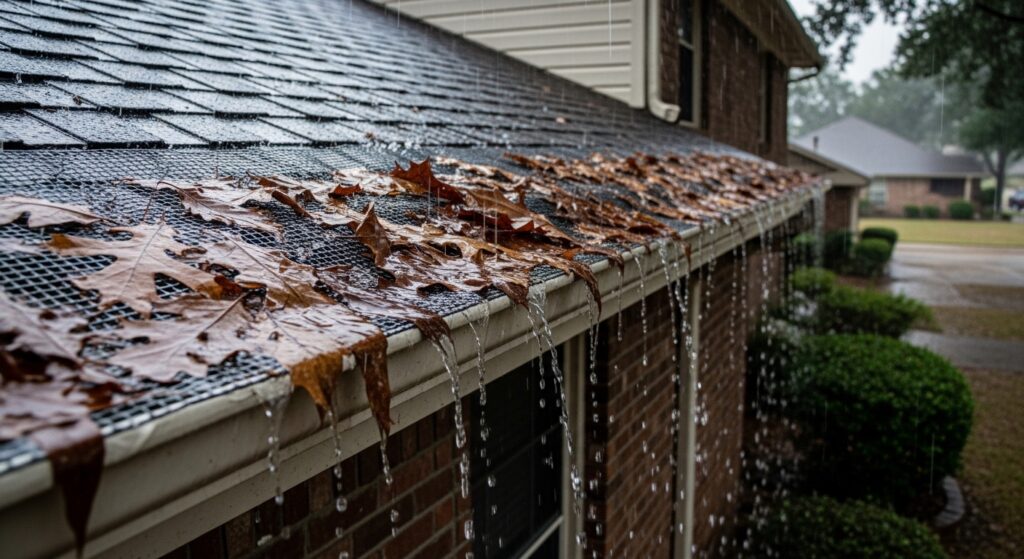
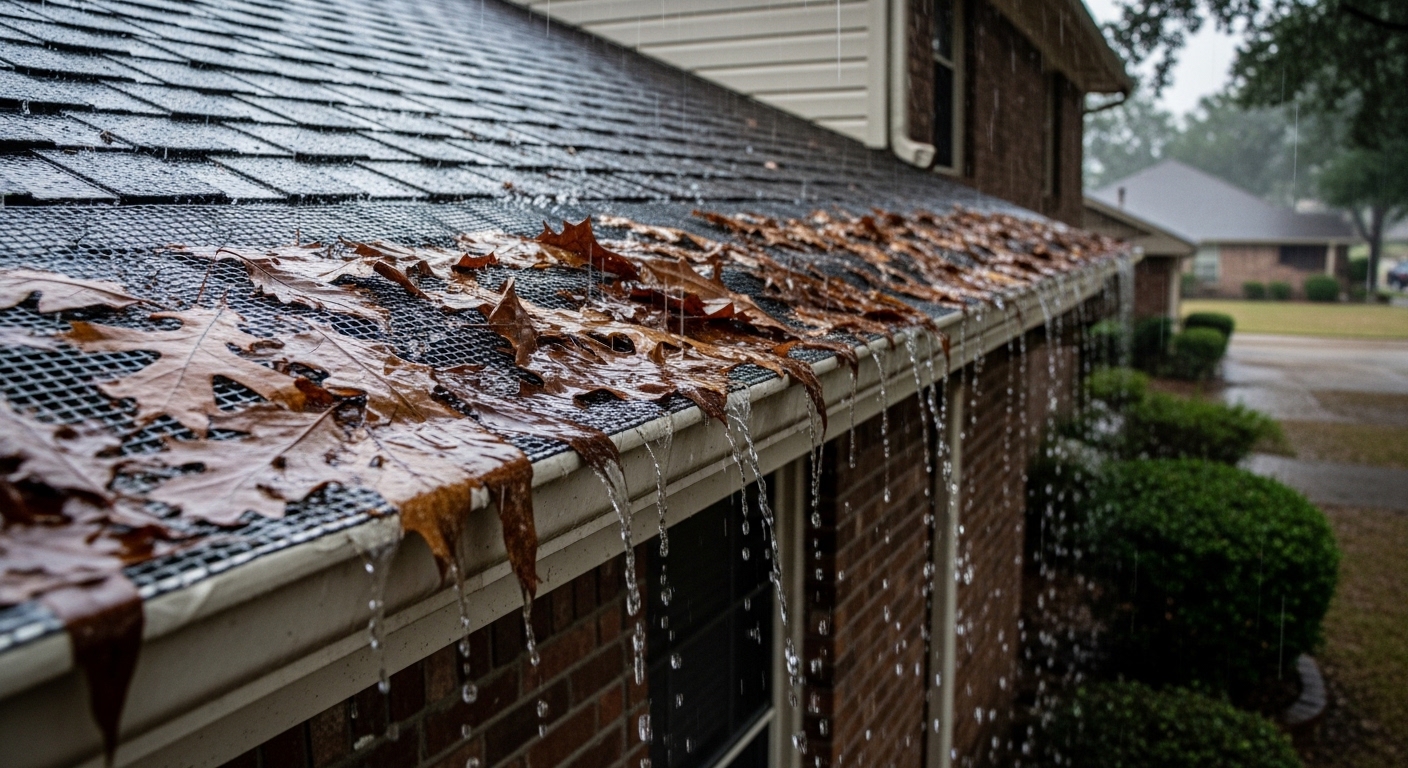
You’re standing in your garage, watching a literal waterfall pour over the side of your gutters because they’re packed tight with oak debris. Or maybe you’re out East, and it’s those stubborn pine needles that seem to find their way into every single crevice of your home.
So, you do the “Ladder Saturday” dance. You spend three hours scooping out soggy, smelling muck, praying you don’t lose your balance. I’ve been there. It’s messy, it’s dangerous, and honestly? It’s a waste of a perfectly good weekend. We’ve all wondered at some point: Is there a gutter guard that actually handles this Texas mess, or is it all just hype?
Let’s talk about what really works when the Live Oaks start shedding and the Loblolly Pines get busy.
Why Texas Debris is a Different Beast
Most gutter guards are designed for big, flat maple leaves. They work great in the Midwest. But Texas? We have special challenges.
The Oak Tassel Problem
Live Oaks and Red Oaks don’t just drop leaves. They drop catkins—those worm-like tassels. They are sticky, they clump together, and they act like a dam. Most “screen” or “slotted” guards just let these things sit on top until they turn into a thick mat that blocks water entirely.
The Pine Needle “Piercing”
If you have pine trees, you know those needles don’t lie flat. They stand up. They poke through holes. I’ve seen many a “high-end” gutter guard that ended up looking like a porcupine because the needles got stuck halfway through the mesh. Once they’re stuck, they trap everything else.
The Foundation Factor
In cities like Dallas or San Antonio, we have highly expansive clay soil. If your gutters clog and water pools at your foundation, you aren’t just looking at a gutter problem; you’re looking at a $15,000 foundation repair bill. That’s why keeping water moving isn’t just about “curb appeal”—it’s about protecting the very thing your house sits on.
The Deep Dive: What’s Actually Under the Hood?
There are a few main “families” of gutter guards you’ll see at the hardware store or advertised on TV. Here’s the reality of how they handle our specific Texas debris.
1. Foam Inserts (The “Pool Noodle” Approach)
These are basically giant sponges you stuff into your gutters.
- The Reality: Honestly, stay away. In the Texas heat and humidity, these things become a breeding ground for mosquitoes and mold. Oak tassels get trapped in the pores, and eventually, you have a solid brick of dirt sitting in your gutter.
2. Screen and Slotted Guards (The Budget Play)
These are usually plastic or thin metal with holes.
- The Reality: They’re better than nothing for big leaves, but pine needles and oak catkins love them. The catkins get caught in the holes, and the pine needles “sew” themselves into the mesh. You’ll still be climbing that ladder twice a year to brush them off.
3. Surface Tension / Solid Covers
These work on the principle of water “clinging” to the curved edge and dropping into the gutter while debris shoots off the side.
- The Reality: They work well for leaves, but in a Texas “frog-strangler” downpour, the water often moves too fast to turn the corner. It just shoots over the side like a ski jump. Plus, bees love to build nests inside the openings.
4. Stainless Steel Micro-Mesh (The Gold Standard)
This is a fine, surgical-grade mesh over a sturdy frame.
- The Reality: This is the only thing I’ve seen truly stand up to both oak tassels and pine needles. The holes are so small (often measured in microns) that even a pine needle can’t poke through.
The Solutions: Ranking the Best for Texas
If I were sitting on your porch helping you pick, here is how I’d rank the options based on what actually survives a Houston humidity spike or a North Texas hailstorm.
#1: Stainless Steel Micro-Mesh (Recommended)
This is the “set it and forget it” option. Brands that use a fine mesh allow water in but keep even the finest oak pollen out.
- Why it wins: It doesn’t allow pine needles to “pin” themselves. The wind usually blows the dry debris right off the top.
- Pro Tip: Look for a brand that installs at a slight angle. If it’s too flat, the oak tassels will just sit there and rot.
#2: Professional Grade Surface Tension Systems
If you don’t have pine trees but have massive oaks, these can be great. They’re heavy-duty and often come with a “never clog” guarantee.
- The Caveat: They are expensive. You’re paying for the warranty and the professional install.
#3: High-End Aluminum Perforated Guards
These are better than the plastic ones from the big-box stores. They are screwed into the gutter, adding a bit of structural strength.
- The Caveat: Good for general leaves, but you’ll still have some “hitching” with pine needles.
For a deeper look at how these systems integrate with your specific home, check out our gutter and downspout services in Texas.
Actionable Tips for Homeowners
Look, even the “best” gutter guard isn’t a magical invisibility cloak for your home. Here is how to make sure your investment actually works:
- Check your roof pitch: If you have a very steep roof, you need a guard that can handle high-velocity water flow without “overshooting.”
- Don’t ignore the downspouts: A guard is useless if your downspout is clogged at the bottom. Make sure your gutter and downspout system is clear all the way to the exit.
- The “Tennis Ball” Test: After installation, run a hose on your roof. If the water shoots over the gutter instead of going in, the guards weren’t installed at the right angle.
- Look for “Bird-Proofing”: Make sure the guards don’t leave gaps at the ends. Texas sparrows love to find a cozy spot under a gutter guard to build a nest.
- Clean the roof, too: Sometimes debris piles up on the roof above the guard. If it sits there, it holds moisture against your shingles and shortens their life.
FAQ: What Texans Ask Most
Q: Do gutter guards cause ice dams? A: In the rare North Texas freeze, they can. But usually, ice dams are a result of poor attic insulation, not the gutter guards themselves.
Q: Will they void my roof warranty? A: Not if they’re installed correctly. Some guards slide under the first row of shingles—make sure your installer doesn’t break the seal or use “shingle-eating” nails.
Q: Are they really “maintenance-free”? A: Honestly? No. Think of them as “low-maintenance.” You might still need to blow off the top of the guards once a year if you have heavy oak drop, but you won’t be digging out wet sludge.
Conclusion: Take Back Your Saturday
At the end of the day, a good set of gutter guards is an investment in your time and your safety. In Texas, where our trees are as stubborn as our weather, “cheap” guards usually end up costing more in the long run when you have to rip them out and start over.
If you’re tired of the “Ladder Saturday” routine, look for a high-quality stainless steel micro-mesh. It’s the only thing that really wins the war against oak tassels and pine needles.
Ready to stop climbing ladders? Don’t wait for the next big storm to realize your gutters are clogged again. Get a professional gutter assessment today and see which system actually makes sense for the trees in your yard. We’ll give you an honest look at your roof and help you find a solution that keeps your foundation safe and your weekends free.
You’ve got better things to do than scoop muck. Let’s get it sorted.