The Real Talk About Houston Roofs and Your Wallet
Honestly, if you’re a homeowner in Houston, you’ve probably had “the talk” with yourself. You know the one. You’re staring at your roof after a particularly nasty thunderstorm—or maybe while sweating through another August heatwave—and wondering if there’s a better way to protect your house.
You’ve seen those sleek, modern metal roofs popping up in neighborhoods from the Heights to Sugar Land. They look great. They look… expensive. And that’s usually where the conversation stops. “It’s too much money,” we tell ourselves. But then the AC bill hits $400, or a hail sensor goes off, and the cycle starts all over again.
Look, I get it. Replacing a roof is probably the least “fun” way to spend twenty or thirty thousand dollars. It’s not a kitchen remodel with a fancy island. It’s a literal shield over your head. So, is metal roofing in Houston actually worth the investment, or is it just a pricey trend? Let’s dig into the grit of it.
The Problem: The “Houston Tax” on Your Home
Living in Houston is a unique kind of challenge for a house. We don’t just have weather; we have events. Between the humidity that feels like a wet blanket, the sun that tries to bake your shingles into crackers, and the occasional hurricane that treats traditional roofs like a deck of cards, our homes take a beating.
Most of us grew up with asphalt shingles. They’re the standard. But here’s the thing—shingles are organic. They’re basically paper or fiberglass soaked in oil and covered in rocks. In the Houston sun, that oil evaporates. The shingles get brittle. They curl. And suddenly, that “30-year” roof is looking pretty rough by year twelve.
Then there’s the heat. Asphalt absorbs it. It sits on your house like a giant heat-soaking sponge, radiating warmth into your attic long after the sun goes down. Your AC is basically running a marathon every single day just to keep up. When you add up the constant repairs, the shortened lifespan, and the energy drain, that “cheaper” shingle roof starts to feel a lot more expensive over time.
The Deep Dive: Why Metal is Different (And Why It Costs More)
I’m not going to sugarcoat it: the upfront price of a metal roof is going to give you a bit of sticker shock. It’s usually two to three times the cost of shingles. But before you close this tab, think about why.
When you buy a shingle roof, you’re buying a temporary fix. When you buy a metal roof, you’re essentially buying a permanent solution. It’s the difference between buying a pair of cheap sneakers every six months or investing in a pair of boots that last a decade.
1. The Energy Game-Changer
In Houston, heat is the enemy. Metal roofs are “cool roofs” by nature. They reflect solar radiant heat instead of absorbing it. I’ve talked to homeowners who saw their cooling costs drop by 20% or even 30% after switching. In a city where the AC runs nine months a year, those savings aren’t just “nice to have”—they’re a significant mortgage offset.
2. The “Last Roof” Factor
A properly installed standing seam metal roof can easily last 50 to 70 years. Think about that. If you’re 40 years old, you will likely never have to deal with a roofing contractor again. You’re opting out of the 15-year replacement cycle.
3. Hurricane Resilience
We all remember the anxiety of checking the yard for shingles after a big blow. Metal panels are often rated for winds up to 140 mph. They don’t peel off one by one. They’re locked together. For a lot of people in South Texas, that peace of mind during hurricane season is worth the entry price alone.
If you’re curious about how metal stacks up against other options specifically for our wild climate, you might want to check out this breakdown of the best roofing materials for Houston’s climate. It puts things into perspective pretty quickly.
Common Misconceptions (Let’s Clear the Air)
I hear the same three things every time metal roofs come up:
- “Won’t it be loud when it rains?” Honestly? No. If you’re putting this on a barn with no ceiling, sure. But on a house with an attic and insulation? You won’t notice a difference. In fact, some people find it quieter because the solid decking dampens the sound.
- “Will it attract lightning?” This is a classic. Metal conducts electricity, but it doesn’t attract it. Your house isn’t more likely to get hit. And if it did? Metal is non-combustible. It’s actually safer.
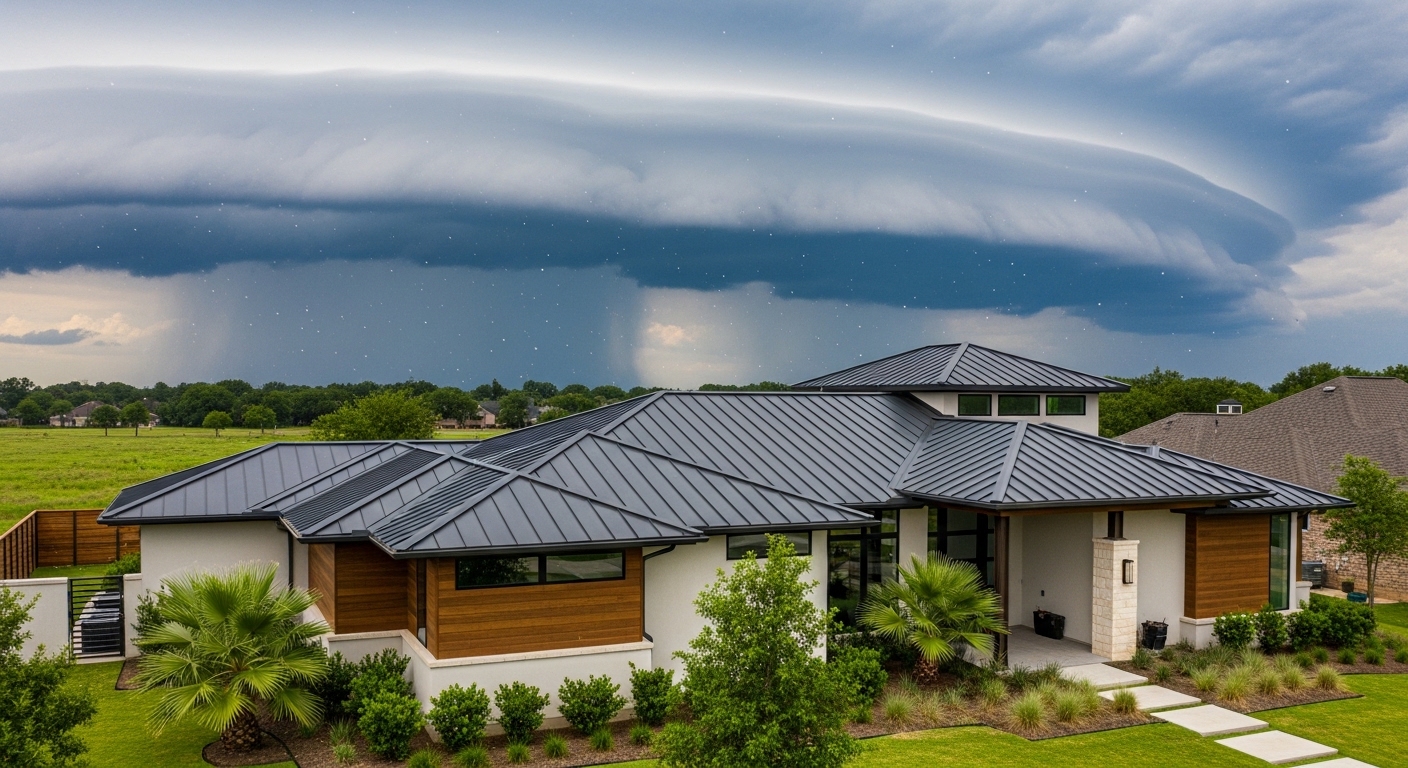
- “It’ll look like an industrial warehouse.” Maybe in 1980. Today, you can get metal that looks like wood shakes, slate, or high-end tile. The aesthetic options are actually pretty incredible.
The Solution: Finding the Middle Ground
If you love the idea of metal but the quote for a “Standing Seam” roof (the gold standard) makes your eyes water, you have options.
There are “exposed fastener” panels (often called R-panels or corrugated). They’re much cheaper, but they require a bit more maintenance because the screws are exposed to the elements. For a residential home, I usually steer people toward standing seam if they can swing it, because the fasteners are hidden under the metal. No holes, no leaks, no worries.
But here’s a pro tip: You don’t have to go “all or nothing.” Some homeowners choose to put metal on high-visibility or low-slope areas of their home and use high-quality shingles elsewhere. It’s a way to get the look and the durability where it matters most without breaking the bank.
Actionable Tips for Houston Homeowners
If you’re seriously considering making the jump, here is how I’d handle it if I were sitting in your living room:
- Check your HOA first. Some Houston neighborhoods have strict rules. Don’t fall in love with a copper-colored roof only to have the board shut you down.
- Get a specialized contractor. Metal roofing is a different skill set than shingles. It requires precision. If a guy says, “Yeah, I can do metal, I’ve got the snips in my truck,” keep looking.
- Ask about “Cool Roof” coatings. Make sure the metal is finished with high-reflectivity paint (like Kynar 500). This is what actually saves you money on your electric bill.
- Look into insurance discounts. Many Texas insurers give a premium discount for Impact Resistant (Class 4) roofs. Metal almost always qualifies. This can shave hundreds off your annual bill.
- Think about your “Forever Home” status. If you plan on moving in three years, you might not recoup the cost in energy savings. But if you’re staying for 10+ years? It’s a no-brainer.
- Don’t ignore the venting. A metal roof is only as good as the ventilation underneath it. Make sure your contractor has a plan for ridge vents to keep that attic air moving.
FAQ: Quick Answers for Busy People
Q: Does a metal roof make my house hotter? Actually, the opposite. Because it reflects the sun’s rays, your attic stays cooler than it would with dark asphalt shingles that soak up heat.
Q: Can I install metal over my old shingles? In many cases, yes. It saves on labor and keeps shingles out of the landfill. But you have to make sure your local building codes and the weight-bearing capacity of your roof allow for it.
Q: What happens if it hails? Metal is incredibly tough. While a massive hailstorm might cause some cosmetic “dimpling,” it’s very unlikely to breach the roof and cause a leak, unlike shingles which can crack and fail instantly.
The Bottom Line
So, is it worth it?
If you’re looking for the cheapest way to get a roof on your house today, no. Stick with shingles. But if you’re looking at your home as an investment—if you want to kill those sky-high electric bills and never worry about a leak after a tropical storm again—then metal is probably the smartest money you’ll ever spend on your property.
It’s about moving from a “maintenance” mindset to an “investment” mindset. It feels like a lot of money right now, I know. But ten years from now, when your neighbors are all replacing their roofs again and you’re sitting in a cool house with a low power bill, you’re going to feel like a genius.
Ready to see if your home is a good fit? Don’t just guess at the numbers. Get a pro to come out, take a look at your specific roofline, and give you a real-world estimate. It’s the only way to know for sure if the switch makes sense for your family.
Looking for more advice on keeping your Houston home in top shape? Check out our guide on how to maintain your roof during the Texas summer to stay ahead of the curve.