
When “Just Cleaning Them” Isn’t Enough
We’ve all been there. You’re standing in the yard during a heavy downpour, watching a literal waterfall pour over the side of your house, right onto your expensive landscaping. You sigh, thinking, “I really need to get up there and scoop out those leaves.” But here’s the cold, hard truth: sometimes, the leaves aren’t the problem. Sometimes, no matter how much you scrub, scoop, or flush, those gutters are just… done.
It’s easy to ignore gutters because they’re high up and, frankly, boring—until they fail. And when they fail, they don’t just get messy. They start rotting your fascia boards, flooding your basement, and cracking your foundation. Suddenly, a “boring” gutter problem becomes a five-figure renovation nightmare.
So, how do you know when you’ve crossed the line from a simple weekend cleaning to a situation where your Gutters Need Replacing? It’s not always as obvious as a section falling off the house (though that’s a pretty big hint).
If you’re already seeing some red flags and want a professional pair of eyes to take a look, you can always request a quote to see where you stand. But first, let’s walk through the checklist of “gutter-is-gone” symptoms.
1. Cracks, Splits, or Peeling Paint
Look, everything wears out eventually. If you see small cracks or splits in the gutter material, it might seem like a minor “I’ll fix it later” issue. But water is patient. Even a hairline fracture will expand during a freeze or under the weight of a heavy storm.
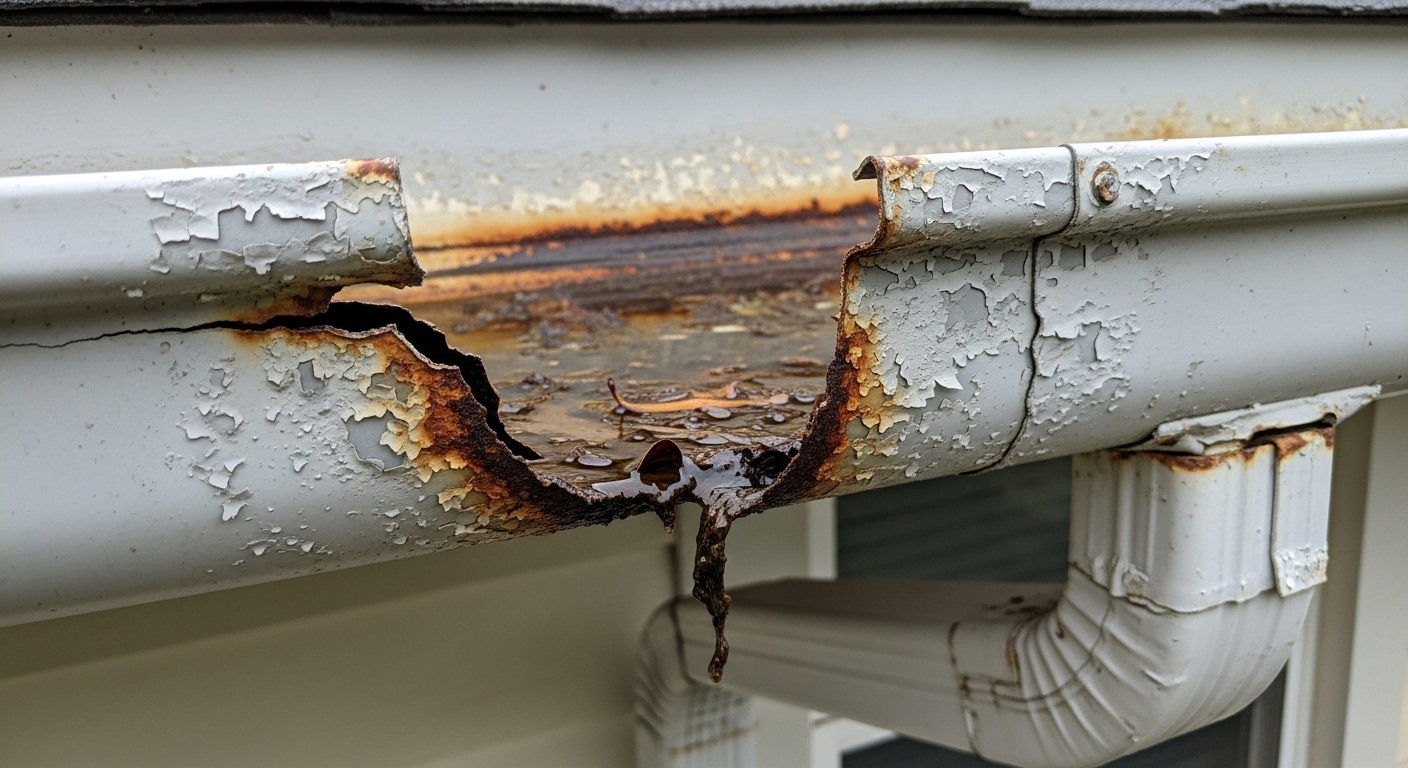
And then there’s the paint. Gutters are usually coated to withstand the elements. If you see paint flaking off or orange flecks of rust starting to bleed through, the structural integrity of the metal is being compromised. Once rust starts, you can’t really “clean” it away; it’s a slow-motion collapse of the material itself.
The Scenario:
Imagine it’s a sunny day, but you notice “tiger stripes” of dirt and rust running down the front of your gutters. This is a sign that water is escaping through cracks and carrying debris with it. It’s not just an eyesore; it’s a warning.
Pro Tip: Check the ground directly under the gutters. If you see flecks of paint or orange rust stains on your splash blocks, your gutters are telling you they’re nearing retirement.
2. Sagging or Pulling Away from the Roofline
Gutters should be straight and snug. If you look up and see a “dip” in a long run, or if there’s a visible gap between the gutter and the fascia board (that’s the wood it’s mounted to), you’ve got a problem.
This usually happens because the fasteners have stripped out of the wood, or the wood itself has rotted from previous leaks. Once a gutter sags, the pitch is ruined. Water will pool in that low spot, making it heavier, which causes more sagging… you see where this is going. If you can see daylight between your house and your gutters, gutter downspout services might be able to re-hang them, but often, the damage to the gutter or the wood behind it means a fresh start is better.
The Scenario:
You notice that even after a light rain, one specific corner of your gutter stays full of water for days. That standing water becomes a breeding ground for mosquitoes and adds constant stress to the hardware holding the system up.
Pro Tip: Grab a ladder (safely!) and try to gently wiggle the gutter. It should feel like a solid part of the house. If it jiggles or pulls back, the mounting system has failed.
3. “Basement Flooding” and Foundation Cracks
This is the one that keeps homeowners up at night. Your gutters have one job: move water away from your foundation. If you start seeing water in your crawlspace, or if you notice new, spiderweb cracks in your exterior brickwork, your gutters are likely failing at their primary mission.
If the water isn’t being channeled through the downspouts and out into the yard, it’s soaking into the soil right next to your home. That soil expands, puts pressure on your walls, and eventually finds a way inside. At this point, whether the gutters “look” okay doesn’t matter—they aren’t working, and they probably need a total redesign.
The Scenario:
You’ve spent thousands on home remodeling in Harris County, only to find a damp smell in the lower levels after a storm. You check the downspouts, and they’re bone dry while the walls are soaking. The water is taking the path of least resistance—over the back of the gutter and down the wall.
4. Mold, Mildew, and Rotting Fascia
Take a look at the wood behind your gutters. Is it dark, soft, or covered in green or black spots? That’s rot. When gutters clog or overflow regularly, the water sits against the fascia board.
Wood wasn’t meant to be underwater. Once the fascia rots, the “nails” holding your gutters have nothing to grip onto. This is usually when you see sections of gutter literally hanging by a thread. If you’re replacing the wood, it’s almost always the right time to perform a full exterior remodeling of the gutter system to ensure the new wood doesn’t suffer the same fate.
The Scenario:
You’re cleaning the gutters and notice that the spikes holding them up are pulling out. You try to hammer them back in, but they just slide into the wood like it’s butter. That wood is gone, and the gutters are no longer protected.
5. Puddles and Eroded Landscaping
Sometimes the best way to inspect your gutters is to look at the ground. Do you see “trenches” carved into your mulch or flower beds directly under the roofline? Do you have standing water right against the house long after the sun comes out?
This erosion is a “smoking gun” for failing gutters. It means the water is overflowing the top edge instead of flowing to the downspouts. This can be caused by gutters that are too small for the pitch of your roof or sections that have warped over time. If your landscaping is being destroyed, your Gutters Need Replacing with a system that can actually handle the volume of water your roof sheds.
Gutter Health Summary Table
| Sign of Trouble | Can It Be Cleaned/Repaired? | Does It Need Replacing? |
| Simple Clog (Leaves) | Yes, definitely. | No, just maintenance. |
| Hairline Cracks | Temporary patch possible. | Yes, if there are multiple. |
| Orange Rust Spots | No, the metal is failing. | Yes. |
| Sagging Sections | Maybe, if wood is solid. | Yes, if fascia is rotted. |
| Basement Leaks | Unlikely. | Yes, immediately. |
Key Takeaways for Homeowners
- Don’t ignore the “small” stuff: A tiny leak over the front door today is a rotted door frame next year.
- Pitch is everything: Gutters aren’t level; they’re angled. If that angle is gone, the system is useless.
- Water always wins: If you don’t give water a clear path away from your house, it will create its own path—usually through your drywall or foundation.
- Check during the rain: The best time to see if your gutters are working is to put on a raincoat and walk around the house during a storm.
- Safety first: If your house is two stories or higher, don’t risk the ladder. Get a professional expert roofing service to do the inspection for you.
Your Next Steps
Here’s the thing: gutters are your home’s first line of defense. They’re not glamorous, and nobody ever complimented a neighbor on their “stunning new downspouts.” But they are the difference between a dry, happy home and a soggy, expensive disaster.
If you’ve walked around your house and checked off more than two of the items on this list, it’s time to stop scooping leaves and start looking at new options. It’s about peace of mind. There’s nothing quite like sitting inside during a heavy Texas storm and knowing that every drop of water is being safely moved exactly where it belongs.
Ready to stop worrying about those waterfalls off your roof? We’ve helped countless homeowners navigate gutter and downspout services to protect their biggest investment. Let’s get your home back in shape before the next big storm hits.