The Silent Stress of a Texas Summer
If you’ve lived in Houston for more than five minutes, you know that the air doesn’t just sit there—it clings. It’s that thick, “I-need-a-shower-after-walking-to-the-mailbox” kind of humidity. And the heat? It’s not just a temperature; it feels like a physical weight.
But here’s the thing we often forget while we’re hiding inside with the AC cranked to sixty-eight: our houses don’t get a break. They’re standing out there in the 100-degree sun, soaking up UV rays and breathing in that swampy air 24/7.
Over time, that constant bake-and-steam cycle starts to change things. Boards warp. Shingles curl. Paint starts to look like it’s tired of life. If you’ve noticed your curb appeal slipping or your energy bills climbing, it’s not just your imagination. It’s the environment quite literally trying to break your house down.
I’m writing this because I want to help you understand exactly how heat affects your home’s exterior and, more importantly, how you can fight back. It’s not about “winning” against mother nature (spoiler: she always wins eventually), but about making sure your home stays a sanctuary rather than a money pit.
By the way, if you’re already seeing some “bubbles” in your siding or “waves” in your roof, don’t spiral. We’ve seen it all, and honestly, catching it now is way better than waiting for a surprise leak in the middle of a tropical storm.
What We’re Up Against: The Three Big Vulnerabilities
When we talk about the exterior, we’re really talking about the “envelope” of your home. To understand the damage, we have to look at the three main materials that take the biggest beating in our climate.
1. Your Siding (The Shield)
Whether you have wood, vinyl, or fiber cement, your siding is the primary barrier. Heat causes materials to expand, and humidity provides the moisture for mold and rot.
- Pros of high-quality siding: It keeps the “swamp” out of your wall cavities and reflects UV rays.
- Cons of neglect: Once siding warps or cracks, moisture gets behind it. That leads to the kind of rot you can’t see until it’s a $10,000 problem.
- Best use case: If you’re in a high-exposure area with no shade, fiber cement (like James Hardie) is usually the king of the mountain here.
2. Your Roofing (The Sun-Baked Hat)
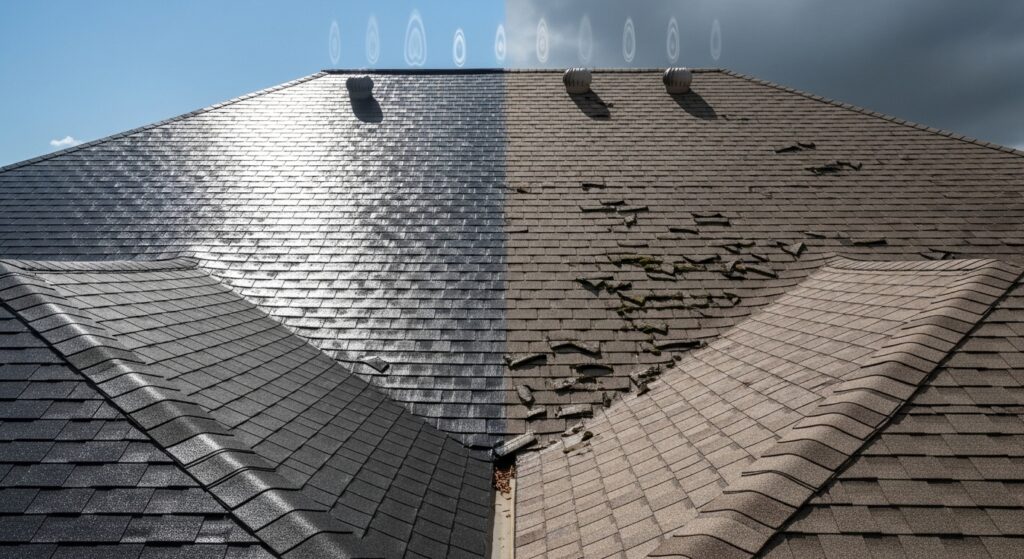
Your roof is basically a giant solar collector. Asphalt shingles can reach temperatures of 150 degrees or more. That heat “cooks” the oils out of the asphalt, making them brittle.
- Pros of a healthy roof: Proper ventilation and reflective shingles can actually lower your attic temp by 20 degrees.
- Cons of the heat: Brittle shingles lose their granules (the “sand” on top). Once those are gone, the sun eats the shingle alive.
- Cost considerations: A new roof installation in Texas is an investment, but it’s the only way to stop heat from migrating into your living space.
3. Windows and Seals (The Weak Links)
Ever notice a window that’s “foggy” even when you wipe it? That’s a seal failure caused by thermal expansion. The glass moves, the frame moves, and eventually, the seal just gives up.
- Pros of energy-efficient windows: They stop “heat transfer.” You can stand next to them in July and not feel like you’re in an oven.
- Cons: They are a major investment and require professional installation to ensure they’re actually airtight.
- Expert Insight: I always tell people to look at energy-efficient windows in Texas specifically rated for our “Climate Zone 2.”
Side-by-Side: Material Performance in Extreme Humidity
| Material | Heat Resistance | Humidity/Rot Resistance | Typical Lifecycle in TX |
| Vinyl Siding | Moderate (can warp) | High (doesn’t rot) | 15-20 Years |
| Fiber Cement | High (doesn’t warp) | High (pest/rot proof) | 30-50 Years |
| Wood Siding | High | Low (requires constant paint) | 10-15 Years (if neglected) |
| Asphalt Shingles | Moderate | High | 15-25 Years |
Expert Recommendations: The “Texas-Tough” Strategy
If I were sitting across from you with a cup of coffee, here’s exactly what I’d suggest depending on what you’re seeing at your house right now.
If your siding is looking “wavy”…
Look, vinyl is great for the price, but it has a “memory.” Once it warps from the sun, it stays warped. If you’re seeing this, it’s time to consider a siding installation using a material that doesn’t expand and contract so violently. Fiber cement is my go-to recommendation for Houston homes because it’s basically stone in plank form.
If your roof is losing its “sand”…
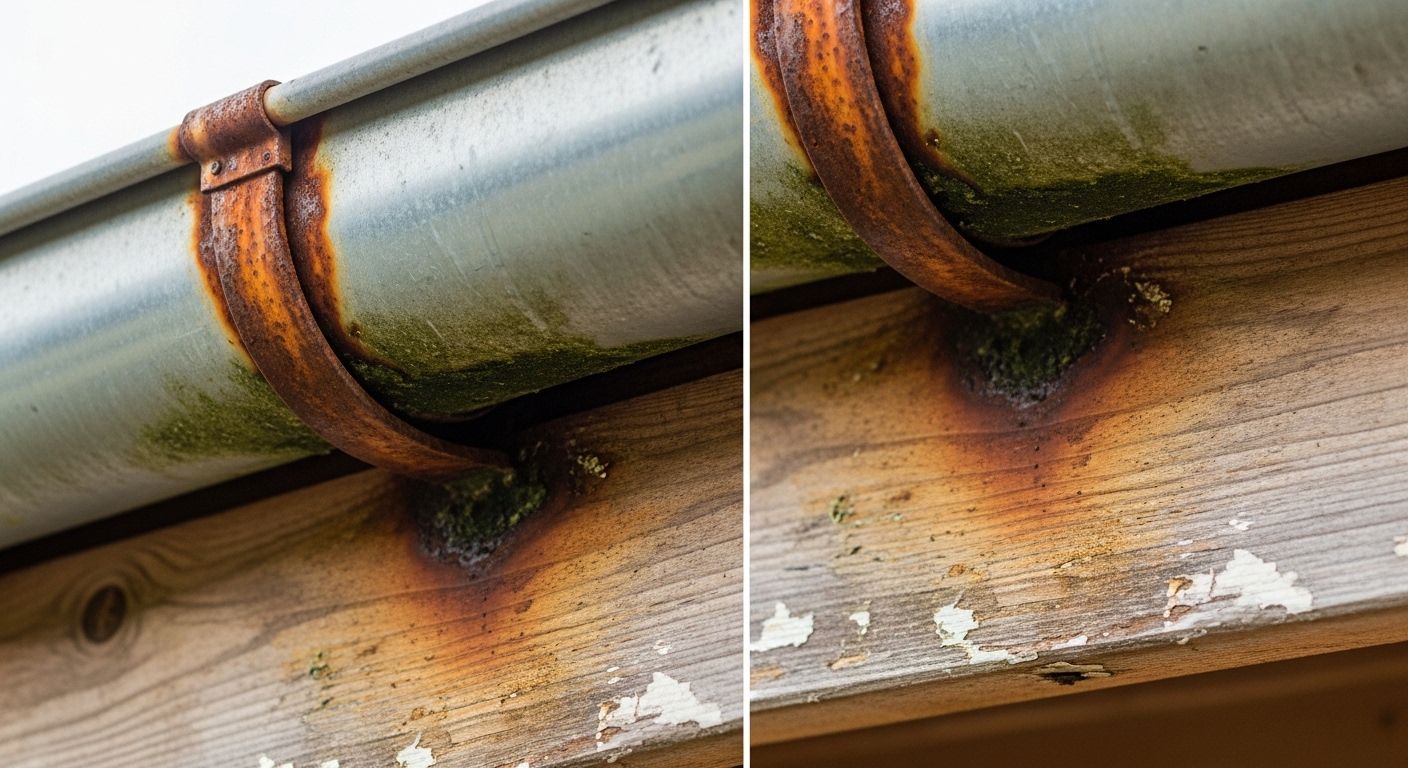
Go outside and look at your gutters after a rain. If they’re full of shingle granules, your roof is “balding.” It’s no longer protected from the UV rays. You might need reliable roof repairs to patch up hotspots, or it might be time for a full replacement to save your AC unit from working itself to death.
If your paint is peeling in sheets…
Humidity is the enemy of paint. If moisture is trapped behind the paint film, the heat turns it into steam, which pushes the paint off. It’s a sign that your home isn’t “breathing” right.
Decision Framework: Should You Repair or Replace?
I get this question all the time: “Can I just wait another year?” Here is how I think about it:
- The “Finger Test”: Go to the area where the siding meets the trim. Push on it. Is it soft? If it’s soft, the “bone” of your house is rotting. Replace now.
- The Energy Bill Check: Have your summer bills gone up 20% compared to last year (and it’s not just the rate increase)? Your exterior is leaking energy. Replace/Upgrade.
- The Aesthetic Check: Is it just faded? If the material is structurally sound but just looks “blah,” a high-quality paint job and some gutter downspout services to keep water away might be all you need.
FAQs: Your Weather-Related Questions Answered
Q: Does lighter-colored siding really help with the heat?
A: Absolutely. Dark colors soak up the sun. A lighter-colored exterior can significantly reduce the “surface temperature” of your walls, which means less heat transferring into your home.
Q: My attic is like a furnace. Is that normal?
A: Normal for Texas? Yes. Good for your house? No. It means your ventilation is failing. You need to check your soffit vents and ridge vents. If that heat stays trapped, it “bakes” your shingles from the inside out.
Q: Can I install new siding over my old wood siding to save money?
A: I wouldn’t. Honestly, it’s like putting a clean shirt over a dirty one. You’re just trapping existing moisture and rot between the layers. Always strip it down to the sheathing so you know what you’re dealing with.
Keeping Your Cool When the Weather Isn’t
Look, I know this can feel like a lot. Owning a home in a climate that’s trying to reclaim it for the swamp is a full-time job. But you don’t have to do it alone.
The goal isn’t to have a “perfect” house—those don’t exist in Houston. The goal is to have a house that’s smart, efficient, and protected. Whether that’s through a few roof repair services to get you through the season or a full exterior remodeling to start fresh, taking that first step is the biggest hurdle.
Think about it this way: every dollar you spend protecting your exterior is five dollars you don’t spend fixing mold in your walls or replacing a blown AC compressor.
If you’re worried about how the sun is treating your home, let’s take a look. We’ll be honest with you—if it just needs a good cleaning, we’ll tell you. If it’s time for a change, we’ll show you why.
Request a free, honest estimate from Tekton Exteriors and let’s get your home back into fighting shape.
Would you like me to check the long-term weather forecast for your area to see if we have a “dry window” coming up that would be perfect for an exterior inspection?