
That Rhythmic Drip Above Your Head
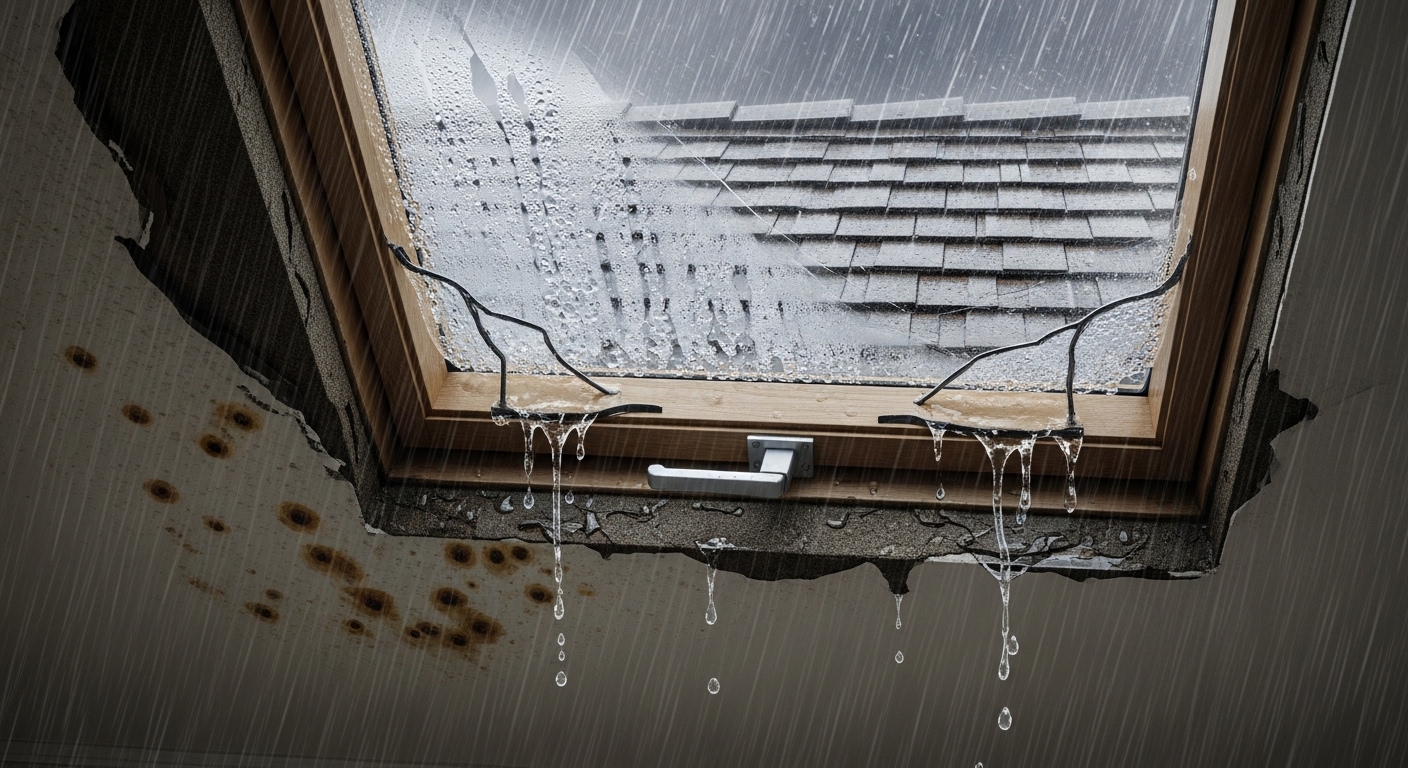
It’s 3:00 AM on a Tuesday. A classic Texas rainstorm is hammering your roof, and you’re just drifting off to sleep when you hear it. Drip. Pause. Drip. You flip on the bedside lamp, look up, and there it is—a slow, persistent bead of water tracing its way down the drywall tunnel of your skylight.
Honestly, it’s a heart-sinking moment. Your skylight is supposed to be that beautiful feature that floods your kitchen with morning sun or lets you watch the stars from bed. But the second it starts acting like a faucet, it feels like a liability. You start imagining the mold growing in the rafters and the massive bill for a full roof replacement.
But here’s the thing: a leaking skylight doesn’t always mean your roof is failing, and it doesn’t always mean you need to tear the whole thing out. Sometimes it’s a simple fix that takes twenty minutes. Other times… well, other times the unit has just reached the end of its road.
If you’re sitting there right now with a bucket on the floor and a knot in your stomach, take a breath. We’re going to walk through the “why” and the “how” together. Think of this as a diagnostic session over coffee—no jargon, just real talk about what’s happening above your head.
The Deep Dive: How Skylights Actually Work
To understand why a skylight leaks, you first have to realize that it’s essentially a giant hole cut into a perfectly good roof. To keep that hole dry, manufacturers rely on a “system” of defenses. When one part of that system tires out, the water finds a way in.
The Layers of Defense
- The Glazing: The actual glass or acrylic. This is usually doubled up with a seal in between.
- The Frame: The structure that holds the glass.
- The Flashing: The metal “armor” that directs water away from the hole and back onto the shingles.
- The Underlayment: A waterproof membrane tucked under the flashing for back-up protection.
Most homeowners think the glass is the problem, but in about 80% of the cases I’ve seen on Texas home remodeling projects, the leak is actually happening in the metal armor (the flashing) or the surrounding shingles.
6 Common Causes of a Leaking Skylight
1. The “Ghost” Leak: Condensation
Believe it or not, sometimes your skylight isn’t actually leaking rain. In humid areas like Houston or East Texas, warm, moist air inside your house rises and hits the cold glass of the skylight. It turns into water droplets that roll down the frame.
- The Fix: Improve your home’s ventilation or use a dehumidifier. If the “leak” only happens when it’s cold outside but dry, this is likely your culprit.
2. Clogged Weep Holes
Skylights are designed with tiny “weep holes” in the frame to let internal moisture escape. If these get filled with dust, pet hair, or debris, the water gets trapped and eventually spills over into your drywall.
- The Fix: Gently clear the frame’s internal channels with a small wire or compressed air.
3. Cracked Glazing (The Hail Factor)
Texas hail is no joke. Even if the glass doesn’t shatter, a small pebble-sized hit can create a hairline crack. Over time, the sun bakes that crack until it opens up enough for water to seep through.
- The Fix: If the glass is cracked, you usually need a full unit replacement. Patching glass with sealant is rarely a long-term solution.
4. Failed Flashing
This is the big one. The metal flashing around the skylight can pull away from the roof, or the sealant used during the original skylight installation can dry out and crack.
- The Fix: A pro needs to get up there, lift the shingles, and either re-seal or replace the metal flashing kits.
5. The “Roofing Shingle” Trap
Sometimes the skylight is fine, but the roof above it is failing. Water travels under the shingles, hits the skylight frame, and follows the frame into your house.
- The Fix: You’ll need a reliable roof repair to fix the shingles “upstream” of the skylight.
6. The Blown Seal
If your skylight looks “foggy” or has moisture trapped between the panes of glass, the factory seal has failed. This doesn’t always cause a drip right away, but it ruins your insulation and eventually leads to frame rot.
- The Fix: This requires a replacement of the glass “lens” or the entire unit.
Expert Insights: What the Pros Know
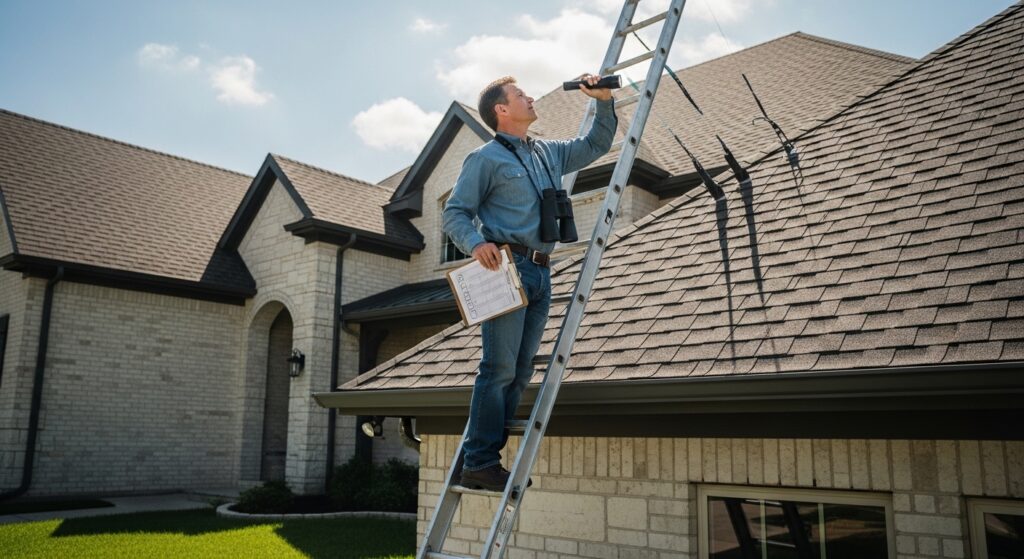
Look, I’ve spent enough time on ladders to know that a “quick fix” often ends up costing more in the long run. Here are a few things I wish every homeowner knew:
- Silicone is a Band-Aid, Not a Cure: Smearing a tube of clear silicone around the outside might stop the drip for a month, but it traps moisture against the wood. It’s the fastest way to turn a $500 repair into a $5,000 structural rot issue.
- The 15-Year Rule: If your skylight is over 15 years old and starts leaking, stop repairing it. The cost of two or three “patches” will equal the cost of a brand-new, energy-efficient unit with a 10-year “No Leak” warranty.
- Insurance Might Help: If a storm caused the leak, you might be eligible for insurance claim assistance. Don’t assume you have to pay out of pocket if hail or wind was involved.
Practical Application: Your Action Plan
If you have a drip right now, follow these steps:
- Identify the Timing: Does it leak during rain (Flashing/Roof issue) or only on cold mornings (Condensation)?
- Clear the Area: Move furniture and electronics. Use a “string” trick—tape a piece of string to the leak point and lead it into a bucket to prevent splashing.
- Check the Surroundings: Look for signs of hidden storm damage on the shingles nearby.
- Call a Specialist: Don’t just call a general handyman. Skylights require specific flashing knowledge that most “jack-of-all-trades” don’t have.
- Get a Quote: Ask for a repair quote and a replacement quote. If the repair is more than 30% of the replacement cost, go with the new unit.
FAQ Section
Q: Can I replace just the glass? A: On some older models, yes. But honestly? The labor cost to take it apart usually makes it smarter to just drop in a brand-new, high-efficiency unit.
Q: How long should a skylight last? A: In the harsh Texas sun, expect about 15 to 20 years. If yours is older than that, it’s on borrowed time.
Q: Will a new skylight make my room hotter? A: Actually, it’s the opposite. Modern units (like VELUX) use Low-E glass that blocks a massive amount of solar heat while still letting in the light.
Bringing it All Back to the stars
I remember a client in The Woodlands who spent two years trying to “patch” a leak in her master bath skylight. She was terrified of the cost of a full replacement. By the time she called us, the water had rotted the header beam in her ceiling. What could have been a $2,000 replacement turned into an $8,000 structural repair.
Your home is your sanctuary. You shouldn’t have to worry every time the clouds turn gray. A skylight is a bridge to the outdoors, and when it’s working right, it’s one of the best parts of a home.
If you’re tired of the “bucket dance” and want a real, permanent solution—or even just an honest inspection to see if you can save the unit you have—we’re here to help. Whether you need a precise skylight repair or you’re ready to upgrade to a modern, no-leak model, we’ll give you the straight-up truth.
Request a quote today, or just give us a call to chat about what’s going on. Let’s get that drip stopped so you can get back to enjoying the view.
Stay dry, and keep looking up.