
Your Home vs. The Texas Elements: A Year-Round Strategy
Let’s be honest for a second: being a homeowner in Texas is a bit like being a professional athlete. You’re constantly in training, and the “opponent”—whether it’s a random February deep freeze or a triple-digit August afternoon—is always looking for a weakness.
I’ve seen it happen so many times. You’re enjoying a quiet Saturday, and suddenly you notice a soft spot in the siding or a shingle that’s decided to go rogue. Most of the time, these “surprises” aren’t actually surprises at all; they’re just the result of the Texas elements slowly wearing down our home’s defenses while we’re busy living our lives.
That’s why I’m a huge advocate for a seasonal home exterior maintenance routine. Think of it like an oil change for your house. It’s not the most exciting way to spend a Saturday morning, but it’s the difference between a $200 weekend project and a $20,000 “oh-no” moment.
We’re going to walk through a checklist that actually makes sense for our climate. We aren’t just talking about raking leaves; we’re talking about protecting your investment from the specific brand of chaos that only Texas can provide. If you’ve been putting off a quick look around the yard, consider this your friendly nudge to grab a coffee and let’s get to work.
1. Spring: The Post-Storm Inspection
Spring in Texas is beautiful, but it’s also the season where the sky likes to throw things at us. Between the hail and the torrential downpours, your roof and gutters take the brunt of the impact.
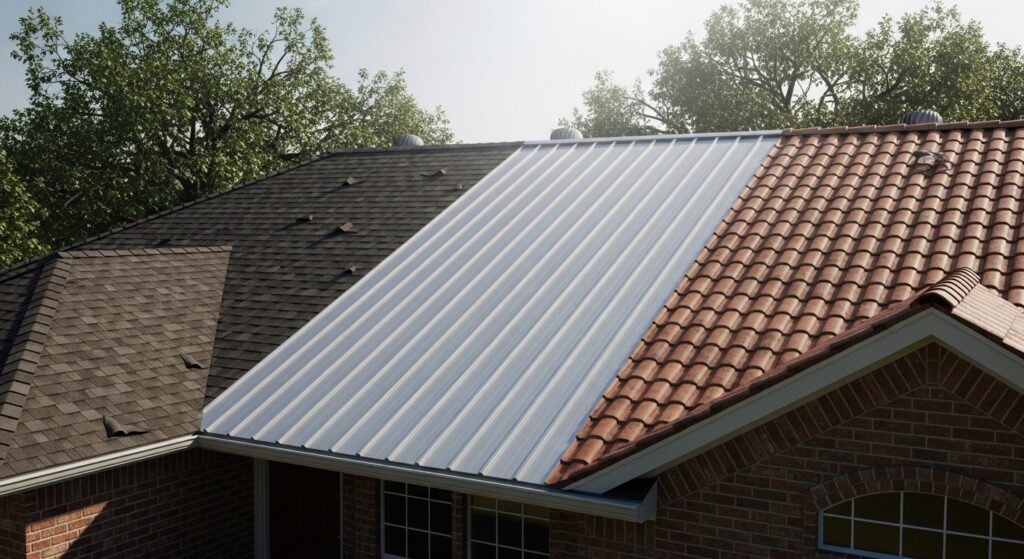
First thing you should do is look up. You don’t necessarily need to get on a ladder, but grab a pair of binoculars and scan for missing or curled shingles. This is the prime time to schedule reliable roof repairs in Texas before the humid summer sets in and turns a small leak into a mold party in your attic.
Real-world scenario: I once talked to a homeowner who ignored a small “hail bruise” in March. By June, a tropical depression turned that bruise into a waterfall in their master bedroom. A fifteen-minute walk around the house could have saved their drywall.
Quick Tip: Check your “splash blocks” at the bottom of your downspouts. Make sure they’re actually aimed away from your foundation. Texas soil is basically a sponge—you want that water far away from your slab.
2. Summer: The UV Protection Check
When the heat hits triple digits, your house is essentially being baked in a giant oven. This is when your siding and windows are most vulnerable to warping and seal failure.
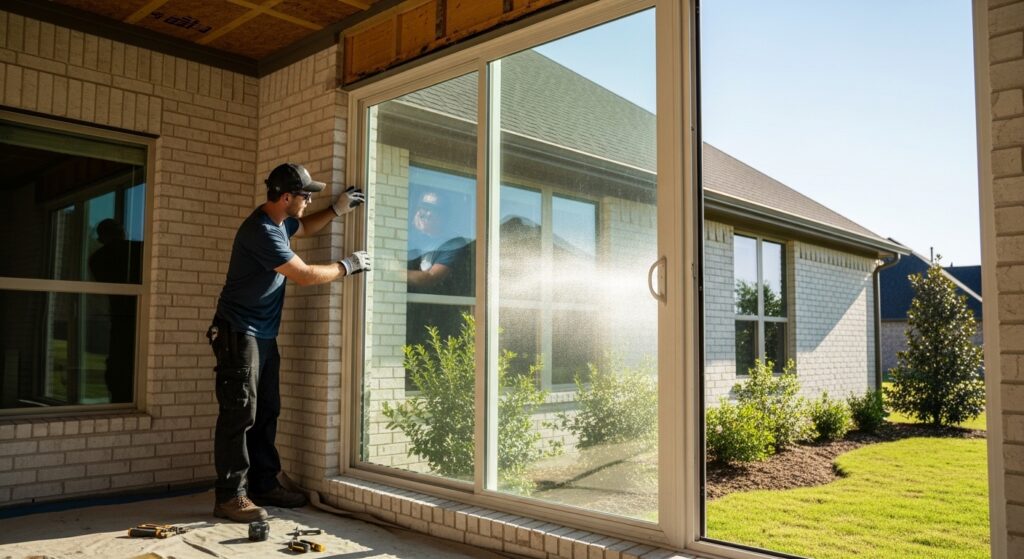
Walk around and look for “waviness” in your siding. If you have vinyl, the heat can cause it to expand so much that it buckles if it wasn’t installed with enough “breathing room.” Also, check the caulking around your windows. If it’s cracked or pulling away, you’re literally paying to cool the outdoors.
Real-world scenario: You know that feeling when you stand next to a window in July and can feel the heat radiating off it? That’s a sign that your energy-efficient windows in Texas might need an upgrade or at least some fresh weatherstripping to keep the Houston humidity where it belongs.
Quick Tip: If you have wood elements on your exterior—like a deck or decorative trim—give them a “water bead” test. Splash a little water on it. If it soaks in immediately, your sealant has failed, and the summer sun is going to dry-rot that wood fast.
3. Fall: The Gutter and Drainage Overhaul
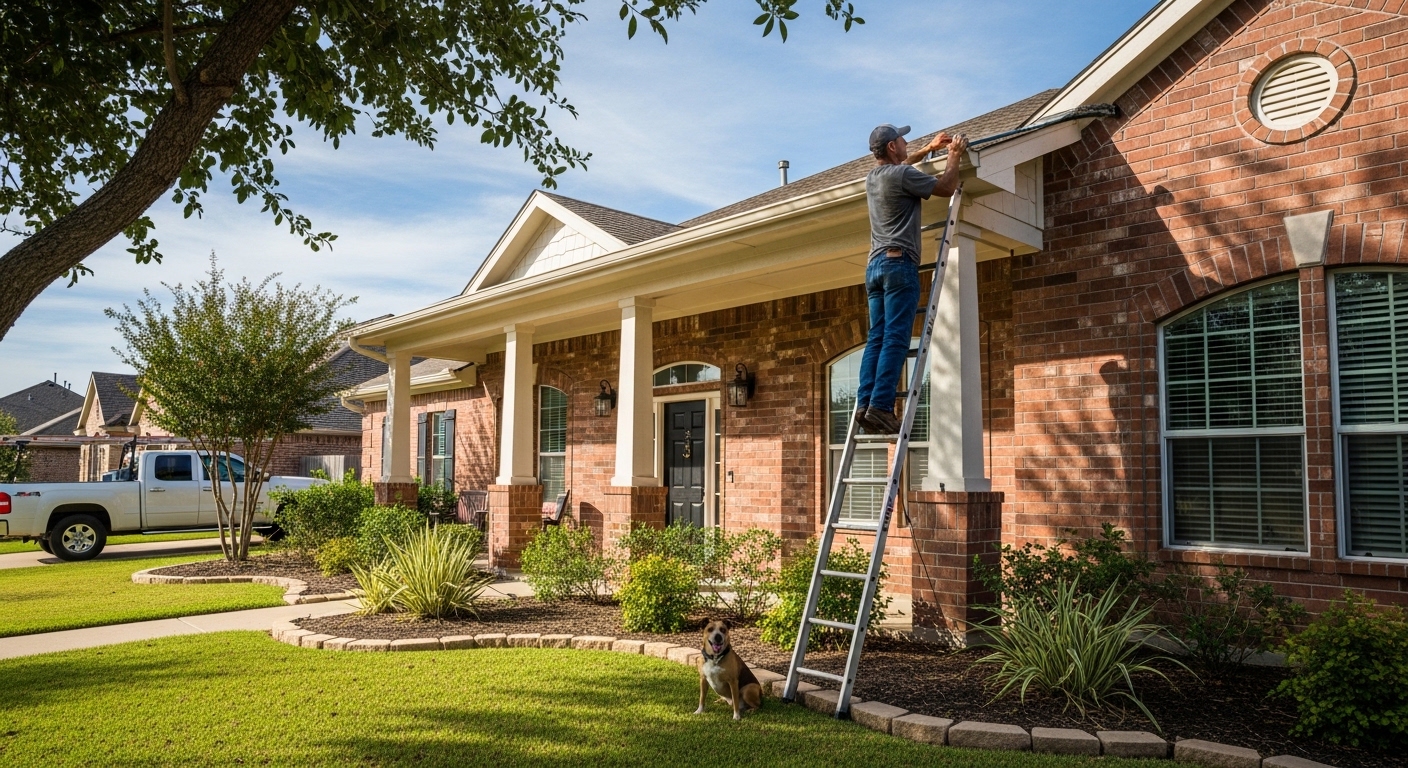
We don’t get much of a “colorful fall” here, but we do get plenty of pine needles and debris. This is the most critical time for gutter and downspout services.
Clogged gutters are the #1 cause of rotted fascia boards. When the water can’t flow, it backs up under your shingles and sits against the wood of your home. In Texas, where we can get three inches of rain in an hour, your gutters need to be clear and ready for the “gully washers.”
Real-world scenario: Imagine a heavy October rain. Instead of flowing out the downspout, the water is cascading over the front of your gutters like a curtain. That water is landing right next to your foundation, which can lead to cracks in your slab—the most expensive repair a Texan can face.
Quick Tip: Check your trees. Any branch hanging within 6 feet of your roof is a bridge for squirrels and a “saw” for your shingles during high winds. Trim them back now before hurricane season ends or the winter winds start.
4. Winter: The Freeze Prep
We all remember the big freezes of the last few years. Winter in Texas is unpredictable, and our homes aren’t always built for sustained sub-freezing temps.
The focus here is on “the envelope.” Make sure your custom door installation is actually airtight. If you can see light around the edges of your front door, heat is escaping. Also, disconnect every single garden hose. A frozen hose can back up and burst a pipe inside your wall, which is a disaster you don’t want to deal with during a power outage.
Real-world scenario: I’ve seen homeowners wrap their pipes but forget their outdoor kitchen area. One frozen faucet can ruin an entire outdoor living space. Think about every point where water leaves your house and protect it.
Quick Tip: Take a look at your attic insulation. Heat rises, and if you don’t have enough “fluff” up there, your roof will stay warm during a freeze, causing “ice damming”—where snow melts and refreezes at the cold eaves, pushing water up under your shingles.
Maintenance Frequency Comparison
| Task | Spring | Summer | Fall | Winter |
| Roof Inspection | High Priority | Moderate | Low | Low |
| Gutter Cleaning | Moderate | Low | Critical | Moderate |
| Caulking/Seals | Low | Critical | Moderate | Low |
| Siding Wash | Moderate | Moderate | Low | Low |
| Foundation Watering | Low | Critical | Low | Low |
Key Takeaways for Your Home’s Health
- Foundation is Final: In Texas, the soil moves. Keep it consistently moist in the summer to prevent your house from “heaving.”
- Don’t Ignore the “Small” Things: A $10 tube of caulk in July can save a $500 window repair in January.
- Gutters are Your Best Friend: They aren’t just for rain; they are foundation-protection devices. Keep them clean.
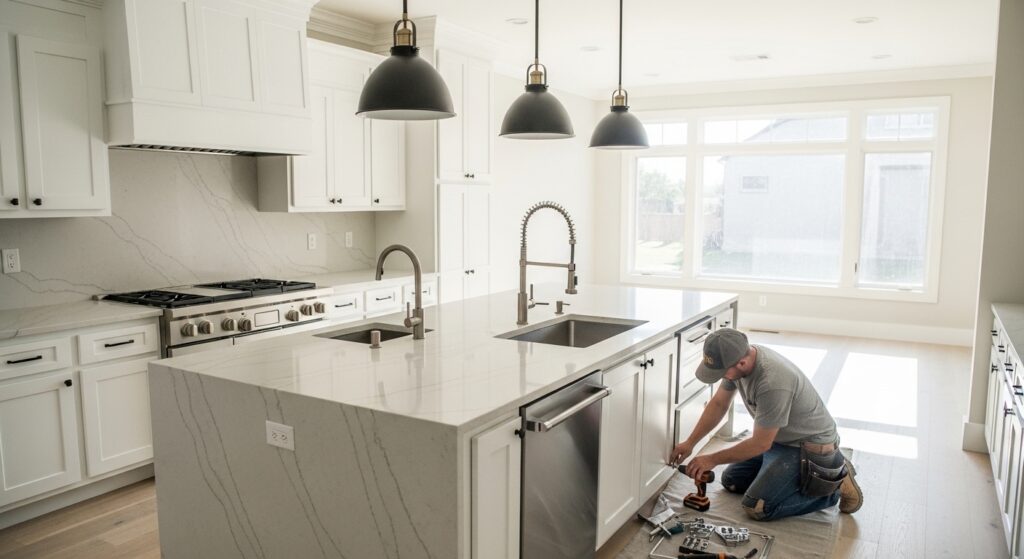
- Get a “Pro” Set of Eyes: Once a year, have an expert do a full exterior remodeling assessment just to catch what you might have missed.
- Contractions Matter: Your house expands and contracts constantly. Choose flexible materials that can handle the “Texas Stretch.”
Ready to Give Your Home the Care It Deserves?
Look, I know life gets in the way. We all have a list of chores that stays on the fridge for months. But your home’s exterior is the only thing standing between you and the wild Texas weather. Taking a few hours each season to walk the perimeter and check these boxes isn’t just about maintenance—it’s about peace of mind.
And hey, if you look up at your roof and see something that doesn’t look quite right, or if your siding is starting to look more like a “wave” than a wall, don’t feel like you have to tackle it alone. That’s what we’re here for. We know this climate, and we know exactly how to fix the damage it does.
Request a free estimate today and let’s make sure your home is ready for whatever the next season throws at it. No pressure, just a real look at what your house needs to stay strong.
Would you like me to send you a simplified, one-page PDF version of this checklist that you can print out and keep in your garage for easy reference?