Picking the Best Roofing Materials for The Woodlands, TX Climate
Look, we all love the towering pines and that “living in a forest” vibe we get here in The Woodlands. But if we’re being honest? This climate is basically a heavyweight boxer, and your roof is the one taking all the punches. Between the humidity that feels like a warm wet blanket, those sudden spring hail storms that sound like someone is throwing golf balls at your ceiling, and the relentless July sun… well, your roof has a tough job.
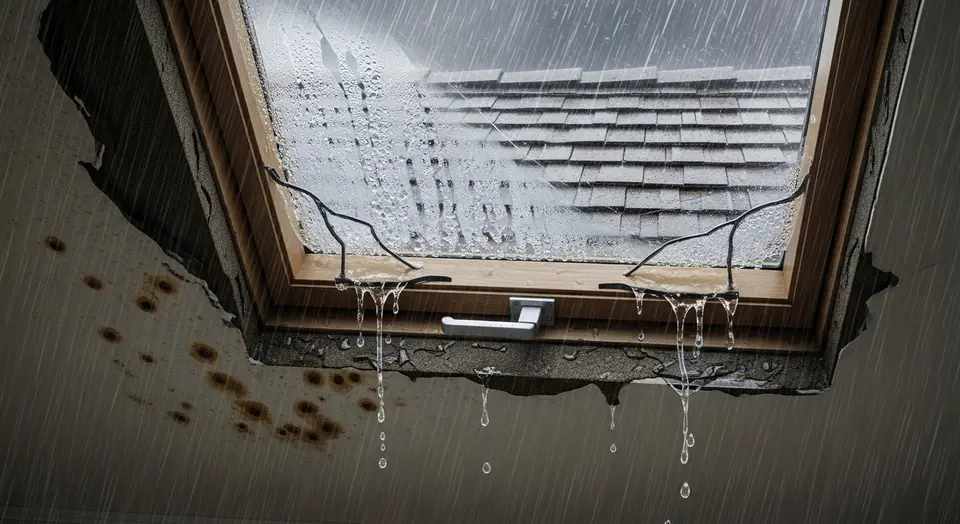
Choosing the right material isn’t just about what looks good on a Pinterest board. It’s about not having to call for emergency storm damage repairs every time a dark cloud rolls in over Lake Woodlands. I’ve seen so many homeowners get caught up in the aesthetics and forget that in Texas, “performance” is the only thing that keeps your living room dry.
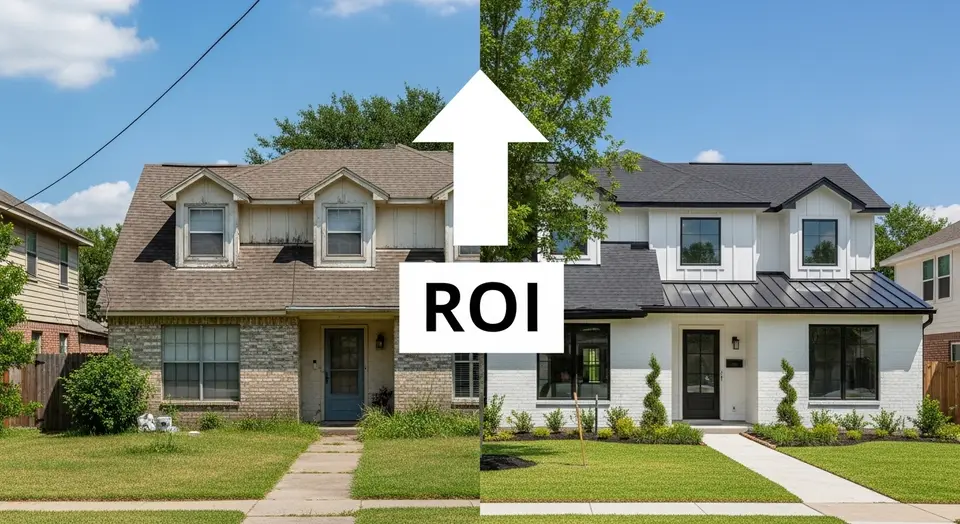
So, let’s grab a coffee and walk through the materials that actually make sense for our neck of the woods. If you’re starting to wonder if your current roof is up for another season, maybe it’s time for a professional roof replacement that’s actually built for Montgomery County.
1. Architectural Asphalt Shingles (The “Crowd Favorite”)
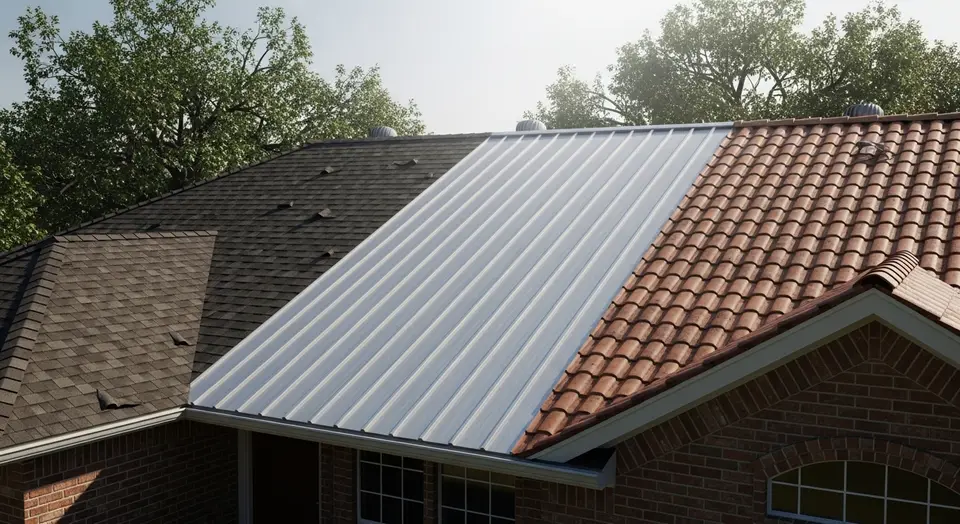
There’s a reason you see these on almost every home from Grogan’s Mill to Indian Springs. They’re the “Goldilocks” of roofing—not too expensive, pretty durable, and they look great. Unlike the old-school flat 3-tab shingles (which honestly, we should probably stop using in Texas), architectural shingles are thick, multi-layered, and have a lot of dimension.
They handle our high winds much better because they’re heavier. Plus, many of the modern versions come with specialized granules that reflect sunlight, helping keep your attic from turning into a literal oven during August.
The Real-World Scenario: Imagine it’s 3:00 PM in July. The sun is beating down, and your AC is screaming. A high-quality architectural shingle with “cool roof” technology is busy bouncing those UV rays back into the atmosphere instead of letting them soak into your decking.
Pro Tip: If you live in a heavily shaded area near the pines, look for shingles with copper-infused granules. They help prevent those ugly black algae streaks that love our humidity.
2. Standing Seam Metal Roofing (The “Forever” Choice)
I’ll be the first to tell you: metal isn’t the cheapest option. But man, is it tough. In a climate like ours, metal is basically a cheat code. It sheds rain instantly, it’s practically fireproof (great for those dry spells), and it laughs at the kind of heat that curls asphalt shingles into potato chips.
“Standing seam” means the fasteners are hidden under the metal folds. This is huge because it means there are fewer places for water to sneak in. Honestly, if you’re planning on staying in your home for the next 30 or 40 years, this is the smartest investment you can make. It’s the closest thing to a “one and done” solution.
The Real-World Scenario: A hurricane-force wind gust hits. While your neighbors are out in the yard the next morning picking up shingle scraps like they’re looking for Easter eggs, your metal roof hasn’t budged an inch.
Pro Tip: Check with your insurance provider. Many companies in Texas offer a significant discount on premiums for metal roofs because they’re so much more resistant to hail and wind.
3. Synthetic Slate and Shake (The “Style Icon”)
We have some gorgeous, high-end homes in Carlton Woods and Sterling Ridge where a standard shingle just doesn’t feel… right. You want that look of natural slate or cedar shakes, but natural wood rots in our humidity, and real slate is heavy enough to potentially crack your home’s frame if it wasn’t built for it.
Enter synthetics. They’re made from advanced polymers (fancy talk for high-grade plastic and rubber) that are molded from real pieces of stone or wood. They look incredibly authentic but weigh a fraction of the real thing and won’t grow moss or rot.
The Real-World Scenario: You want the “Old World” charm of a slate roof, but you don’t want to worry about individual stones cracking every time a tree branch falls. Synthetic slate gives you the look without the fragile ego.
Pro Tip: Synthetics often have the highest “Class 4” impact rating. That’s the gold standard for surviving a Texas hail storm without a dent.
4. Clay or Concrete Tile (The “Thermal Powerhouse”)
You see these a lot in Mediterranean-style homes around here. Tile is incredible at “thermal lag.” Basically, it takes a long time to heat up and a long time to cool down. In The Woodlands, this means the midday sun takes forever to actually penetrate the tile and reach your house.
The big “but” here? They are heavy. Really heavy. You absolutely need a structural engineer or a very experienced roofing expert in Texas to make sure your home can handle the load. But if your house is built for it, tile can last 50+ years.
The Real-World Scenario: It’s a 100-degree day. You touch your interior ceiling and it actually feels cool to the touch because the air pocket underneath the tiles is acting like a natural insulator.
Pro Tip: Concrete tiles are generally more affordable than clay and come in way more colors, though clay holds its color better over decades of Montgomery County sun.
5. Stone-Coated Steel (The “Best of Both Worlds”)
This is one of those materials that people don’t talk about enough. It’s exactly what it sounds like: a steel panel that’s shaped like a shingle or tile and then coated with stone granules. You get the incredible strength of metal but the traditional look of a “normal” roof.
It’s lightweight, so it can go on almost any home, but it’s tough enough to walk on without denting. For a place like The Woodlands where we want durability but also have to follow strict HOA “look and feel” guidelines, this is often the perfect middle ground.
The Real-World Scenario: Your HOA says “no metal roofs allowed” because they think it’ll look like a barn. You show them stone-coated steel that looks exactly like wood shake, they approve it, and you secretly get all the benefits of a steel roof.
Pro Tip: Because these are installed in a “grid” pattern, they create an integrated air gap that provides some of the best attic insulation of any material on this list.
Comparison Table: At a Glance
| Material | Lifespan | Cost | Best For… |
| Architectural Shingles | 20-30 Years | $ | Budget-conscious homeowners wanting reliability. |
| Standing Seam Metal | 50+ Years | $$$ | Maximum durability and “forever home” status. |
| Synthetic Slate/Shake | 40-50 Years | $$ | High-end curb appeal without the weight/maintenance. |
| Clay/Concrete Tile | 50+ Years | $$$ | Mediterranean styles and natural cooling. |
| Stone-Coated Steel | 50+ Years | $$ | Extreme weather protection with a traditional look. |
Key Takeaways for Woodlands Homeowners
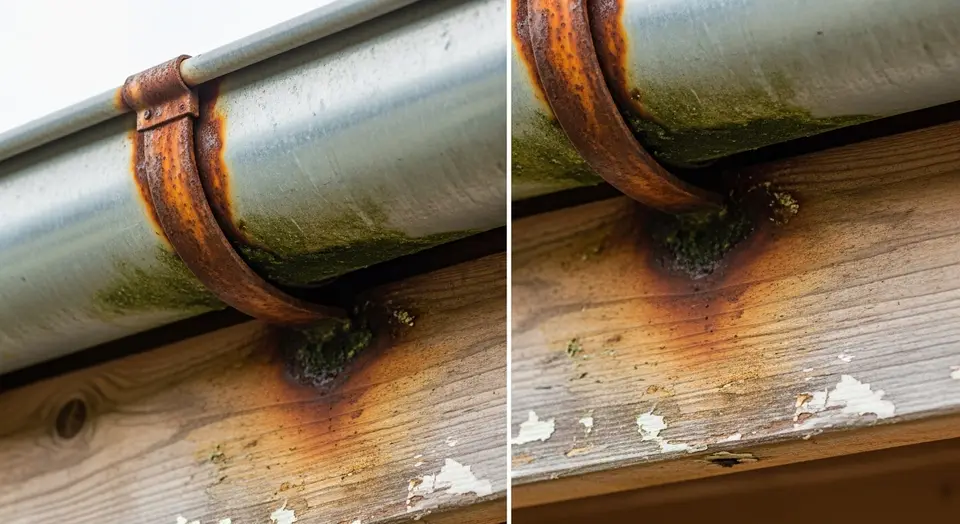
- Humidity is the silent killer: Whatever you choose, make sure it has algae-resistant properties and that your gutter and downspout system is clear to keep moisture away from the edges.
- HOAs are real: Always, always get your material and color choice approved by your specific Woodlands village association before the first shingle is torn off.
- Ventilation is half the battle: The best material in the world will fail if your attic is a sauna. Make sure your contractor checks your soffit and ridge vents.
- Invest in “Class 4”: If you can swing the extra cost for an impact-rated roof, it almost always pays for itself in insurance savings and avoided repairs.
Wrapping It All Up
Look, I know that talking about “underlayment” and “fastener patterns” isn’t exactly a thrill a minute. But here’s the thing: your roof is the only thing standing between your family and the wild Texas weather. Whether you go with the classic look of shingles or the “fortress” feel of metal, the goal is the same—peace of mind.
You want to be able to sleep through those midnight thunderstorms without wondering if you’re going to wake up to a puddle in the kitchen.
If you’re feeling overwhelmed by the options, or if you just want someone to take a look at your current setup and give you the straight scoop, we’re here to help. You can always reach out for a free estimate. No high-pressure sales, just one neighbor helping another figure out the best way to keep the rain out.
How’s your roof holding up? Seen any of those dreaded algae streaks lately? Drop a comment or reach out—let’s make sure your home is ready for whatever 2026 throws at us!
Related services and next steps
Compare Materials in the Context of the Whole Roof
A product choice should be evaluated with the roof deck, underlayment, flashing, penetrations, edge details, ventilation, drainage, and installation scope. A material that looks attractive on one home may not be the best fit for a different roof shape or tree exposure. Before selecting a color or profile, also check the review requirements that apply to the property.
Continue with the Woodlands roofing contractor hub, review the new-roof installation process, and compare new-roof estimate variables in The Woodlands.
Frequently Asked Questions
Which roofing material is automatically best for every Woodlands home?
No single material is automatically best for every property. Roof structure, pitch, ventilation, tree exposure, appearance goals, maintenance expectations, budget, and neighborhood requirements all affect the choice.
Should materials be compared by warranty length alone?
No. Review the written product and workmanship terms, exclusions, installation requirements, ventilation, maintenance expectations, and whether the selected system fits the roof.
How do shade and mature trees affect material planning?
Shade can slow drying, while needles, leaves, and branch contact can increase maintenance needs. The roof layout and surrounding canopy should be considered with drainage and ventilation.
When should I compare repair with replacement?
Compare the options when problems recur in multiple areas, the roof is approaching the end of its useful service life, or a limited repair may not address the broader system condition.