Quick answer: The most useful way to compare energy-efficient window costs in Texas is to compare written, installed quotes for the same number and size of openings, the same NFRC-rated performance, and the same labor scope. A low product price is not a reliable comparison when removal, flashing, trim, disposal, permits, glass options, or warranty coverage differ.
What U-factor and SHGC mean
Two numbers on the National Fenestration Rating Council (NFRC) label help homeowners compare whole-window energy performance:
| Rating | What it measures | How to read it | Why it matters in Texas |
| U-factor | Heat transfer through the complete window assembly | Lower means better resistance to heat flow | It affects how readily outdoor heat and indoor conditioned air move through the window |
| SHGC | Solar heat admitted through the window | Lower means less solar heat gain | It is especially important for sun-exposed glass in a cooling-dominated climate |
| Visible transmittance | Visible daylight admitted | Higher means more daylight | It helps balance glare, daylight, and solar-control choices |
| Air leakage | Air passing through the tested assembly | Lower means less tested leakage | It is useful when comparing comfort and draft performance |
NFRC describes U-factor as a measure of how well a product keeps heat from escaping and SHGC as the amount of solar heat a product allows in. ENERGY STAR qualification uses independently certified NFRC ratings and climate-zone criteria. These ratings apply to the whole product, not only the center of the glass.
The cost-comparison method
Online “price per window” figures often omit scope. Use this worksheet to normalize quotes before deciding which proposal costs less.
| Quote item | What to record | Common reason totals differ |
| Openings | Quantity, dimensions, location, and operator type | Picture, casement, sliding, bay, and specialty units are not equivalent |
| Performance | NFRC U-factor, SHGC, visible transmittance, and air leakage | Glass packages and complete-unit ratings differ |
| Frame and glass | Frame material, pane count, low-e coating, gas fill, laminate, tint, and grids | Options change material and fabrication scope |
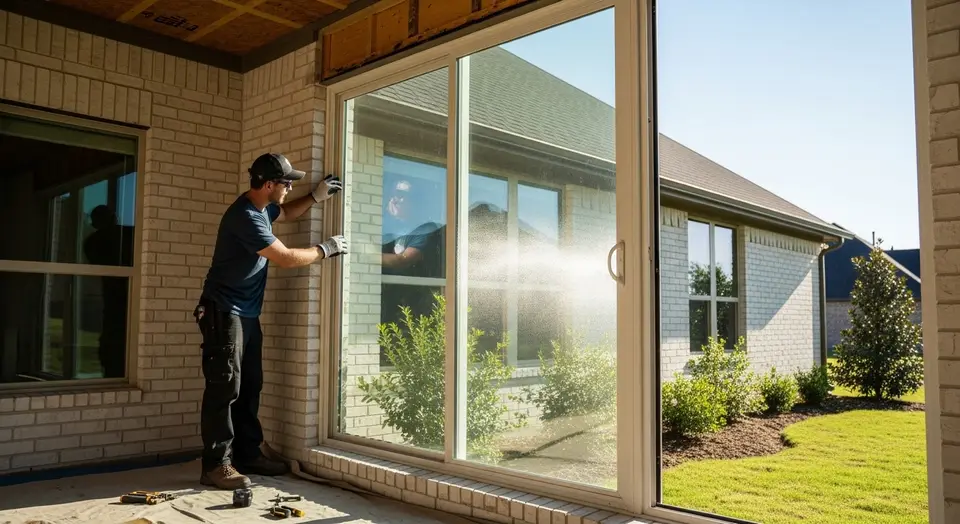
| Installation | Insert or full-frame method, flashing, sealants, shims, insulation, and water management | A lower quote may exclude opening repairs or exterior integration |
| Finish work | Interior/exterior trim, paint, stucco, siding, or masonry work | Finish restoration may be excluded or listed as an allowance |
| Removal and disposal | Old-unit removal, hauling, cleanup, and protection | Some proposals price these separately |
| Permits and access | Permit allowance, engineering if required, equipment, and difficult access | Local requirements and site conditions vary |
| Warranty | Manufacturer coverage, labor coverage, exclusions, and claim process | “Lifetime” wording can refer to different components or owners |
For an apples-to-apples comparison, calculate the total installed proposal, subtract clearly optional upgrades, and divide by the number of comparable openings. Keep specialty shapes, doors, structural repairs, and finish allowances in separate rows. This method does not predict the final price; it shows why two proposals differ.
Window features that influence performance and price
Low-e coatings and insulated glass
The U.S. Department of Energy explains that insulated glazing, low-emissivity coatings, gas fills, spacers, frames, and operating style all influence overall performance. Different low-e coatings can be tuned for lower, moderate, or higher solar gain, so “low-e” alone is not a complete specification.
Frame and operator type
Frame material affects heat transfer, maintenance, strength, and appearance. Operator type also affects size limits, hardware, screens, ventilation, and tested air leakage. Compare the exact configuration, not only the brand or series name.
Impact resistance versus energy performance
Impact resistance and energy efficiency answer different questions. An impact-rated configuration addresses specified impact and pressure tests; the NFRC label reports energy performance. If both matter, require documentation for both rather than assuming one label proves the other. See the separate impact-window comparison guide.
Questions to ask before signing
- What are the exact NFRC U-factor and SHGC for every configuration in this quote?
- Which ENERGY STAR climate zone does this county use, and does the quoted unit qualify?
- Is the installation insert, full-frame, or another method?
- How will the opening be flashed, sealed, insulated, and integrated with the exterior?
- What damage or finish work is excluded?
- Are permits, disposal, protection, cleanup, and taxes included?
- Who handles service if glass, hardware, seals, or installation develops a problem?
- Which warranty terms are from the manufacturer and which are from the installer?
Official sources and review date
This guide was reviewed on July 21, 2026 against the following primary sources. Criteria and incentives can change, so verify the current official pages before purchasing.
- ENERGY STAR: Residential Windows, Doors, and Skylights
- ENERGY STAR: Key Product Criteria
- ENERGY STAR Climate Zone Finder
- U.S. Department of Energy: Purchasing Energy-Efficient Windows, Doors, and Skylights
- National Fenestration Rating Council: Window Ratings and Labels
Plan the next step
Review the available energy-efficient window options, try the free window U-factor and SHGC comparison calculator, compare the related impact-window guide, or request a written project estimate. Ask for the exact NFRC ratings and installed scope so the proposal can be compared using the worksheet above.
Frequently Asked Questions
Which rating should Texas homeowners prioritize?
There is no single correct number for every Texas property. ENERGY STAR criteria vary by climate zone, and the correct zone should be checked by county. In warmer climates, ENERGY STAR advises prioritizing lower solar heat gain for windows facing south, east, and west. U-factor, air leakage, orientation, shading, frame type, and installation quality still matter.
- Use the official ENERGY STAR climate-zone finder for the property’s county.
- Ask for the NFRC label or certified performance record for each quoted product.
- Compare U-factor and SHGC across the same operator type and glass package.
- Discuss east- and west-facing windows separately because afternoon solar exposure can change the best glass choice.
- Confirm that the quoted rating is for the complete window configuration being ordered.
Is a lower U-factor always better?
A lower U-factor indicates less heat transfer through the tested product, but selection should also consider SHGC, orientation, daylight, air leakage, applicable code, budget, and the quality of installation.
Is a lower SHGC always better in Texas?
Lower SHGC is generally useful for limiting unwanted solar heat in warmer climates, particularly on sun-exposed elevations. The appropriate product still depends on the county’s climate zone, orientation, shading, daylight goals, and complete-window specifications.
Does ENERGY STAR certification replace the NFRC label?
No. ENERGY STAR advises shoppers to look for the ENERGY STAR label for the applicable climate zone next to the NFRC label. The NFRC ratings provide the product-specific performance values used for comparison.