
The Sound of Pennies Dropping from Heaven (Except They’re Ice)
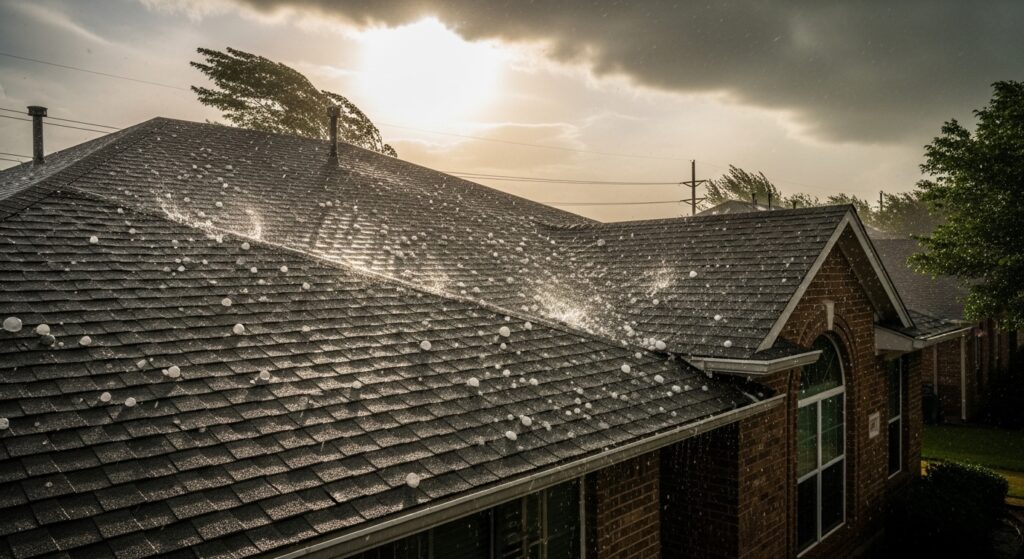
I’ll never forget the first big spring storm I experienced in Harris County. I was sitting in the living room when the rhythm of the rain suddenly changed. It wasn’t a pitter-patter anymore; it sounded like someone was standing on my roof and dumping a bucket of marbles every few seconds. Then came the “thuds”—the heavy, metallic clangs against the AC unit that make every homeowner’s stomach do a slow flip.
My neighbor, Mike, ran out as soon as the clouds broke. He was frantic, staring up at his shingles and touching his window screens like he was checking for a pulse. “It looks fine from here,” he shouted over the fence, “so I guess we dodged a bullet!”
But here’s the thing about Mike: he didn’t realize that hail is a sneaky thief. It doesn’t always break things immediately. Sometimes, it just weakens them enough that the next heat wave or rainstorm finishes the job. A few months later, Mike had a watermark on his ceiling the size of a dinner plate. By then, his insurance claim window was closing, and the “minor” bruising he’d ignored had turned into a full-blown roof replacement nightmare.
Mike’s story is exactly why we need to talk about what happens to your home’s exterior—especially your roof, siding, and windows after a Texas storm.
Why “Looks Okay from the Ground” Isn’t Enough
In Texas, we get the kind of weather that other states write folk songs about. When hail hits, it’s rarely just a few frozen pellets. It’s a high-velocity bombardment.
The problem is that damage to your home’s “envelope” is often cumulative. A hailstone hits a shingle, knocks off a few granules, and creates a microscopic fracture. You can’t see it from the driveway, but that shingle is now a ticking time bomb. The sun will bake it, the humidity will seep into it, and eventually, the water will find its way to your rafters.
Knowing how to spot these signs early isn’t just about being “handy.” It’s about protecting the equity in your home and making sure your insurance company actually pays for the protection you’ve been buying every month.
The Inspection Walkthrough: What You’re Actually Looking For
Don’t wait for the ceiling to drip. Grab a flashlight and a pair of binoculars, and let’s look at the three big battlegrounds.
1. The Roof: Bruises, Not Just Breaks
Most people look for missing shingles. And yes, if your roof looks like a patchwork quilt, you have a problem. But the real enemy is “bruising.”
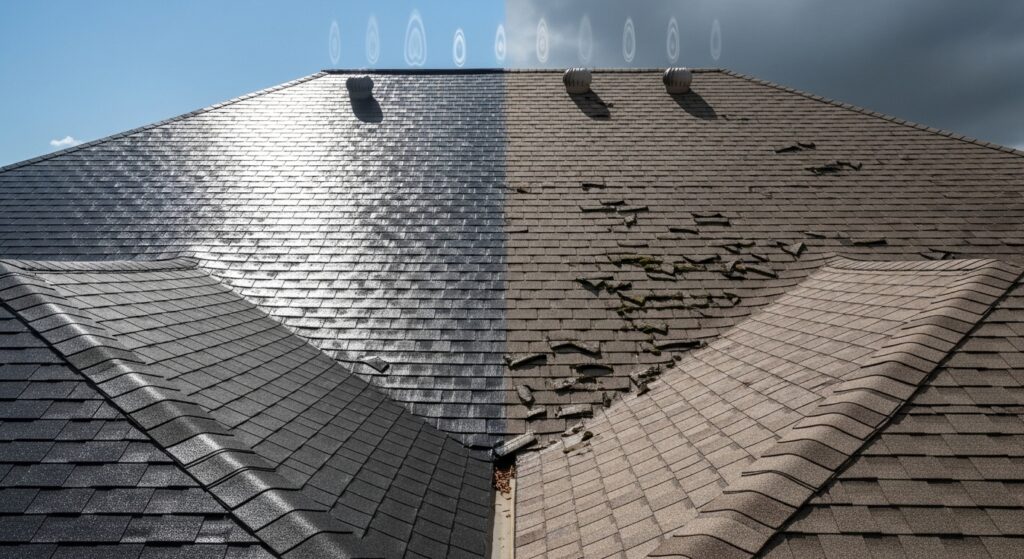
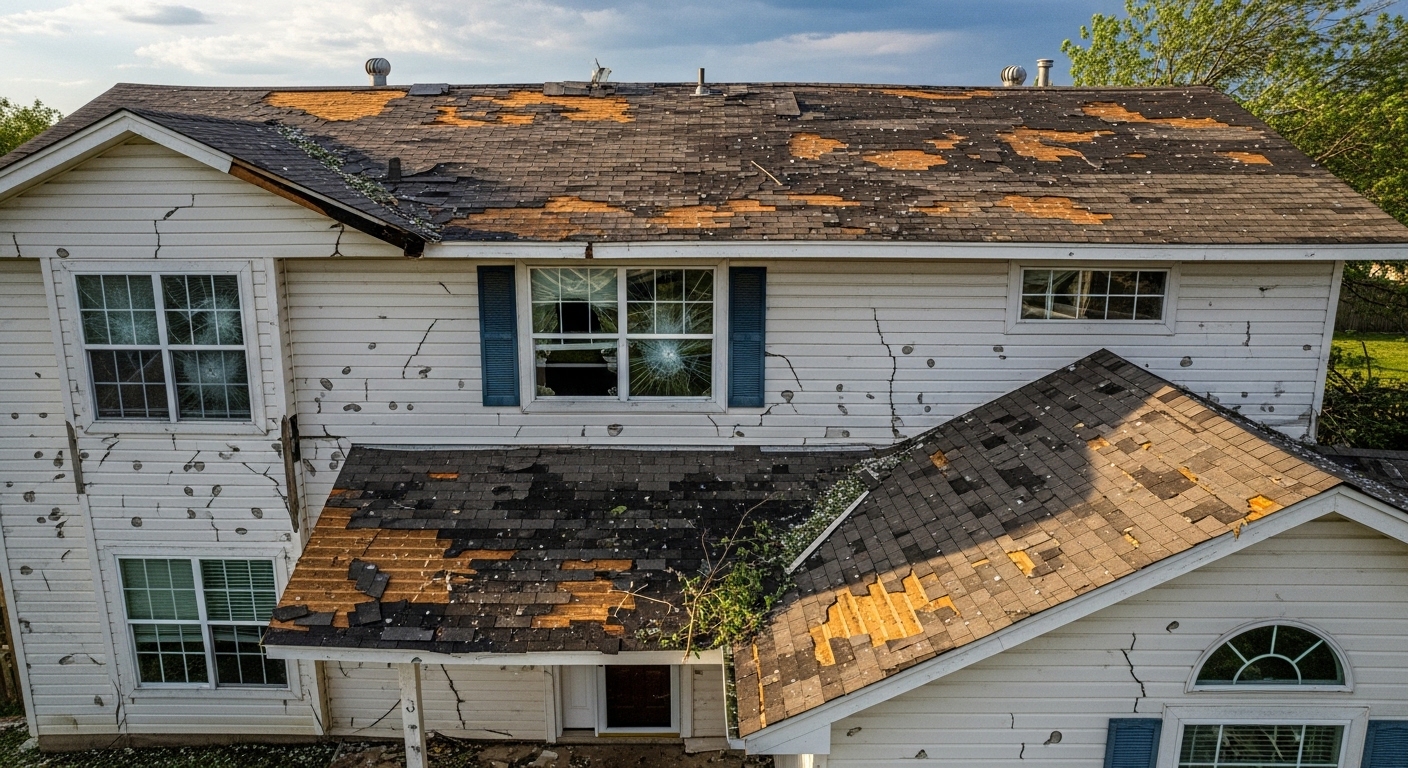
On asphalt shingles, hail damage looks like dark spots where the granules have been knocked away. It might feel soft to the touch, almost like the bruise on an apple. Look closely at the “flashing”—the metal parts around your chimney or vents. If the metal has dents (even tiny ones), the shingles nearby almost certainly took a hit too.
2. Siding: Cracks and Chips
If you have vinyl siding, hail can leave “starburst” patterns or actual holes. If you have fiber cement or wood, look for chips in the paint or hairline cracks.
Common Challenge: Many homeowners ignore siding damage because it doesn’t cause immediate leaks. But cracked siding lets moisture sit against your house’s sheathing. In our 90% humidity, that is an invitation for rot that you’ll be paying for in three years.
3. Windows After a Texas Storm: The Sneaky Damage
This is where most people miss the boat. You check for shattered glass, see that it’s intact, and move on. But your windows are more than just glass.
Look at the window frames (the “sashes”) and the wraps. Aluminum wraps will show dents like a car door. If you have vinyl frames, look for small cracks or “pitting.” Most importantly, check the seals. If your windows look “foggy” or have condensation between the panes a few days after a storm, the vibration or impact of the hail likely broke the thermal seal.
Expert Insights: The “Collateral Damage” Secret
I’ve spent years walking roofs with insurance adjusters, and there’s a trick the pros use to prove hail damage when the shingles are being stubborn: look at the soft metals.
Insurance adjusters always check your gutters, downspouts, and the fins on your AC unit first. Why? Because those materials are “honest.” They show every hit. If your gutter downspout services reveal dents the size of a dime, it’s statistically impossible that your roof escaped unharmed.
Also, don’t forget your fence! If the stain is knocked off your wooden fence in a circular pattern, that’s a clear indicator of the hail’s size and direction. Documenting this “collateral damage” is the best way to get a storm damage repair claim approved without a fight.
Practical Application: Your Post-Storm Action Plan
If the ice has just stopped falling, here is exactly what you should do:
- Safety First: Never get on a wet roof. Honestly, stay off the roof entirely. Use binoculars from the ground or a ladder at the eave.
- Take “Reference” Photos: Take wide shots of the house, then close-ups of the dents in your gutters, the chips in your siding, and any issues with your windows after a Texas storm.
- Check the “Chalking” Trick: If you suspect damage on your siding but can’t see it, run a piece of sidewalk chalk sideways over the area. The chalk will skip over the dents, making them pop out visually for your camera.
- Call a Professional: Insurance adjusters are paid to find reasons not to pay. You need someone on your side who knows how to spot the “silent” damage. We offer insurance claim assistance in Texas to make sure nothing gets missed.
FAQ: Quick Answers for Worried Homeowners
Q: Does hail have to be “golf ball sized” to cause damage? A: Not at all. High winds can make even marble-sized hail destructive. It’s about the velocity and the angle of the hit.
Q: Can I wait a few months to file a claim? A: You can, but it’s risky. The longer you wait, the harder it is to prove the damage came from that specific storm. Most policies have a one-year window, but sooner is always better.
Q: My windows didn’t break, but they feel drafty now. Is that hail damage? A: It could be. Large hail can warp frames or displace the window slightly in the opening, breaking the airtight seal. It’s worth having a window and door service pro take a look.
Don’t Let Your Home “Pull a Mike”
Look, I get it. After a storm, the last thing you want to do is start a fight with an insurance company or deal with a construction crew. It’s tempting to just glance at the roof, see that the shingles are still there, and go back to your coffee.
But remember Mike. A little bit of “bruising” today is a waterfall in your living room tomorrow. Texas storms are part of life here, but they don’t have to be the end of your peace of mind.
If you’re standing in your yard right now looking at your gutters and wondering if that “dimple” is new, let’s find out together. We’ve been through these storms before, and we know exactly what the adjusters are looking for—and what they’re trying to ignore.
Request a free storm damage inspection from Tekton Exteriors today. No pressure, no “storm chaser” tactics—just a real set of eyes on your home’s most important defenses.
Would you like me to look up the recent hail maps for your specific zip code to see exactly how large the hail was in your neighborhood last night?