
The Chaos After the Clouds Clear
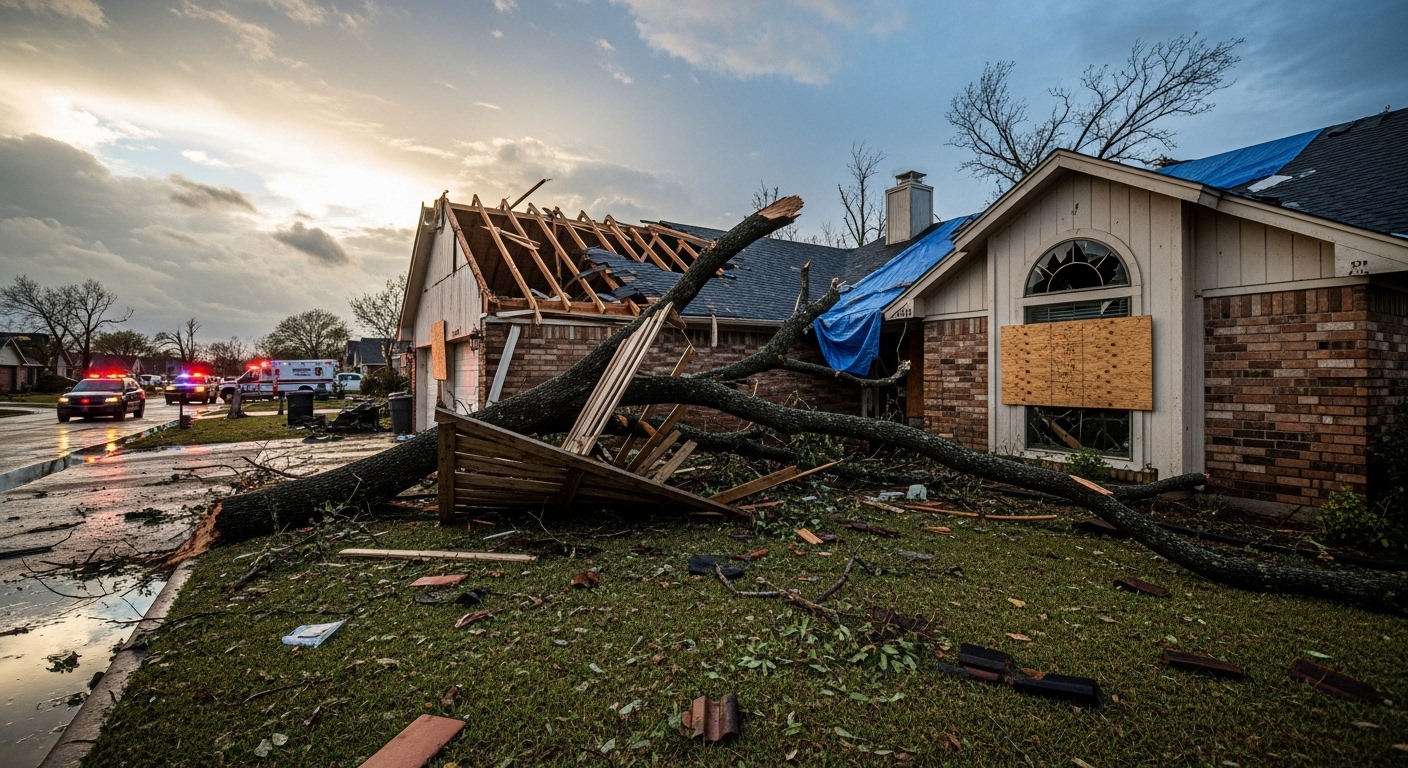
You know that specific, heavy silence that follows a massive Texas thunderstorm? The wind stops howling, the hail stops drumming on the shingles, and you finally step out onto your porch. You’re bracing yourself. Maybe you see a few missing shingles, a downed limb, or worse—a literal hole where the sky shouldn’t be.
Honestly, it’s overwhelming. Your home is usually your safe spot, and seeing it “wounded” by a storm feels personal. It’s easy to freeze up or, conversely, to start running around trying to fix everything at once. But here’s the thing: what you do in the very first 24 hours after storm damage to your Texas home determines how much of a headache the next six months will be.
If you’re standing there right now with a literal or metaphorical knot in your stomach, take a breath. We’re going to walk through this together. I’ve seen enough collapsed ceilings and “denied” insurance letters to know there’s a right way to handle this—and it starts with a very specific checklist.
1. Confirm Your Family is Actually Safe (Don’t Skip This)
It sounds like a “no-brainer,” but adrenaline does weird things to the brain. Before you even look at the roof, check the humans and the pets. In Texas, big storms often mean downed power lines or compromised gas pipes.
If you smell “rotten eggs,” get everyone out immediately. Don’t flip a light switch, don’t grab your shoes—just go. And look, if there’s standing water in your house, do not—I repeat, do not—step into it until you’ve confirmed the main power breaker is off. Electricity and water are a lethal combo, and no piece of furniture is worth the risk.
The “Real World” Scenario: I once talked to a homeowner in Conroe who ran into his flooded basement to save a box of old photos. He didn’t realize a power line had snapped and was touching the metal siding of his house. He got lucky, but it was a terrifyingly close call.
Quick Insight: If you’re unsure about the electrical safety, call a pro or the utility company before you step foot in the damaged area.
2. Take “The Evidence Photos” (Before You Touch Anything)
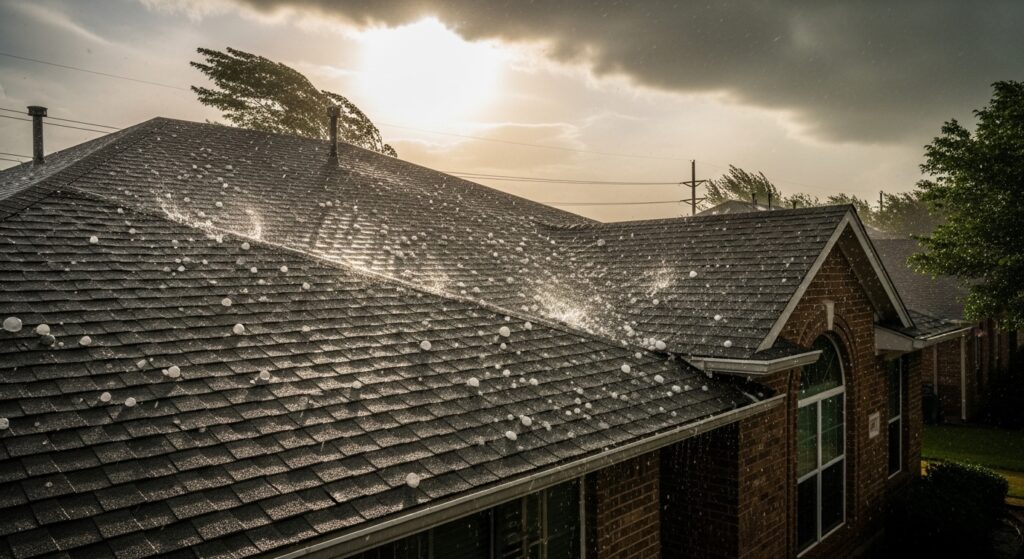
You’re going to want to start cleaning up. It’s a natural instinct to want the mess gone. But stop. Your insurance adjuster wasn’t there when the hail was the size of golf balls. They only see what’s left behind.
Grab your phone and take way more photos than you think you need. Get the wide shots of the whole house, then get the “macro” shots of the individual dings in your siding or the granules of shingle in the flower beds. If there’s a tree on your roof, photograph it from five different angles. This is your leverage.
The “Real World” Scenario: Think about it this way: if you move that fallen limb before the adjuster sees it, they might argue it didn’t cause the structural crack you’re claiming. Keep the “crime scene” intact for the camera.
Quick Insight: Don’t forget to take photos of interior damage too—water stains on the ceiling or soaked carpets are just as important as the roof.
3. Slap on a “Band-Aid” (Temporary Mitigation)
In the insurance world, you have a “duty to mitigate.” That’s just a fancy way of saying you can’t let a small leak turn into a swimming pool in your living room just because you’re waiting for a contractor.
If you can safely do it, throw a tarp over a hole or board up a broken window. If you aren’t comfortable climbing a ladder (and honestly, after a storm, surfaces are slick and dangerous), this is when you call for storm damage emergency repairs. You want to stop the bleeding, not perform the full surgery yet.
The “Real World” Scenario: I’ve seen a $5,000 roof repair turn into a $50,000 “whole-house mold remediation” because the owner waited three days for the sun to come out before covering a leak.
Quick Insight: Save every receipt for tarps, plywood, or emergency labor. Your insurance company is usually required to reimburse you for these “loss prevention” expenses.
4. Call Your Insurance Agent (The “First to File” Rule)
Texas storms usually hit entire neighborhoods at once. That means thousands of people are calling their insurance companies at the exact same time. It’s a race.
Get your claim in the system as soon as you’ve confirmed you’re safe and have your photos. You don’t need all the answers yet; you just need a claim number. Ask them specifically what your deductible is for “wind and hail”—in Texas, that’s often a percentage of your home’s value, not a flat $500.
The “Real World” Scenario: In Houston, after a big hurricane, the wait time for an adjuster can jump from two days to three weeks in a matter of hours. Being the 10th caller versus the 1,000th caller is a huge deal.
Quick Insight: If the process feels like a foreign language, look into insurance claim assistance. Having someone who speaks “Adjuster” on your side can change everything.
5. Beware the “Chasers” (Check the License Plate)
Within hours of a storm, you’ll probably have people knocking on your door offering “free roofs.” We call them storm chasers. Some are okay, but many are out-of-state companies that disappear the moment the check clears.
Look, I get it. They’re convenient. But you want someone with a local office—someone you can find if the roof starts leaking again in two years. Check for a local area code and ask where their home office is. If they’re from three states away, politely tell them “no thanks.”
The “Real World” Scenario: I’ve seen folks in Sugar Land get a “new roof” from a chaser, only to find out six months later that the shingles weren’t nailed down to code, and the company’s phone number was disconnected.
Quick Insight: Check their testimonials and Google reviews. A real local company will have a history in the community.
6. Get a Professional Inspection (Not Just a “Look-See”)
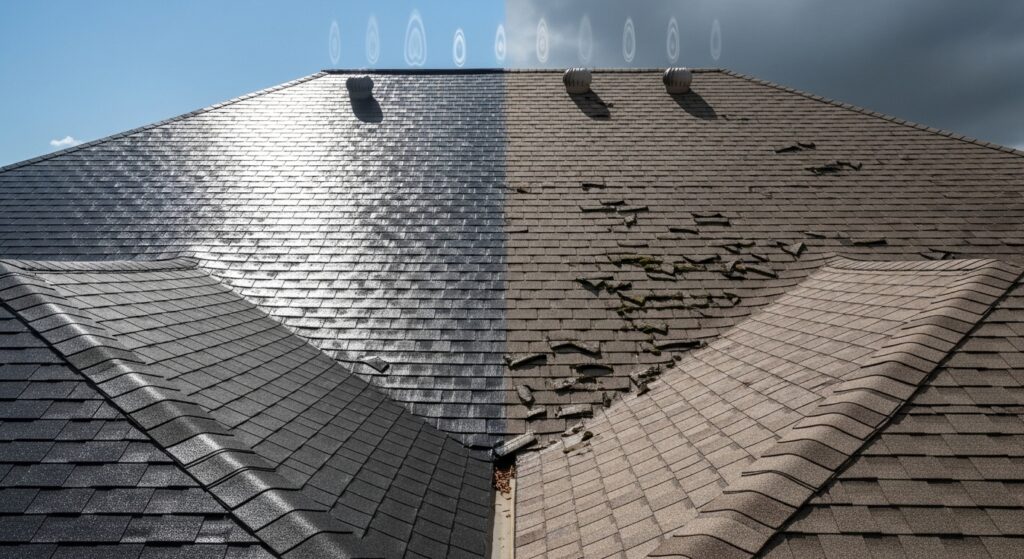
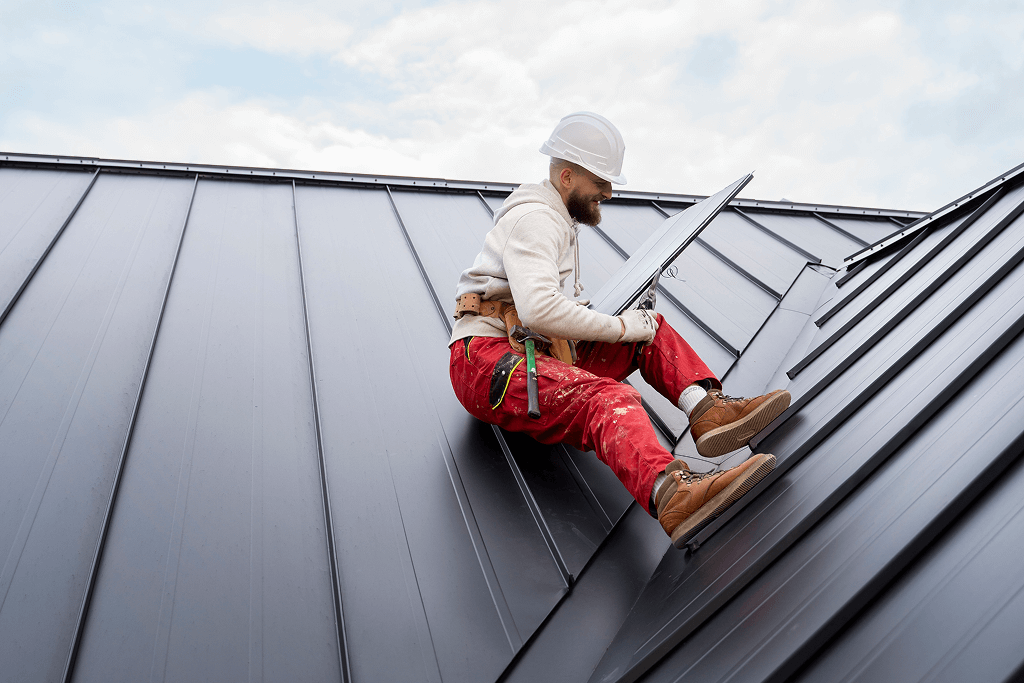
An adjuster’s job is to save the insurance company money. Your contractor’s job is to find everything that’s actually broken. You need a pro to get up on that roof and look for “bruised” shingles—hail damage that you can’t see from the ground but will cause the shingle to fail in a year.
Ask for a detailed estimate that breaks down materials and labor. If they just give you a number on a napkin, walk away. You need a document you can hand to your insurance company to say, “Hey, you missed this.”
The “Real World” Scenario: Often, a homeowner thinks they just need a roof repair, but the structural integrity is shot. You won’t know that until a pro gets up there with a trained eye.
Quick Insight: Ask the contractor to be present when the insurance adjuster visits. They can point out damage the adjuster might “overlook.”
Action Plan Summary
| Task | Priority | Why it matters |
| Safety Check | Immediate | Prevents injury from lines/gas/structure. |
| Photos | Within 2 Hours | Provides undeniable proof for your claim. |
| Emergency Tarp | Within 6 Hours | Stops further water damage and mold. |
| File Claim | Within 12 Hours | Puts you at the front of the line for an adjuster. |
| Find Local Pro | Within 24 Hours | Ensures you have an advocate for the repair. |
Key Takeaways for the Texas Homeowner
- Document Everything: From the first drip in the kitchen to the last receipt for a box of nails.
- Be Proactive, Not Passive: Don’t wait for the insurance company to tell you what to do; protect your home first.
- Stay Local: Use contractors who have a physical footprint in Texas. It’s about accountability.
- Understand Your Policy: Know your deductible before the “repair” talk starts.
- Don’t Rush the Final Fix: Emergency repairs happen now; the permanent roof replacement should happen once the insurance is settled.
Moving Forward Without the Headache
Look, I know this is a lot. Dealing with storm damage to your Texas home is a marathon, not a sprint, even if that first day feels like a mad dash. The most important thing is to not let the stress lead you into a bad contract or a dangerous situation.
If you’re sitting there looking at your ceiling and wondering where to start, you don’t have to do it alone. Whether you’re in Harris County or anywhere else in our neck of the woods, we’ve been through these storms too. We know the drill.
The clouds have cleared, the sun is coming back out, and we can get your house back to being a home. If you want a real, honest look at what needs to be fixed—without the “storm chaser” pressure—request a quote or just give us a shout. We’ll figure it out together.
Stay safe out there.