
The 3:00 AM “Is That a Leak?” Moment
I remember a guy I helped last summer—let’s call him Mike. Mike lives out in Katy, and he called me after one of those classic Houston afternoon thunderstorms that feels like the sky is literally falling. He was standing in his hallway, staring at a small, yellowing circle on his ceiling.
“The inspector told me this roof had ten years left when I bought the place in 2018,” he told me, sounding more exhausted than angry. “It’s only been eight years total since it was installed. What happened?”
Honestly? Houston happened.
Mike had a standard asphalt shingle roof, and on paper, it’s a “30-year” product. But here’s the thing about those manufacturer ratings: they aren’t tested in a place where the humidity stays at 90% and the sun bakes your attic like a convection oven for six months straight.
If you’re sitting there looking at your own roof—maybe you’re seeing some grit in the gutters or a shingle that looks a bit curled at the edges—you’re probably asking the same thing Mike did. How long do I really have?
Why Houston Years are Like Dog Years for Roofs
Look, we all love this city, but we have to be honest: it’s a brutal environment for building materials. When we talk about how long a roof lasts in Houston, we aren’t just talking about age; we’re talking about endurance.
In other parts of the country, a roof just sits there. In Houston, a roof is in a 24/7 wrestling match with the elements. We have three main “roof killers” that basically cut manufacturer warranties in half:
- The UV “Slow Bake”: The Texas sun evaporates the essential oils in asphalt shingles. They get brittle. Once they’re brittle, they lose their granules (that sandy stuff). Once the granules are gone, the roof is defenseless.
- The Humidity/Algae Cycle: You know those black streaks you see on roofs around town? That’s Gloeocapsa magma. It’s a hardy algae that loves our humidity. It doesn’t just look bad; it eats the limestone filler in your shingles.
- Thermal Shock: Imagine a shingle that’s been sitting in 100-degree sun all day—it’s probably 150 degrees to the touch. Then, a sudden thunderstorm dumps 70-degree rain on it. That rapid contraction causes micro-cracks that add up over time.
Breaking Down the Lifespan by Material
If you’re wondering what to expect based on what’s currently over your head, here is the breakdown of what I actually see in the field, not just what the brochure says.
1. Asphalt Shingles (The Common Choice)
This is what Mike had. Most “30-year” architectural shingles in Houston will realistically last 15 to 20 years. If you have the old-school “3-tab” flat shingles, you’re looking at more like 12 to 15 years.
If you’ve hit the 15-year mark and you’ve lived through a couple of hailstorms, you’re officially in the “bonus round.” It might look fine from the ground, but the underside is likely starting to fail.
2. Metal Roofing (The Marathon Runner)
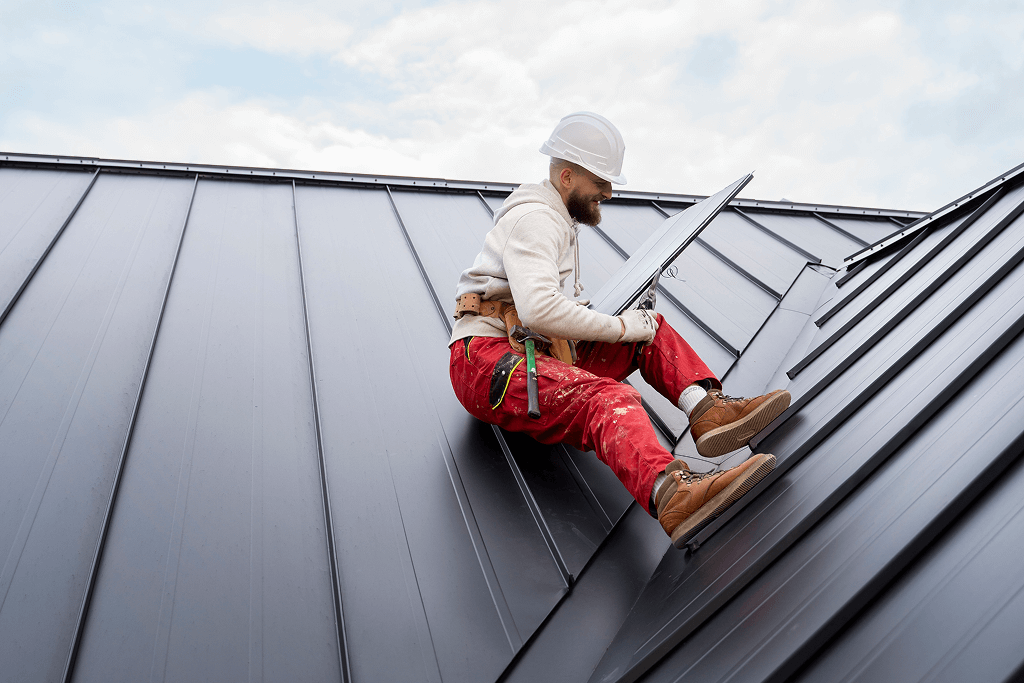
Metal is becoming huge in Houston for a reason. A well-installed standing seam metal roof can easily go 40 to 60 years.
The secret here is that metal doesn’t have oils to dry out. It reflects the sun rather than absorbing it. While the upfront cost is higher, you’re basically buying three shingle roofs’ worth of time. If you’re curious about why more people are making the jump, you should check out this guide on the best roofing materials for Houston’s climate.
3. Clay and Concrete Tile (The Heavyweights)
You’ll see these a lot in Mediterranean-style homes in areas like River Oaks or Memorial. These are incredibly durable and can last 50+ years.
But there’s a “but.” While the tiles themselves last forever, the underlayment (the waterproof layer underneath) usually fails around year 25 or 30. So, you might have to “lift and reset” the tiles at some point, which isn’t cheap.
Expert Insights: The Stuff Contractors Don’t Always Tell You
Here’s the thing: I’ve seen 10-year-old roofs that need to be torn off and 25-year-old roofs that look great. What’s the difference? It usually comes down to two things that have nothing to do with the shingles themselves.
Ventilation is Everything
Think of your attic like the lungs of your house. If it can’t breathe, the heat builds up and “cooks” your shingles from the inside out. I’ve seen roofs fail in eight years because the soffit vents were blocked with insulation. If your attic feels like a sauna in July, your roof’s lifespan is ticking away twice as fast.
The “Storm Tax”
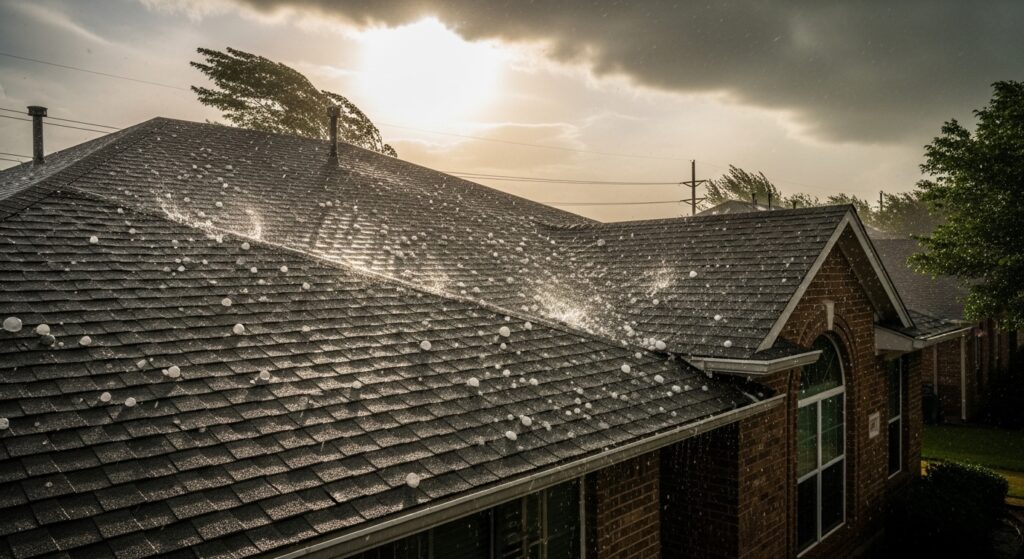
In Houston, we don’t usually wait for a roof to “wear out.” Usually, a hurricane or a hailstorm makes the decision for us. Even if you don’t see a hole, a hail hit can bruise the shingle and knock the granules off, shortening its life by five years in a single afternoon.
How to Tell if Your Time is Up
You don’t need to be a pro to spot the warning signs. Take a walk around your yard this weekend and look for:
- Granules in the downspouts: If your gutters look like they’re full of coffee grounds, your shingles are losing their “sunscreen.”
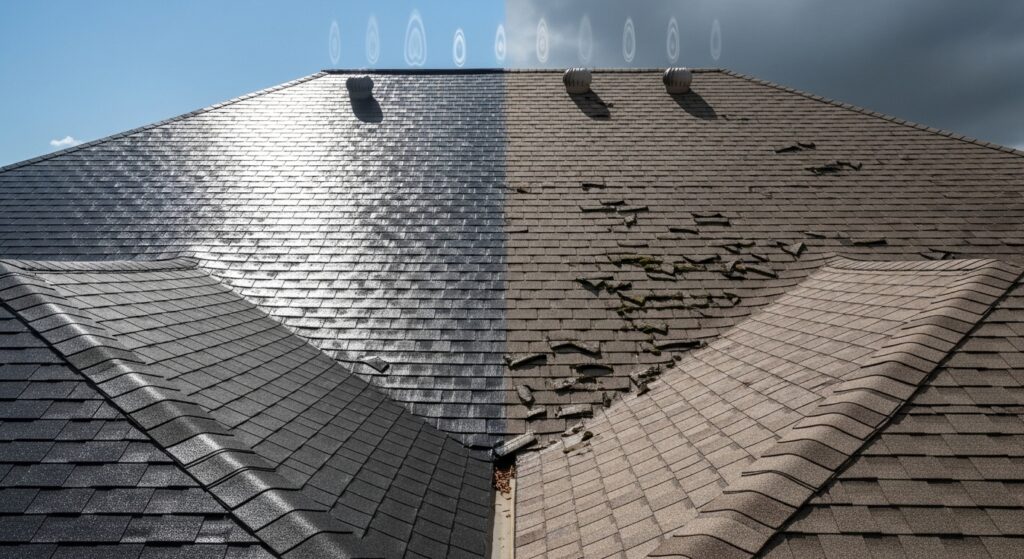
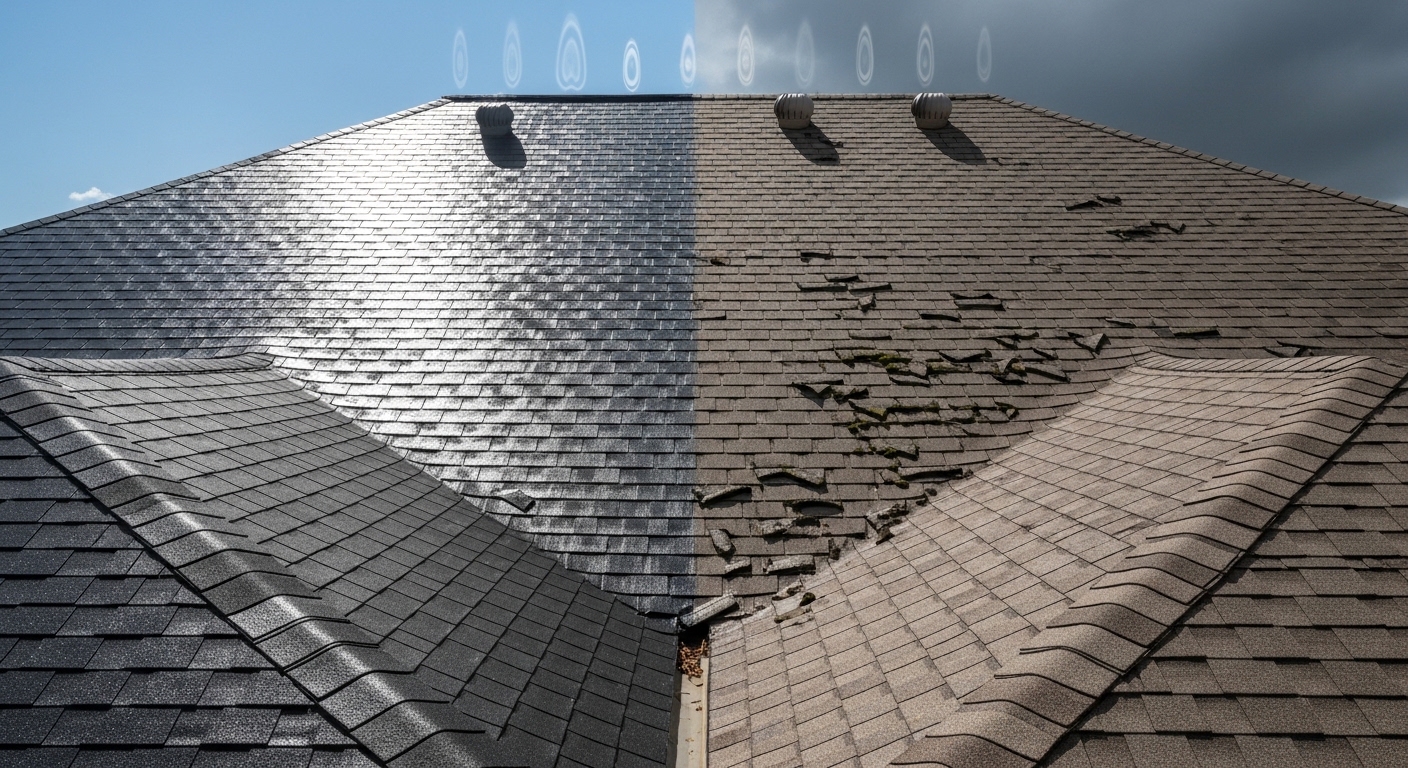
- The “Shiny” Look: When shingles lose granules, the fiberglass mat underneath starts to show. If your roof glints in the sun, it’s a red flag.
- Cupping or Curling: If the corners of the shingles are turning up like a dried-out leaf, they’re no longer shedding water properly.
- Interior Clues: Check your attic for light peeking through or dark water stains on the rafters.
FAQ: Quick Answers for Houstonians
Q: Does a “Lifetime Warranty” actually mean the roof lasts forever? A: Honestly? No. “Lifetime” usually refers to the “intended life of the product,” which manufacturers often define as 25-40 years. Plus, those warranties are usually pro-rated, meaning they pay out less as the roof gets older.
Q: Can I just patch my roof to make it last longer? A: You can patch a leak to save your ceiling, but you can’t really “extend” the life of an aging shingle. Once the whole system is brittle, patching one spot often just causes the shingles next to it to crack.
Q: Does my insurance pay for a roof that’s just old? A: No. Insurance covers “sudden and accidental” damage (like hail or wind). They don’t cover “age and wear.” This is why it’s so important to have a pro look at your roof after a storm—you want to catch the damage while it’s still an insurance matter.
The Verdict: Don’t Wait for the Drip
Back to Mike in Katy. We ended up replacing his roof with a high-quality architectural shingle, and we made sure his attic ventilation was actually working this time. He told me later that his AC didn’t run nearly as much that August.
If your roof is over 15 years old, you aren’t “saving money” by waiting—you’re just gambling with your drywall and your peace of mind.
Look, nobody wants to buy a new roof. It’s not as fun as a new car or a patio. But in Houston, your roof is the only thing standing between you and the next 100-degree afternoon or tropical system.
Give yourself some peace of mind. If you’re worried about how much time you have left, have someone you trust get up there and give you an honest assessment. Not a sales pitch—just the facts. Because the best time to find out your roof is failing is before you see that yellow circle on your ceiling.
Need an honest look at your roof’s health? We’ve helped thousands of Houstonians navigate the “roofing maze” with zero-pressure inspections and actual expert advice. Let’s make sure your home is ready for whatever the Texas sky throws at it next.