
The $20,000 Puddle
I remember a homeowner in Austin—let’s call him David—who was a dedicated DIY enthusiast. He’d spent a weekend at a big-box store, bought a truckload of 10-foot vinyl gutter sections, and spent two days climbing ladders to snap them all together. He was proud of it. It looked decent, and it saved him a few hundred bucks on labor.
But then, a classic Texas spring rolled in. You know the kind—where the sky turns a weird shade of bruised purple and suddenly it’s dumping three inches of rain in an hour.
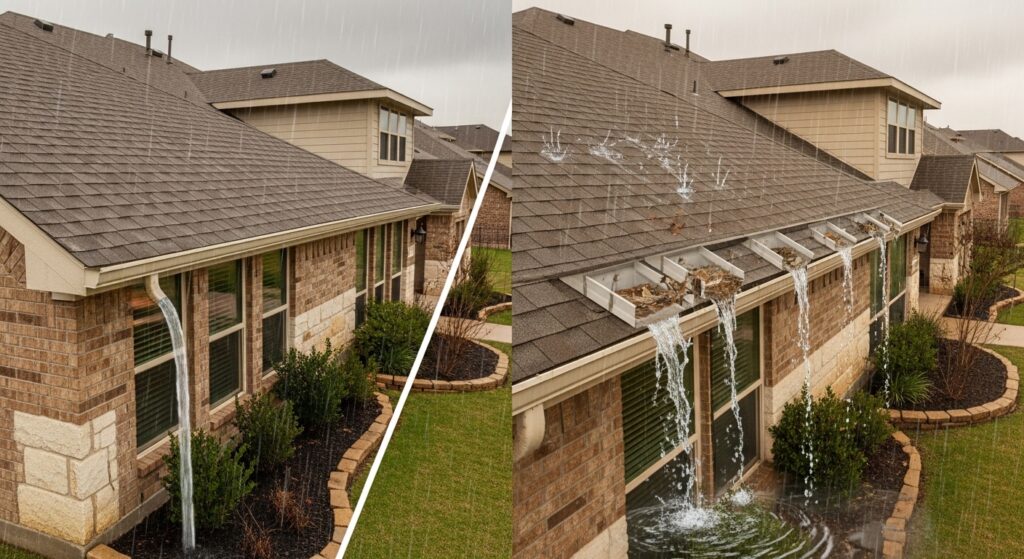
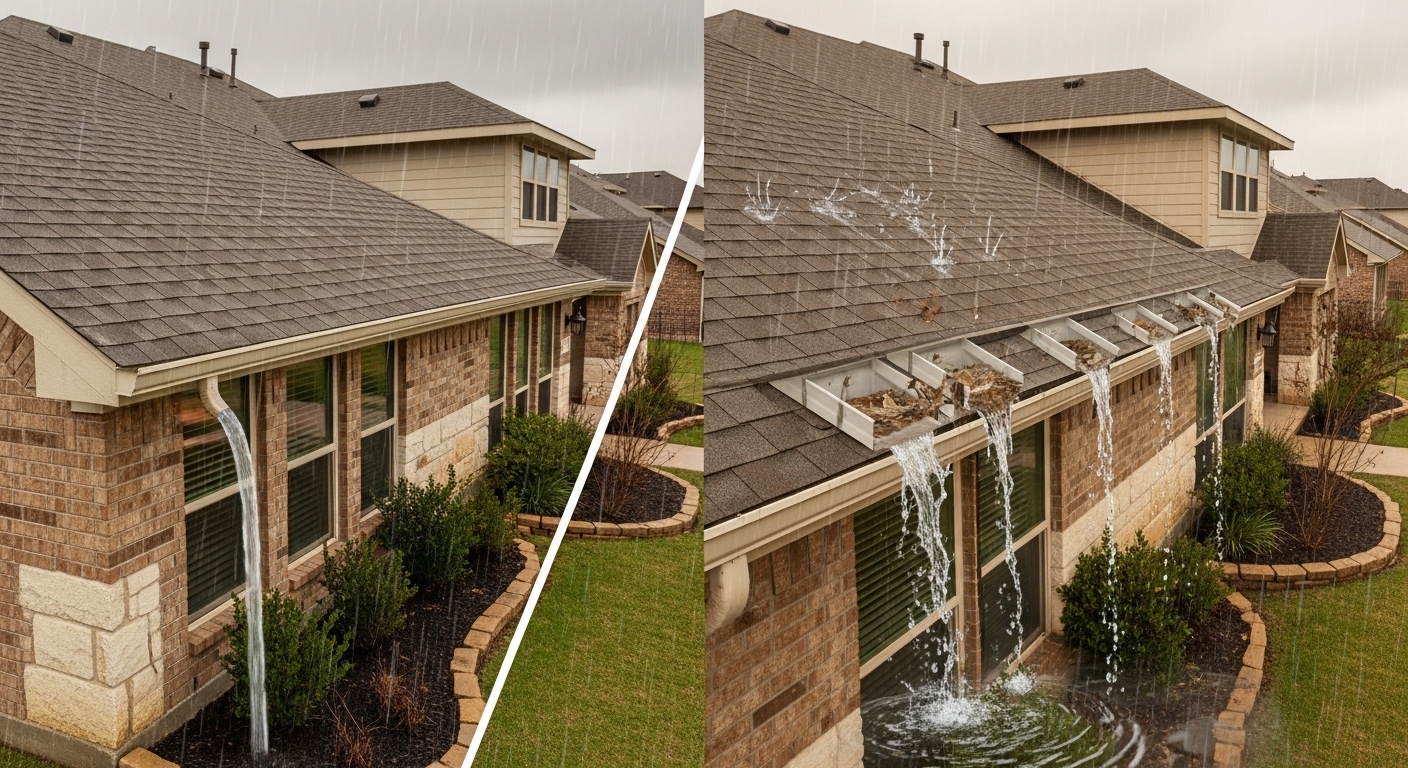
David was standing in his garage, watching the “waterfall.” His sectional gutters were holding up in some spots, but every five or ten feet, right at the seams, they were gushing. One particular leak was dumping a steady stream of water right against his foundation. Fast forward two years, and David was looking at a foundation repair bill that made his “DIY savings” look like pocket change.
The problem wasn’t David’s effort. It was the seams. In a state where everything is bigger—including the storms—those little gaps in your gutters are the difference between a dry home and a total nightmare.
Understanding the Two Contenders
If you’re looking at your roof and realizing your current drainage is a mess, you’re basically choosing between two very different philosophies of water management.
Sectional Gutters: The “Lego” Approach
Sectional gutters are what you find on the shelves of your local hardware store. They come in pre-cut lengths—usually 10 or 20 feet. You, or a contractor, piece them together like a giant puzzle using connectors, corner pieces, and a whole lot of sealant.
They’re accessible. They’re cheap upfront. But… they have a built-in expiration date. Every single joint is a potential failure point.
Seamless Gutters: The “Custom Suit” Approach
Seamless gutters are exactly what they sound like. They don’t come in a box. Instead, a professional roofing crew brings a specialized machine to your driveway that “rolls” the gutter out of a single coil of metal to the exact length of your roofline.
One side of your house is 53 feet long? You get one 53-foot piece of gutter. No seams. No joints. Just one continuous path for the water to follow.
Why Texas Homes Care About the Difference
Look, if we lived in a place where it just drizzled occasionally, this might not be a big deal. But Texas doesn’t do “drizzle.” We do flash floods, extreme heat, and wild temperature swings. Here is why that matters for your gutters:
1. The Expansion and Contraction Game
Our summer sun is brutal. Metal expands when it’s 105 degrees in August and contracts when we get those weird winter freezes. On a sectional gutter, all that shifting puts immense stress on the sealant and the screws at every joint. Eventually, that sealant gets brittle, cracks, and—you guessed it—starts leaking.
Seamless gutters don’t have that problem. Because there are no joints, the whole system moves as one. It’s significantly more resilient to the “Texas flex.”
2. Debris and the “Snag” Factor
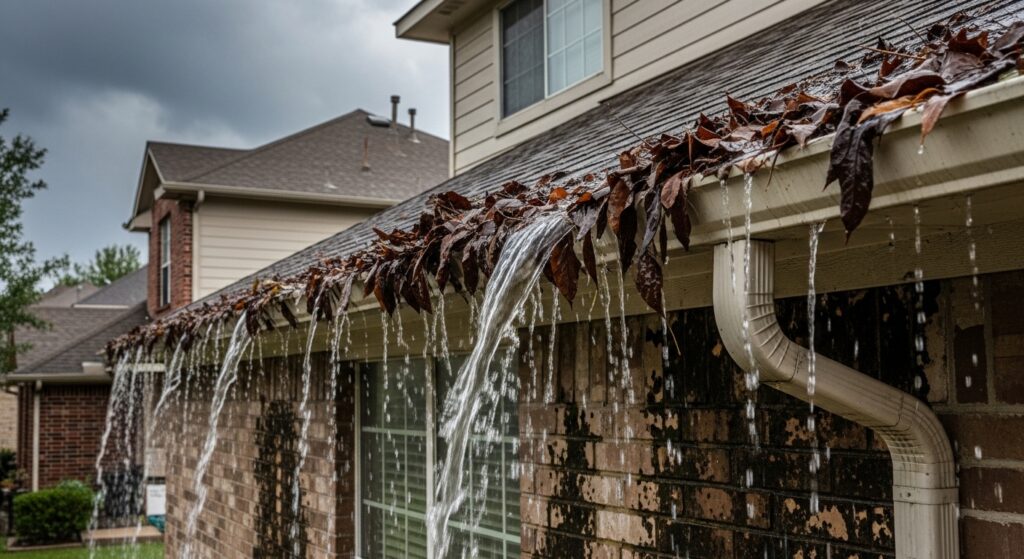
Sectional gutters have ridges and screws on the inside at every seam. These are perfect little “snags” for oak tassels, pine needles, and shingle grit. Once a small pile of muck starts building up at a seam, it traps more debris. Pretty soon, you’ve got a mini-wetland growing in your gutters.
Seamless gutters are smooth on the inside. Water and debris slide right through to the downspouts without getting caught on internal hardware. For more on how different materials handle this, check out our guide on the best roofing materials for Houston’s climate.
3. Foundation Protection
I’ve said it before, and I’ll say it until I’m blue in the face: gutters are for your foundation. Texas clay soil is incredibly sensitive to moisture. When a sectional gutter leaks at a seam, it creates a concentrated “borehole” of water right next to your slab. Over time, that leads to foundation shifting, which leads to cracked drywall and doors that won’t shut.
Expert Insights: The Real Cost of “Cheap”
When I talk to homeowners about gutter and downspout services in Texas, the biggest hurdle is usually the initial price tag. Yes, seamless gutters cost more. You’re paying for a specialized machine, a professional crew, and high-quality aluminum or copper.
But here is the “insider” truth: Sectional gutters are a maintenance trap. You’ll spend more money on tubes of sealant, ladder rentals, and potential wood rot repairs over five years than you would have spent on the seamless install from day one.
Honestly? I rarely recommend sectional gutters for anyone planning to live in their home for more than two years. They’re a “band-aid” fix. Seamless is the cure.
Practical Application: What Should You Do?
If you’re standing in your yard, squinting up at your eaves, here’s my advice on how to handle the decision:
- Do the “Rain Audit”: The next time we get a decent storm, grab an umbrella and walk around your house. If you see water dripping from anywhere except the downspout, your seams have failed.
- Count the Corners: The more complex your roofline, the more seams a sectional system will have. If your house has a lot of “ins and outs,” seamless is practically mandatory.
- Think Long-Term: If this is your “forever home,” or even your “five-year home,” go seamless. The boost in curb appeal alone often pays for itself when you go to sell.
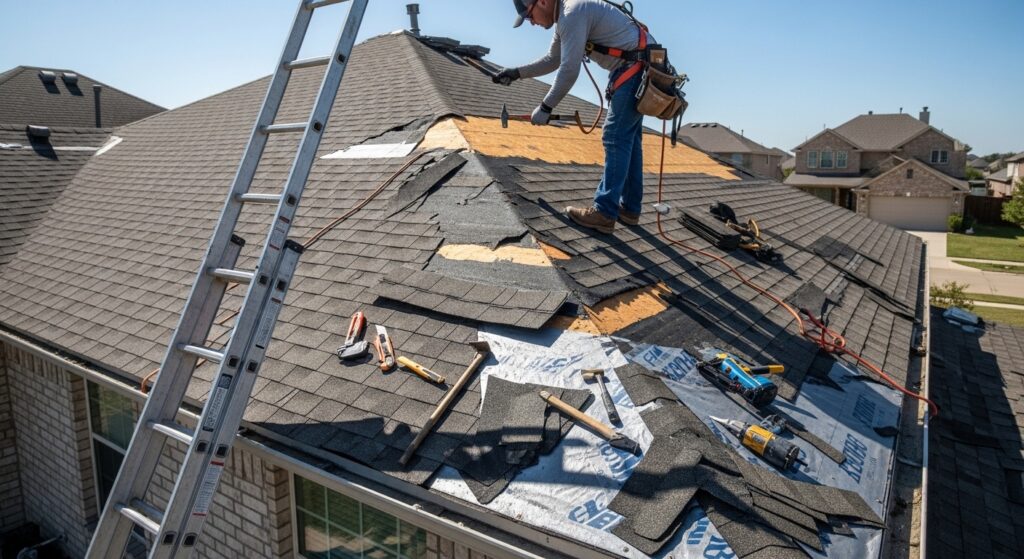
- Check Your Fascia: If your current sectional gutters have been leaking, there’s a good chance the wood behind them (the fascia) is starting to rot. A pro seamless install usually includes an inspection of that wood, which can save your roof’s edge.
FAQ: Clearing the Air
Q: Can I install seamless gutters myself? Honestly, no. Unless you happen to own a $10,000 gutter-rolling machine and a very long trailer, it’s not a DIY job. It requires a specialized crew.
Q: Are seamless gutters truly “seamless”? Almost. They have seams at the very corners (where two sides of the house meet) and at the downspout connections. However, these are professionally mitered and sealed, making them 95% more reliable than a standard sectional joint.
Q: How much more do they cost? Typically, you’re looking at about $10 to $20 per linear foot installed for seamless aluminum. Sectional gutters can be done for about half that if you do the labor, but again—you get what you pay for.
Conclusion: Don’t Let the Seams Get You Down
Back to David in Austin. He eventually bit the bullet and had his sectional “Lego” gutters ripped off and replaced with a 6-inch seamless system. The first time a big storm hit, he sat on his porch and watched the water disappear down the downspouts instead of pouring over his front door.
“I wish I’d just done this the first time,” he told me. “I would’ve saved my weekends and my foundation.”
Texas weather doesn’t play fair. It looks for the weakest link in your home’s defense, and on your roof, that link is the gutter seam. If you want to stop worrying about foundation cracks and wood rot, it’s time to lose the joints.
Ready to upgrade your home’s defense? If your gutters are gushing where they should be flowing, it’s time for a change. Explore our gutter and downspout services and get a real-world estimate for a system that can actually handle the next Texas “frog-strangler.”
Your house—and your wallet—will thank you. Stay dry out there!