The Sound of Golf Balls on the Roof
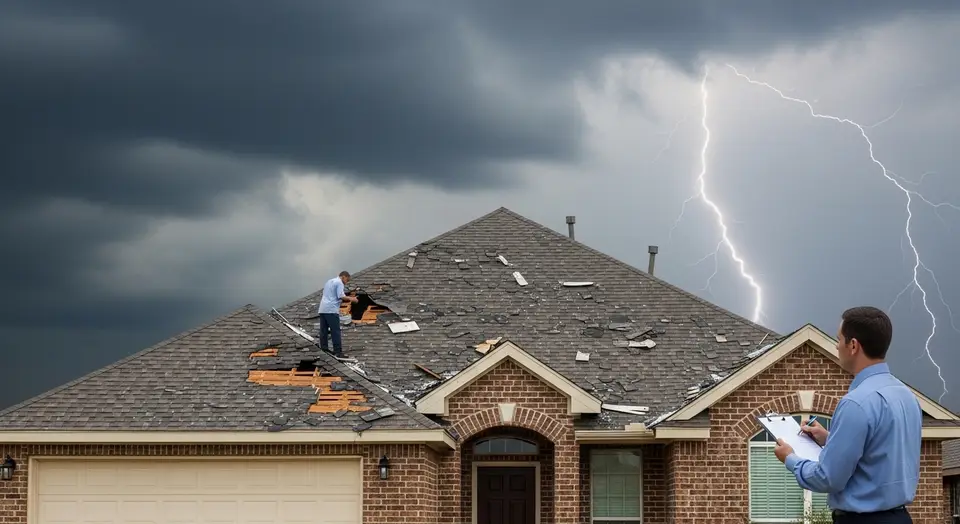
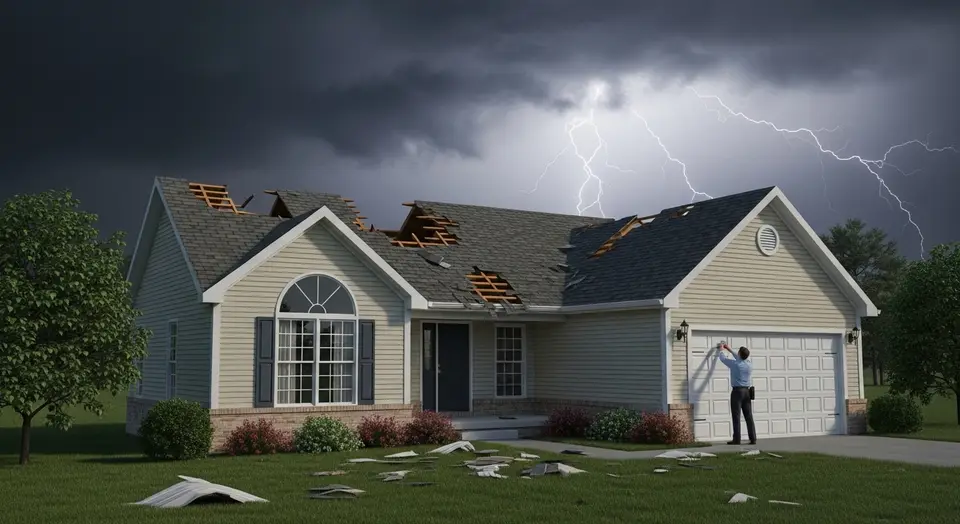
It’s 2:00 AM in North Texas. You’re lying in bed, and that low rumble you’ve been hearing for the last hour suddenly turns into a frantic, rhythmic pounding. It sounds like someone is standing on your roof with a bucket of golf balls, throwing them down with all their might. You know that sound. It’s the sound of money leaving your bank account—or at least, that’s how it feels in the moment.
The next morning, you step outside. The neighborhood is quiet again, but the evidence is everywhere. Shredded leaves, a neighbor’s downed fence, and those tell-tale “bruises” on your shingles. Your heart sinks. You pay your premiums every month, but now that it’s actually time to use that policy, you realize you have no idea where to start. Honestly, it’s intimidating. You’re looking at your home—likely your biggest investment—and wondering if the insurance company is actually going to have your back or if you’re about to get stuck in a maze of red tape.
Look, I’ve been there. I’ve sat at kitchen tables with homeowners who were nearly in tears because they felt like they were being lowballed or ignored. But here’s the good news: the process doesn’t have to be a nightmare. If you take the right steps in the right order, you can navigate this. We’re going to walk through it together, step-by-step, just like I’d explain it to my own brother if he called me after a storm.
Why the First 24 Hours Matter So Much
Most people think they should call their insurance company the second the clouds part. And while you do want to move fast, there’s a little bit of legwork you should do first to protect yourself. Think of it like a crime scene. You wouldn’t want the police to show up after you’ve cleaned up all the evidence, right? The same goes for How to File a Storm Damage Insurance Claim in Texas (Step-by-Step).
The “Evidence” Phase
Before you even pick up the phone, grab yours. Your phone camera is your best friend right now. Walk around the perimeter of your house. Take photos of the hail in your hand (with a coin next to it for scale), the dented gutters, the cracked window, and definitely any water stains showing up on your ceilings inside.
Pro Tip: Don’t just take close-ups. Take wide shots of the whole house. Adjusters love to say damage was “pre-existing,” but if you have a wide shot showing the context of the storm’s path, it’s much harder for them to argue.
The “Mitigation” Rule
There is a clause in almost every Texas homeowner’s policy that says you have to prevent “further damage.” This doesn’t mean you need to fix the roof yourself. It means if there’s a hole, put a tarp over it. If a window is smashed, board it up. If you don’t, and a second rainstorm ruins your hardwood floors, the insurance company might refuse to pay for the floors because you “let” them get ruined. Save every receipt for those tarps and boards—they’re reimbursable!
Walking Through the Claims Process
Okay, you’ve got your photos and the house is temporarily buttoned up. Now what? Here is the actual sequence of events.
1. Contacting Your Agent
Call your local agent first. They can often give you a “reality check” on whether the damage is worth a claim. Remember, every claim stays on your record, even if they pay $0. If your deductible is $3,000 and the repair is $2,800, you don’t want to file. But if you suspect structural issues, file immediately. In Texas, storms hit thousands of houses at once. The first people to file are the first people to see an adjuster.
2. The Adjuster Meeting
The insurance company will send out an adjuster to look at the house. Here’s a bit of “insider” truth: adjusters are human. Some are great; some are tired and overstrained after a big storm. This is why we always recommend having a trusted contractor—someone like the folks at Tekton Exteriors—present when the adjuster arrives.
Why? Because your contractor will get on the roof with the adjuster. They’ll point out the “bruised” shingles that aren’t obvious from the ground. It’s not about being combative; it’s about making sure the scope of work is accurate from day one.
3. Reviewing the “Scope of Loss”
A week or so after the visit, you’ll get a giant packet of paper. It’ll look like a different language. This is the “Scope of Loss.” It breaks down what they’re willing to pay for. If they missed the gutters or the window screens, this is the time to speak up. Don’t sign anything until you’re sure the list matches the reality of the damage.
Expert Insights: What the Insurance Company Won’t Tell You
I’ve spent years in the exterior industry, and honestly, there are things you only learn after seeing a thousand claims.
- ACV vs. RCV: Know these acronyms. ACV (Actual Cash Value) means they pay you what your roof is worth today (which isn’t much if it’s 15 years old). RCV (Replacement Cost Value) means they pay to actually give you a new roof. Most Texas policies are RCV, but some companies have been sneaking ACV endorsements in to save money. Check your policy before you panic.
- The “Storm Chaser” Danger: After a big hail storm in places like Conroe or Pasadena, you’ll see trucks with out-of-state plates knocking on doors. They offer to “cover your deductible.” Stop. In Texas, it is technically illegal for a contractor to waive your deductible. More importantly, if they’re gone next month, who fixes the leak they left behind? Always go with a local team that has a physical office and a reputation to protect.
- Supplementing is Normal: Often, once we start a new roof installation, we find “decking” (the wood under the shingles) that is rotten. The insurance adjuster couldn’t see it during their walk. We file a “supplement” with the insurance company to get that extra cost covered. It happens all the time; don’t let it stress you out.
Practical Application: Your To-Do List
If you’re standing in your kitchen right now looking at a water spot on the ceiling, here is your immediate action plan:
- Stop the water: Put a bucket down. If you can safely tarp the roof, do it. If not, call for storm damage emergency repairs immediately.
- Document everything: Take 50 photos. I’m serious. 50.
- Find your policy: Look for the “Declarations Page.” You need to know your “Wind/Hail Deductible.”
- Call a local pro: Get a free inspection from someone who knows insurance claim assistance in Texas. They can tell you if a claim is actually warranted.
- File the claim: Use the online portal or call the 24/7 claims line.
Q: Will filing a claim make my rates go up? A: In Texas, insurance companies generally can’t raise your individual rates just because you filed a “claim of nature” (like hail). However, they can raise rates for an entire zip code if a massive storm hits. So, if everyone else is filing, you might see a rate hike anyway—you might as well get your roof fixed!
Q: How long do I have to file? A: Most policies give you one year from the date of the storm. But don’t wait. The longer you wait, the harder it is to prove the damage was from that specific storm and not just wear and tear.
Q: What if the insurance company denies my claim? A: Don’t take “no” for an answer immediately. You have the right to request a second inspection or even go to appraisal. Sometimes a different adjuster sees things differently.
Bringing It All Together
I remember a homeowner in Harris County who was convinced she had to pay for her $15,000 roof replacement out of pocket because her first adjuster told her it was just “old age.” We went out, found the actual hail impact marks, and asked for a re-inspection. Long story short? The insurance company ended up covering the whole thing.
Your home is your sanctuary. Storms are part of life in Texas, but the aftermath doesn’t have to break you. Take a deep breath, grab your camera, and remember that you’re the one in charge of this process.
If you’re feeling stuck or just want a second pair of eyes to look at your roof before you talk to the insurance company, we’re here. We’ve helped hundreds of neighbors get their homes back in shape without the headache. You can request a quote or just give us a call to chat through your options. We’ll get through this—one shingle at a time.