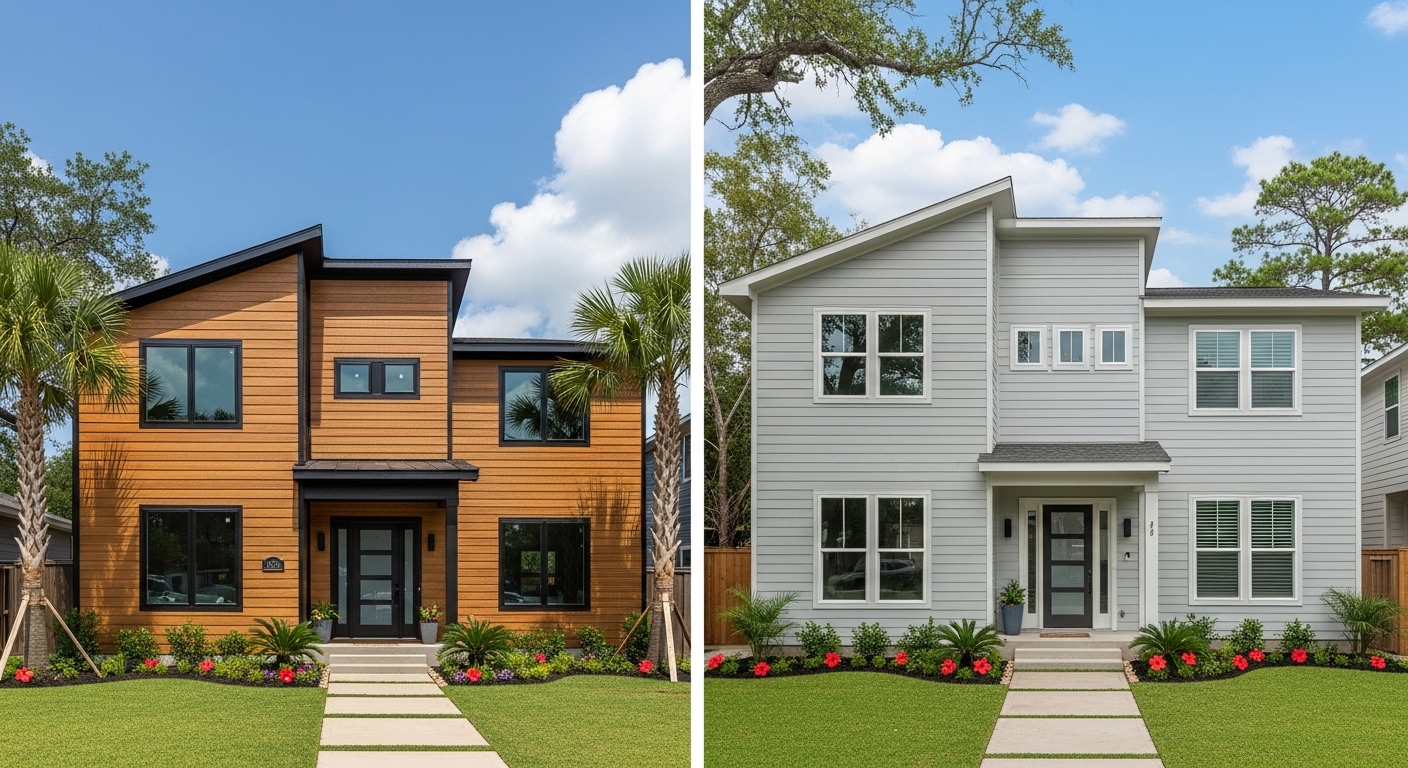
The Great Siding Showdown: Finding What Works for Houston
Look, I get it. You’re standing in your driveway, squinting at the peeling paint or the warped boards on the side of your house, and you know it’s time. But then you start Googling. Suddenly, you’re drowning in a sea of “fiber cement” this and “engineered wood” that. It’s enough to make anyone want to just head back inside and ignore the whole thing.
But here’s the thing about living in Houston: our weather is basically a personal vendetta against houses. We have humidity that feels like a wet blanket, sun that bakes everything to a crisp, and the occasional hurricane that decides to test every nail in your structure. Choosing the right armor for your home isn’t just about curb appeal; it’s about keeping your sanity when the next big storm rolls through.
Most of the homeowners I talk to end up at a crossroads between two heavy hitters: James Hardie and LP SmartSide. Honestly, they’re both great, but they’re built differently—and they behave differently when that Texas sun starts beating down.
So, let’s grab a coffee (or a very large iced tea, considering the humidity) and break down which siding is right for your Houston home. No corporate jargon, just the honest truth about what holds up and what doesn’t.
1. The Battle Against Humidity: Fiber Cement vs. Engineered Wood
First off, let’s talk about what these things actually are. James Hardie is the king of fiber cement. It’s a mix of cement, sand, and cellulose fibers. It’s heavy, it’s sturdy, and it’s basically a rock on the side of your house.
LP SmartSide, on the other hand, is engineered wood. They take wood strands, treat them with a zinc borate compound (to keep the bugs away), and coat them in water-resistant waxes.
Why it matters for Houston:
In our neck of the woods, moisture is the enemy. Fiber cement is essentially waterproof. It doesn’t rot. It doesn’t care if it’s been raining for three days straight. Engineered wood is very, very good at resisting moisture, but at its core, it’s still wood. If it isn’t installed perfectly—and I mean perfectly—moisture can find its way into the edges.
Real-world scenario:
I’ve seen houses after a major flood where the fiber cement siding was power-washed and looked brand new, while the wood-based products started to swell at the seams. It’s a rare extreme, sure, but in Houston, “extreme” is kind of our baseline.
Pro Tip: If your home has a lot of low-clearance areas where the siding sits close to the ground or a deck, fiber cement usually has the edge because it won’t “wick” up ground moisture like wood can.
2. Durability and the “Oops” Factor
We need to talk about impact resistance. Houston has hail. We have stray baseballs. We have lawnmowers that spit out rocks like they’re being paid for it.
LP SmartSide is surprisingly tough. Because it’s made of wood fibers bound with resin, it has a bit of “flex.” It can take a hit from a hailstone and just bounce back. James Hardie is much more brittle. It’s incredibly strong, but if a golf-ball-sized hailstone hits it just right, it can crack.
Why it matters for Houston:
If you live in an area prone to frequent severe storms, the “bounce-back” quality of LP SmartSide is a huge plus. But, if fire safety is your biggest concern—maybe you’re in a more densely packed neighborhood—Hardie is non-combustible. It won’t melt, and it won’t help a fire spread.
Think about it this way:
Do you want a shield that’s hard as a rock but might crack (Hardie), or a shield that’s tough and flexible but made of organic material (LP)? Most of our siding installation Texas projects come down to this exact trade-off.
3. The Installation Headache (And Your Wallet)
I’ll be blunt: James Hardie is a pain to install. It’s heavy, it requires special tools to cut, and it creates a ton of silica dust that’s not exactly great to breathe. Because it’s so heavy and fickle, the labor costs are usually higher.
LP SmartSide comes in longer 16-foot planks (compared to Hardie’s 12-footers), it’s lighter, and you can cut it with standard woodworking tools. This usually means the job goes faster, and you might save some money on the labor side of the quote.
Real-world scenario:
You might find that the material cost for both is fairly similar, but the final “out the door” price for home remodeling in Houston, TX will often be lower with LP because the crew can finish the job in fewer days.
Quick Insight: Fewer seams (thanks to those 16-foot boards) don’t just look better; they also mean fewer places for water to get in.
4. Aesthetics: The “Look” of Your Home
Honestly? Once they’re painted, most people can’t tell the difference from the curb. Both brands do a fantastic job of mimicking real wood grain.
However, James Hardie has their “ColorPlus” technology. They bake the color onto the boards in the factory. It lasts a long time and resists fading from the brutal Texas sun. LP SmartSide is often “primed only,” meaning it gets painted on-site.
Why it matters for Houston:
That Houston sun eats paint for breakfast. Factory-finished siding tends to hold its vibrancy longer than a standard paint job done in the humidity of a Tuesday afternoon. If you want to go a decade without thinking about a paintbrush, Hardie’s factory finish is hard to beat.
A quick aside: But… and there’s always a but… if you ever need to do a small repair, matching a factory-finished board can be trickier than just grabbing a gallon of the custom paint you used for the rest of the house.
5. Maintenance: Set It and Forget It?
Neither of these is “zero” maintenance. Anyone who tells you that is selling something. You still need to wash your siding occasionally to get the Texas dust and pollen off. You still need to check the caulk around your windows.
But in the long run, fiber cement is the “set it and forget it” champion for rot resistance. With LP, you really have to keep an eye on the bottom edges. If the paint chips and the “wood” is exposed to our 90% humidity, it’s going to start soaking up water like a sponge.
The “I’ve seen this happen” moment:
I’ve walked up to houses where the siding looked great from ten feet away, but when you got close to the foundation, the bottom boards of an engineered wood install were starting to flake because the original installer didn’t paint the bottom edges after cutting them. That’s a mistake you just can’t make in Houston.
Comparison Summary: LP vs. Hardie
| Feature | James Hardie (Fiber Cement) | LP SmartSide (Engineered Wood) |
| Moisture Resistance | Exceptional (Doesn’t rot) | Very Good (If edges stay sealed) |
| Impact Resistance | Good (Can crack under heavy hits) | Exceptional (Impact-resistant) |
| Fire Rating | Non-combustible | Combustible (though treated) |
| Installation | Heavy, specialized labor | Lighter, faster, fewer seams |
| Warranty | 30-year non-prorated | 50-year (often prorated) |
Key Takeaways for Houston Homeowners
- Prioritize the Installer: Regardless of which you choose, the Houston humidity will find a way in if the flashing and caulking aren’t perfect. Always check testimonials before hiring.
- Think About Fire: If your neighbor’s house is only 10 feet away, James Hardie’s fire rating provides a huge peace of mind.
- Don’t Ignore the Foundation: Ensure your siding has at least a 6-inch gap from the soil to prevent moisture wicking.
- Factor in Longevity: Hardie tends to be a “forever” solution for rot, while LP offers better protection against the physical dings of life.
So, What’s the Verdict?
If you asked me which siding is right for your Houston home while we were sitting on your porch, I’d tell you this:
If you want the ultimate “armor” that will never rot, even if the city turns into an aquarium for a week, go with James Hardie. It’s the gold standard for a reason, especially in our climate. It’s a bit more of an investment upfront, but it’s hard to argue with a product that’s basically made of stone.
But, if you’re looking for something that can handle the kids playing ball against the house, saves you a bit on labor, and gives you those beautiful long runs with fewer seams, LP SmartSide is a fantastic choice. Just make sure you hire a crew that knows they must seal every single cut edge.
Look, choosing siding is a big deal. It’s the face your home shows the world. If you’re still feeling a bit stuck or just want someone to take a look at your specific house and give you a straight answer, we’re here to help.
Why not request a quote or just reach out for a chat? We’ve seen what the Houston weather does to homes, and we’d love to help you pick the siding that’ll keep your house looking great for the next twenty years. No pressure, just good advice from people who live and work right here in Texas.
Would you like me to look up specific siding color trends popular in the Houston area for 2026?