You know that specific feeling when you pull into your driveway in Sugar Land—maybe you’re in First Colony, Greatwood, or over in Telfair—and you catch a glimpse of your house from the street?
The sun is hitting it just right (or wrong), and you see it.
Maybe it’s the way the lap siding is starting to wave a little bit, like bacon that’s been in the pan too long. Or maybe it’s that chalky, faded color that makes your home look ten years older than it actually is. It’s frustrating. You work hard to keep the yard looking nice, but the house itself? It feels like it’s fighting a losing battle against the Gulf Coast climate.
And honestly? It probably is.
Most homes built here in the 90s and early 2000s were wrapped in standard vinyl or basic wood composite. Those materials are fine for cooler, drier places. But here? Between the humidity that feels like a wet blanket and the UV rays that bake everything in sight, those materials just don’t stand a chance long-term.
If you’ve been thinking about siding installation in Sugar Land, you aren’t alone. But this isn’t just about making the house look pretty again (though that’s a huge part of it). It’s about stopping the slow, silent damage that happens when your home’s “skin” starts to fail.
The Problem: It’s Not Just Ugly, It’s Leaking (Energy and Water)
Here’s the thing about siding damage: the stuff you see is usually just the symptom. The wavy boards or the peeling paint are annoying, sure. But the real issue is what’s happening underneath.
When siding warps or cracks, it breaks the seal of your home. In our climate, that is dangerous.
I remember talking to a homeowner recently who just wanted to paint his wood siding. When we pressed on a board near the chimney, it crumbled. The termites and moisture had been having a party back there for years, and the paint was the only thing holding the shape together.
If you ignore these signs, you aren’t just looking at a siding bill later. You’re looking at framing repairs, insulation replacement, and potentially mold remediation.
Plus, think about your energy bill. If your siding is loose or thin, you are basically trying to air condition the entire neighborhood. Upgrading your siding is often the single most effective way to lower those summer electric bills, especially if you combine it with roof replacement services in Sugar Land to completely seal the envelope of your home.
The Root Cause: Why Sugar Land Homes Struggle
Why does this happen so often here? It boils down to a mismatch between materials and environment.
- Thermal Shock: Our weather is weird. We can have a 40-degree swing in temperature in 24 hours. Vinyl siding expands and contracts aggressively. Over time, this movement loosens nails and causes that “wavy” look.
- The Moisture Trap: Standard wood siding acts like a sponge. It absorbs the humidity. Then the sun hits it, and the water tries to push out, causing paint to blister and peel.
- The “Builder Grade” Standard: When many of these neighborhoods were built, speed was the priority. Builders used the cheapest legal option. They didn’t always use house wrap properly, and they certainly didn’t flash the windows with the level of detail we know is necessary today.
It’s not your fault your siding is failing. It was essentially designed with an expiration date.
The Solution: Installing Armor (Fiber Cement)
So, what do you do? Please, don’t just paint over the rot. It’s like putting a band-aid on a broken leg.
The gold standard for our area is Fiber Cement siding (you probably know it as James Hardie or “Hardie Board”).
Unlike wood, it doesn’t care about humidity. It doesn’t rot. Termites can’t eat it (it’s basically concrete). And unlike vinyl, it doesn’t melt or warp when the Texas sun hammers it for 12 hours a day.
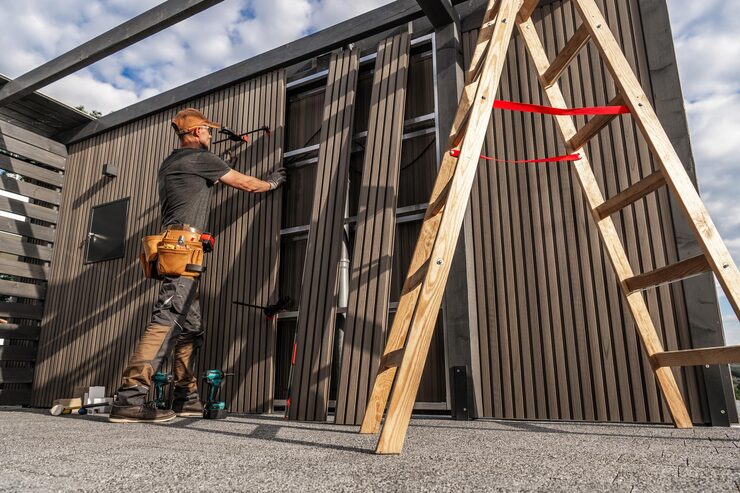
When we approach a project, we don’t just “hang siding.” We rebuild the wall system.
- Tear Off & Inspect: We strip everything down to the sheathing. If there is rot, we fix it. Period.
- The Wrap: We install a high-performance weather barrier. This lets the house breathe but stops bulk water.
- The Flashing: This is where most leaks happen. We install metal flashing above windows and doors to kick water out and away.
- The Install: We use rust-proof fasteners and install the siding according to windstorm certifications.
This is also the perfect time to look at other weak points in your exterior. Often, when we peel back the siding, we find that the old windows were the source of the leak. It makes a lot of sense to handle new window installation at the same time so everything is flashed together perfectly.
6 Actionable Tips Before You Hire a Siding Contractor
Look, I know hiring a contractor is scary. You hear the horror stories. To help you navigate this, here are a few things you should look for before you sign anything.
- Check the “Corners”: Ask them how they handle corner trim. Do they caulk it (bad) or do they use proper flashing and trim boards (good)? The corners are where the rot starts.
- Ask About the Nails: In Sugar Land, you need galvanized or stainless steel nails. If they use standard nails, they will rust, and in five years, you’ll have brown streaks running down your beautiful new walls.
- Windstorm Certification: Make sure they know the local windstorm codes for Fort Bend County. Your siding needs to stay on when the next hurricane blows through.
- Insulation Options: Ask if they can install rigid foam insulation under the new siding. It’s a small cost for a huge comfort upgrade.
- Look at the Portfolio: Do they do a lot of work in the area? You want someone who knows the local HOA restrictions in places like First Colony. (We do a lot of siding installation in Rosenberg and surrounding areas, so we know the drill).
- Don’t Forget the Doors: If your siding is rotten, your door frames probably are too. Ask if they can replace the door frame or install new sliding glass patio doors as part of the package.
Frequently Asked Questions
Is fiber cement really worth the extra cost over vinyl? Honestly? Yes. In Texas, vinyl eventually becomes brittle and cracks. Fiber cement is a lifetime product. The ROI on resale value alone usually makes up the difference, not to mention the maintenance savings.
Can I change the style of my home with new siding? Absolutely. You aren’t stuck with the boring horizontal lap siding you have now. We can do Board and Batten (the “Farmhouse” look), shake accents, or smooth modern panels. It’s a total facelift for your house.
How long does the installation take? For an average 2,500 sq ft home, expect about 7-10 days. It’s a construction zone, yes, but we clean up daily.
Do I need HOA approval? In Sugar Land? almost certainly. But don’t worry, we help with that. We can provide the samples and specs you need to keep the committee happy.
Ready to Love Your Home Again?
You don’t have to wince every time you pull into the driveway. You can have a home that looks incredible and—more importantly—is secure against the weather.
If you’re ready to stop worrying about rot and start enjoying a beautiful home, let’s chat. We’ll give you an honest assessment (no sales pressure, I promise) and a plan to fix it right.