
The Sound of Falling Ice: A Tuesday Night Terror
I remember a storm a few years back. It started as a typical summer evening—the sky turned that weird, bruised shade of purple, and the air got unnervingly still. Then, it happened. Thwack. Then another. Within seconds, it sounded like a bag of marbles was being dumped onto my roof by a very angry giant.
I sat on my sofa, heart racing, hoping my windows wouldn’t shatter. When the noise finally stopped and the sun peeked back out, everything looked… fine? The cars had a few dings, sure, but the house seemed okay from the driveway.
But here’s the thing I didn’t know then: hail is a silent killer for roofs. It doesn’t always leave a gaping hole or a missing shingle. Sometimes, it just “bruises” the roof, starting a countdown to a massive leak that shows up six months later when you’ve totally forgotten about the storm.
If you’ve recently heard that dreaded “thwack” on your shingles, you’re probably wondering how to spot hail damage on your roof without needing a 20-foot ladder and a degree in structural engineering. Let’s walk through it together, because catching this early is the difference between a simple insurance claim and a $20,000 headache. (And if you’re already seeing shingles in your yard, don’t wait—request a quote to get an expert eye on it.)
Why Hail Damage Is Sneakier Than You Think
When we think of storm damage, we usually picture fallen trees or shingles flying down the street like frisbees. Hail is different. It’s an impact injury. Think of your roof like a shield; hail is the hammer that slowly cracks the surface until the shield can’t hold back the water anymore.
The Anatomy of a Hail Hit
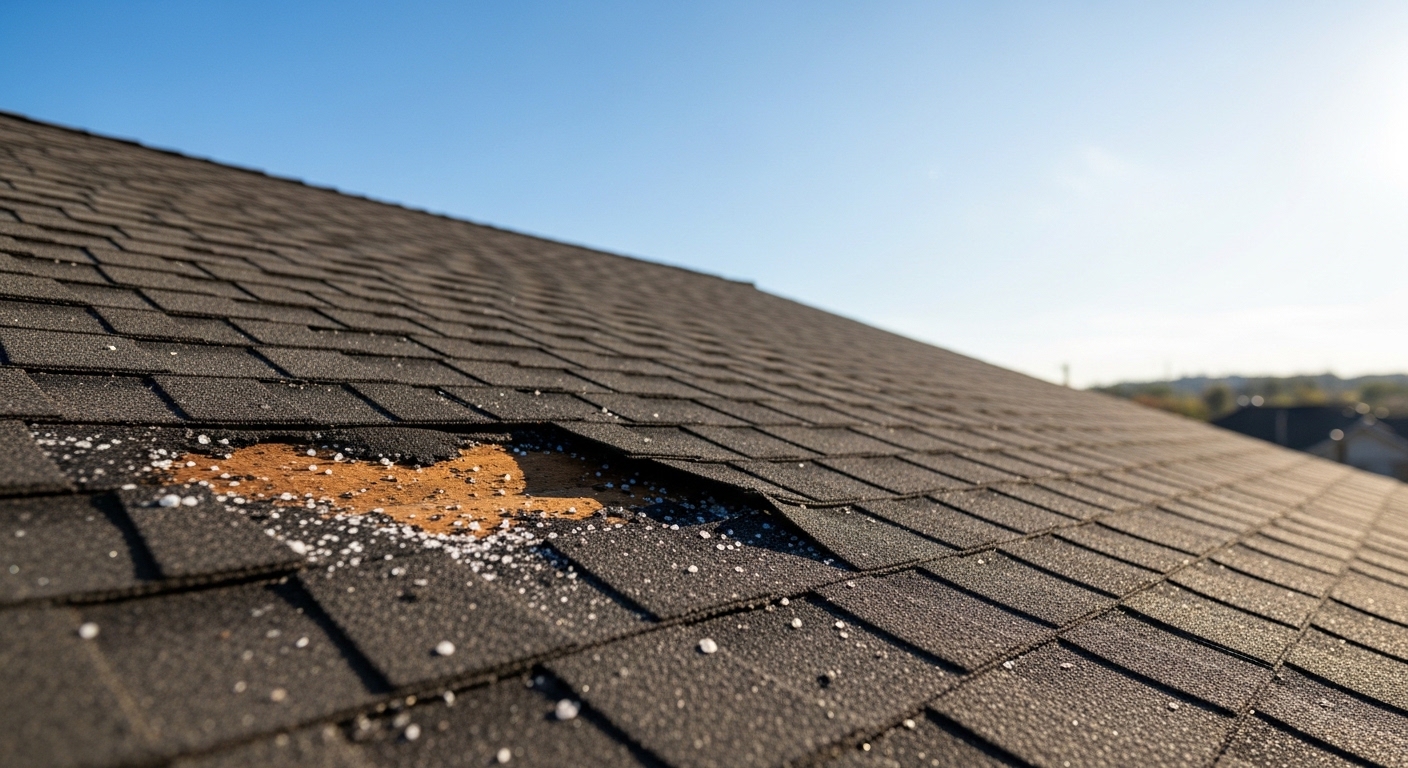
Most roofs in the U.S. use asphalt shingles. These shingles are covered in tiny granules that protect the underlying asphalt from the sun’s UV rays. When a hailstone hits, it knocks those granules loose.
At first, it just looks like a dark spot. But without those granules, the sun bakes the asphalt, it becomes brittle, and eventually, it cracks. That’s when the water finds its way into your attic.
The Misconception of “It Looks Fine from Here”
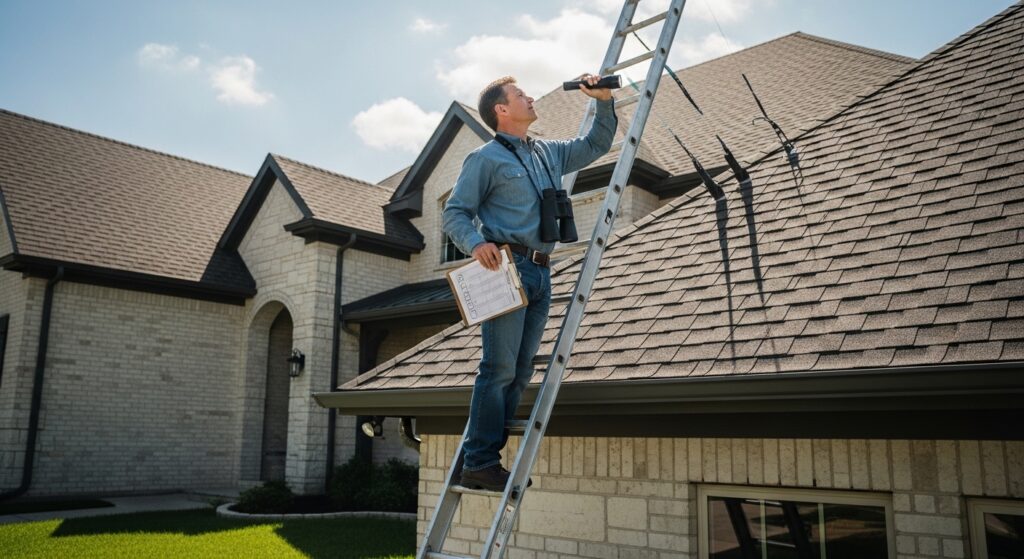
I’ve talked to so many homeowners who said, “I looked up from the sidewalk and didn’t see anything.” Honestly, you can almost never see hail damage from the ground. Even a pro often has to get up there with chalk to highlight the “bruises.” If you wait until you can see the damage from the street, you’ve likely already got water damage inside your walls.
How to Spot Hail Damage on Your Roof: A Step-by-Step Check
You don’t necessarily need to climb onto your roof to find the first clues. In fact, for safety’s sake, I usually recommend starting on the ground. Your house will “tell” you if it took a beating.
1. Check the “Ground-Level Witnesses”
Before looking up, look around.
- Gutters and Downspouts: Look for “dings” or dents in the metal. If the hail was hard enough to dent your aluminum gutters, it was definitely hard enough to bruise your shingles.
- The Gutter Exit: Check the end of your downspouts for a pile of granules. If it looks like someone dumped a bucket of coarse sand there, your shingles are shedding their protective layer.
- Mailboxes and Siding: Dented mailboxes or cracked vinyl siding are huge red flags.
2. Inspect the “Soft Metals” on the Roof
If you can safely see your roof from a window or a sturdy ladder, look at the vents and flashing.
- Roof Vents: These are usually made of thin metal or plastic. Hail leaves very distinct, circular dents in these.
- Chimney Flashing: Check the metal wrapping around your chimney for small “dimples.”
3. Identifying the “Bruise” on the Shingle
If you do find yourself looking at the shingles themselves, you’re looking for three specific things:
- Loss of Granules: Areas that look “bald” or where the black substrate is showing through.
- Soft Spots: If you (carefully) press on a dark spot, does it feel “spongy” like a bruised apple? That’s a structural failure in the shingle.
- Random Patterns: Wind damage usually affects the edges of a roof. Hail damage is random—it hits everywhere at once.
Expert Insights: What the Insurance Company Won’t Tell You
After years of helping people with storm damage repair in Texas, I’ve seen the “insurance dance” play out hundreds of times. Here is the insider info you need.
The Statute of Limitations
Most insurance policies have a “filing window”—often one year from the date of the storm. If you find a leak 18 months later, and it’s clearly from that hail storm, you might be out of luck. This is why getting an inspection immediately after a storm is vital, even if you don’t think there’s damage.
“Functional” vs. “Cosmetic” Damage
This is a favorite phrase of insurance adjusters. They might argue the damage is just “cosmetic” (it looks bad but the roof still works). Don’t buy it. In the roofing world, any loss of granules is a reduction in the life of the roof. That is functional damage. You might need insurance claim assistance to help navigate these tricky conversations.
The “Total Loss” Threshold
In many cases, if a certain number of “hits” are found within a 10×10 foot square (called a “square” in roofing terms), the insurance company will deem the whole roof a total loss. This is actually a win for you—it means a brand-new roof for the cost of your deductible.
Practical Application: Your Post-Storm Action Plan
If you think you’ve been hit, don’t panic. Here is exactly what you should do:
- Document the Date: Write down the exact date and time the storm hit. You’ll need this for the claim.
- Take Ground-Level Photos: Take pictures of the hail next to a ruler (or a quarter) and the dents in your gutters.
- Call a Trusted Professional: Do not call the “storm chasers” who knock on your door ten minutes after the rain stops. Call a local, reliable roofing company with a physical office and good reviews.
- Wait to File the Claim: Let your roofer do an inspection first. If they find $500 worth of damage and your deductible is $1,000, you don’t want to file a claim and have a “hit” on your insurance record for no reason.
FAQ Section: Common Hail Hurdles
Can I just repair the damaged spots? Technically, yes. But it’s like patching a pair of jeans—the patch will be stronger than the surrounding old material. Usually, if the hail was widespread, a full roof replacement is the only way to ensure your home stays dry long-term.
Does my insurance go up if I file a hail claim? In many states, hail is considered an “Act of God.” Insurance companies generally aren’t allowed to raise your rates specifically because you filed a weather-related claim. However, rates in an entire zip code can go up after a major storm.
What if my roof is old anyway? Insurance usually pays out based on “Replacement Cost Value” (what it costs to fix it today) or “Actual Cash Value” (the depreciated value). Even an old roof is worth a claim if a storm destroys it!
Bringing the Shield Back Up
Think back to that storm I mentioned earlier. I eventually got my roof looked at, and sure enough, there were over 20 hits per square. The shingles looked “okay” to me, but they were effectively dead. Getting that new roof felt like putting a brand-new suit of armor on my house.
Knowing how to spot hail damage on your roof isn’t about becoming a roofing pro—it’s about being a vigilant protector of your biggest investment. Don’t let a “little ice” turn into a big mold problem in your attic.
Worried about your shingles? If the sky has been falling lately, don’t leave it to chance. We’ve spent years climbing roofs and spotting the damage that others miss.
Get started with a free estimate today, and let’s make sure your “shield” is ready for the next round of Texas weather. Whether you need a simple roof repair or help with a complex claim, we’re rooting for your home’s success.