
The “Sky is Leaking” Panic
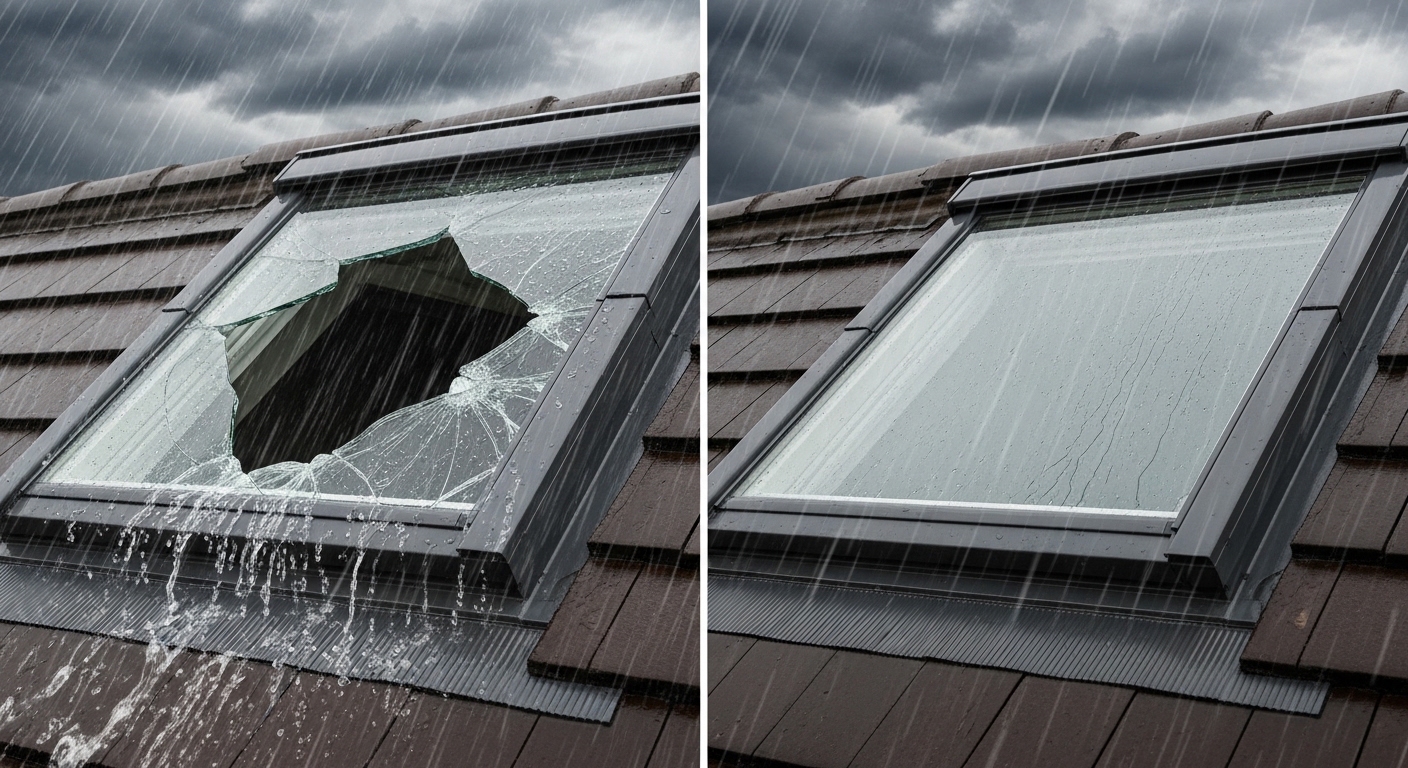
You know that peaceful feeling of watching a thunderstorm from the comfort of your living room? The rain is drumming on the roof, the lightning is putting on a show, and then—drip. You look up, and there’s a slow, rhythmic bead of water tracing its way down the side of your skylight.
Honestly, it’s a heart-sinking moment. Your skylight is supposed to be your connection to the outdoors, a way to bring in that beautiful Texas sun without the heat. But when it starts acting more like a faucet than a window, the stress levels go through the roof.
The question I get asked constantly is: “Do I just need a little caulk, or am I looking at a total teardown?” It’s a fair question. No one wants to spend thousands on a full skylight replacement if a simple seal fix will do. But here’s the kicker—patching a skylight that’s fundamentally broken is like putting a band-aid on a broken leg. You’re just delaying the inevitable (and probably ruining your drywall in the process).
If you’re staring at a foggy dome or a mysterious water spot on your ceiling, take a breath. We’re going to walk through how to tell the difference between a minor headache and a major project.
The Deep Dive: Why Skylights Fail
To understand if you need a repair or a replacement, we have to look at how these things are built. A skylight isn’t just a piece of glass; it’s a complex system of flashing (the metal bits that keep water out), gaskets, and insulated glass units.
In a place like Texas, skylights live a hard life. They get baked by 100-degree sun all afternoon, then potentially pelted by hail or blasted by 60-mph winds during storm season. This constant expansion and contraction—what we call thermal cycling—eventually wears out the materials.
The problem is that a “small leak” is rarely just about the skylight itself. Often, the leak is actually in the surrounding roof. If your roofing shingles are aging or the flashing was installed poorly, water can travel several feet before it finally finds an exit point through your skylight frame. This is why a “quick fix” often fails—it’s attacking the symptom, not the cause.
Common Misconceptions: Fog vs. Drips
Before we jump into solutions, let’s clear up a huge myth: Foggy glass isn’t just a cosmetic issue.
If your skylight looks cloudy or has condensation trapped between the panes of glass, it means the factory seal has failed. Once that seal is gone, the insulating gas (usually argon) has escaped. Not only does it look bad, but your skylight is now an energy-efficiency black hole, letting your expensive AC escape right out the top of your house. You can’t “repair” a blown seal; once the fog is inside the glass, the unit is toast.
The Solution: 5 Signs It’s Time for a Full Replacement
Look, I’m all for saving a buck, but as someone who has seen the “hidden” damage inside a roof deck, there are five scenarios where you should stop looking for a repairman and start looking for a new roof installation pro.
1. The “Age” Factor
Most skylights have a lifespan of 15 to 20 years. If your skylight was installed back when George W. Bush was in office, it’s lived its life. Even if it isn’t leaking today, the plastics are likely brittle and the seals are paper-thin.
2. Condensation Between Panes
As I mentioned, fogging means a failed seal. While you can technically replace just the glass in some models, the labor cost is often so close to the cost of a brand-new, modern unit that it makes zero sense to keep the old, worn-out frame.
3. You’re Getting a New Roof
This is the most important tip I can give you: If you are replacing your roof, replace your skylights. Period. Why? Because the flashing for the skylight is integrated into the shingles. If you put a 30-year roof around a 15-year-old skylight, that skylight will fail long before the roof does. To fix it later, you’ll have to tear up your brand-new shingles, which voids warranties and costs double.
4. Cracked Frames or Flashing
If the actual frame of the skylight is cracked or warped from the Texas heat, no amount of sealant will keep it watertight for long. Plastic domes are especially prone to “crazing”—tiny spiderweb cracks—that eventually turn into real leaks.
5. Persistent Leaks After “Repairs”
If you’ve already had a handyman come out and slap some “goop” around the edges and it’s still leaking six months later, the problem is structural. It’s time to stop throwing good money after bad.
Actionable Tips for Homeowners
Okay, so what do you do right now? Here’s a checklist to help you make a decision:
- Check the Serial Number: Most skylights (like Velux) have a small ID plate on the inner frame. This will tell a pro exactly how old it is and what model you have.
- The “Wait for Dry Weather” Test: If you see moisture only on humid days but not during rain, it might actually be a ventilation issue in your house, not a leak.
- Inspect the Drywall: Look at the “tunnel” leading up to the skylight. If you see peeling paint or brown stains, water is getting behind the flashing.
- Get a Professional Drone or Ladder Inspection: Don’t climb up there yourself. Get a pro who can check for reliable roof repairs and see if the shingles around the skylight are the real culprit.
- Check the Warranty: You might be surprised. Some high-end units have 10-year “no-leak” installation warranties.
FAQ: What We Hear Most Often
Q: Can’t I just caulk the leak myself? A: You can, but honestly, you shouldn’t. Silicone caulk is a temporary patch. It doesn’t bond well to old roofing materials and usually fails within a year. Plus, if you use the wrong type, you can actually trap water inside the frame, causing the wood to rot faster.
Q: How much does a full replacement cost? A: It varies, but for a standard-sized skylight in a residential home, you’re usually looking at $1,500 to $3,500 including labor and flashing. It sounds like a lot, but compared to the cost of mold remediation and ceiling repair, it’s a bargain.
Q: Are new skylights better at blocking heat? A: Oh, absolutely. Modern skylights use Low-E glass that blocks up to 65% of the heat. If your old skylight makes your room feel like a sauna, a replacement will actually save you money on your electric bill.
The Bottom Line: Listen to Your House
At the end of the day, your home is your sanctuary. A skylight is a wonderful feature that can make a room feel twice as large and ten times brighter, but it requires respect. If yours is showing its age or letting the Texas rain into your living room, don’t ignore it.
I’ve seen too many homeowners wait until a “minor leak” turned into a $10,000 “full ceiling replacement.” Don’t be that person. Look, I get it—it’s another thing on the to-do list. But catching a failing skylight early is the smartest move you can make for your home’s longevity.
If you’re not sure where you stand—if you need a simple skylight repair or if it’s time to upgrade to something modern and energy-efficient—we’re here to help. We’ve seen it all, from the “easy fixes” to the “total overhauls.”
Request a quote today or just give us a shout. We’ll give you a straight-up, honest assessment of what your home actually needs. No pressure, just professional advice.
Stay dry and keep looking up!