
When Should You Replace Your Roof in Texas?
I’ve sat through enough Texas thunderstorms to know that “peace of mind” is a relative term. You’re lying in bed, the wind is howling outside, and every time a heavy gust hits, you’re subconsciously listening for the sound of water dripping onto the drywall. It’s stressful.
Honestly, the roof is the most ignored part of the house until it isn’t. We just assume it’s doing its job until a yellow stain appears in the hallway or a shingle ends up in the pool. But in a state where the sun literally bakes your shingles in July and the hail tries to punch holes in them in April, “waiting and seeing” is a dangerous game.
Look, I’m not here to tell you that every missing shingle means you need a $20,000 replacement. Sometimes a repair is all you need. But there’s a tipping point where patching an old roof is like putting a band-aid on a dam break. You’re just wasting money. Let’s talk about the real warning signs that your roof is calling it quits, explained like we’re grabbin’ a coffee and looking at your house together.
1. The “Balding” Shingle (Granule Loss)
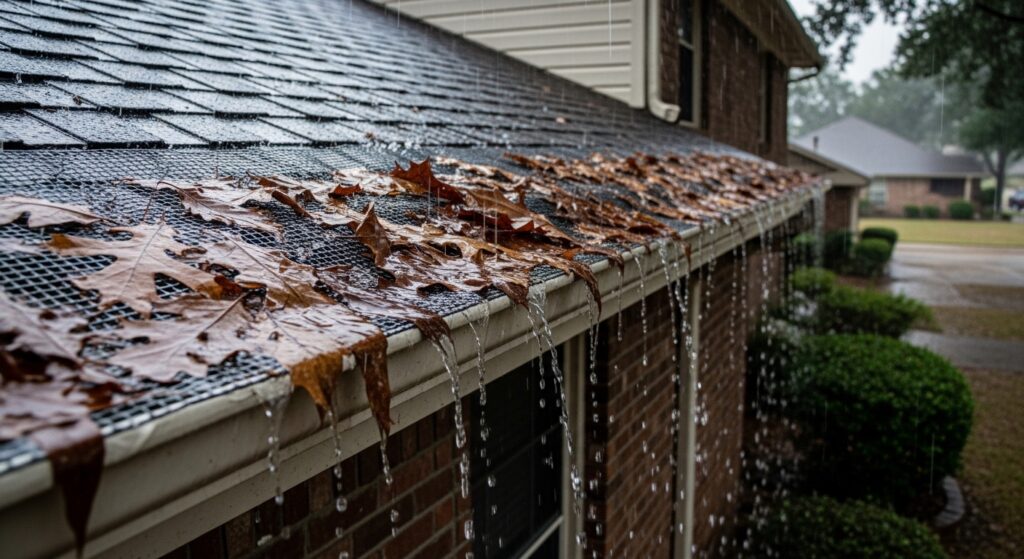
If you look into your gutters after a rain and they look like they’re full of coffee grounds, we’ve got a problem. Those little pebbles on your shingles aren’t just for decoration; they’re the “sunscreen” for the asphalt underneath.
Once those granules wash away, the sun starts to “cook” the shingle. It gets brittle, it cracks, and eventually, it stops being waterproof. In Texas, our UV index is so high that once a shingle starts balding, it reaches the end of its life remarkably fast.
Real-world scenario: Imagine a house in Plano that hasn’t had a roof check in twelve years. The homeowner notices the downspouts are clogged with gray sand. A month later, after a standard afternoon shower, the shingles look “shiny” or “bald” in the sun. That’s the asphalt showing. It’s defenseless.
Quick tip: If you see “bald spots” from the ground, the roof’s UV protection is gone. It’s time to at least get a pro to tell you how much life is left.
2. Curling or “Clawing” Edges
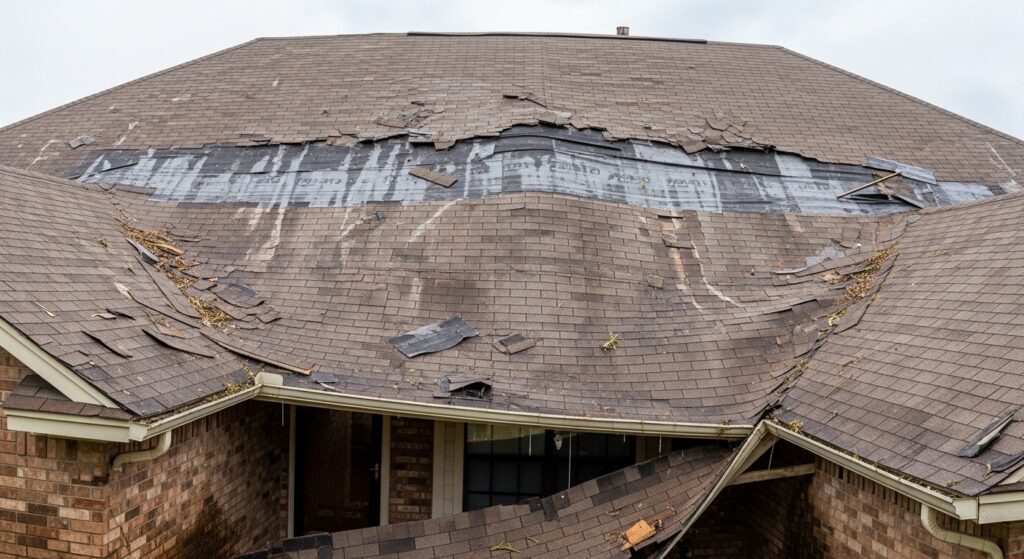
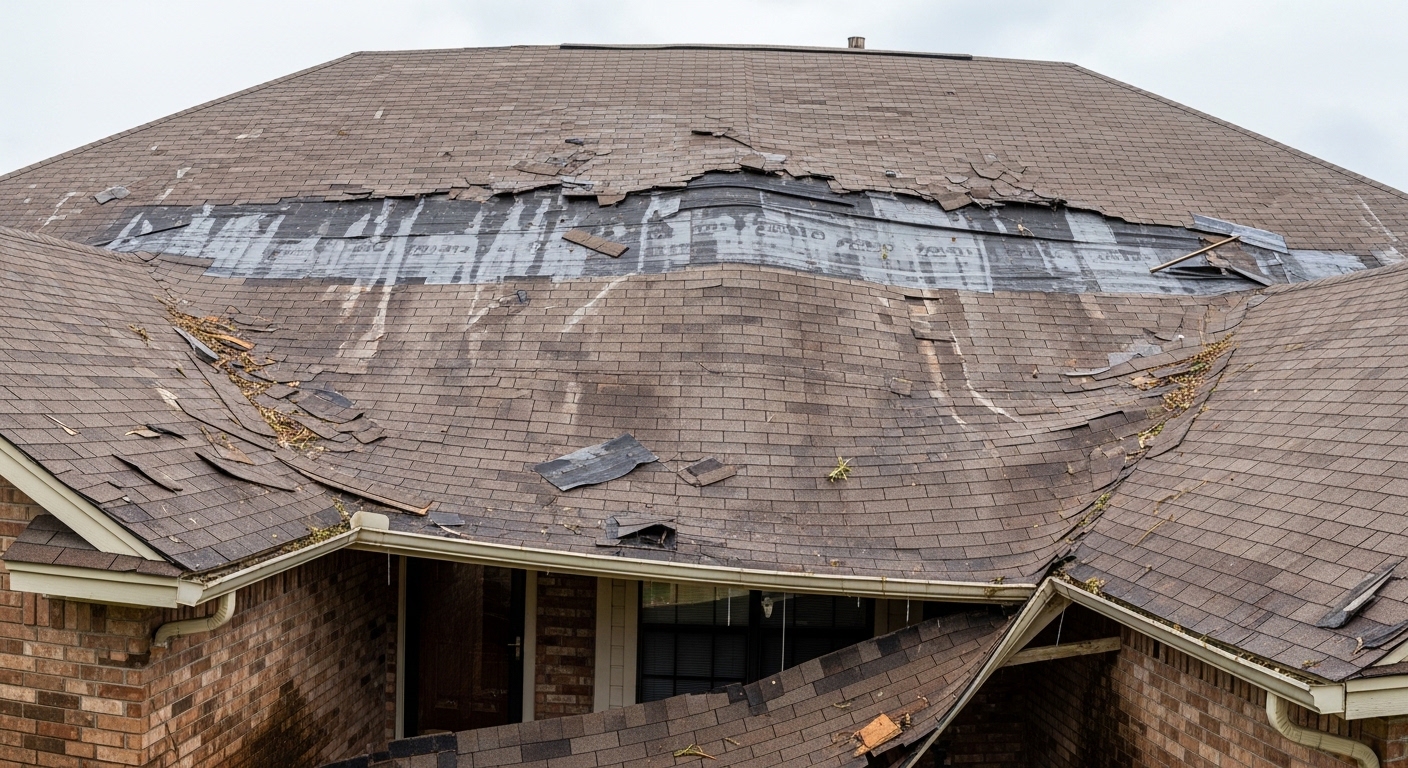
This is a classic Texas sign. Because our attics get so hot, the heat can actually bake the shingles from the underside. This causes them to curl upward at the edges or “claw” (where the middle rises up).
When shingles do this, they’re no longer flat against the roof. Wind can easily get under them and rip them off, and rain can blow right underneath the layer. It’s a sign that the shingles have physically failed due to age and heat. You might even notice specific causes for shingles to curl and crack like poor attic ventilation making the problem worse.
Real-world scenario: I’ve seen roofs in Houston where the shingles looked like Pringles. They were so warped you could see the felt paper underneath. A roof in that condition is one heavy wind away from a major leak.
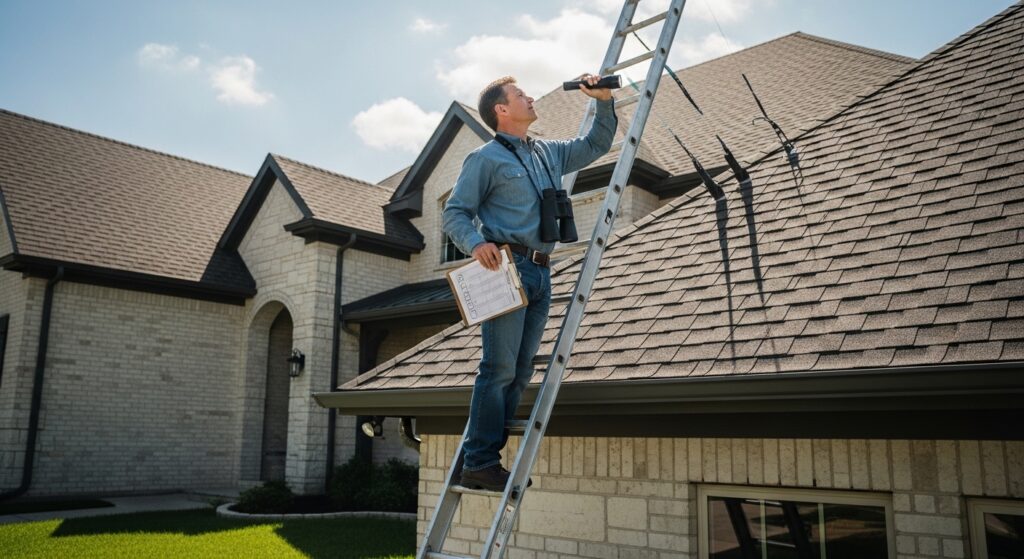
Quick tip: Take a pair of binoculars and look at the “valleys” of your roof. If the shingles there are turning up, the water-shedding ability is basically zero.
3. The “Ghost of Hail” (Bruising)
Hail damage is the “silent killer” of Texas roofs. After a storm, you might look up and see the shingles are still there, so you think you’re fine. But hail doesn’t always break the shingle; it “bruises” it.
A bruise is a spot where the impact knocked the granules deep into the mat or cracked the fiberglass layer underneath. You can’t always see it from the ground, but over the next six months, those spots will rot away. This is why many gutter and downspout services in Texas also offer roof inspections—they see the granule runoff firsthand.
Real-world scenario: Think about a storm in North Texas. The hail was only “pea-sized,” so you didn’t file a claim. Six months later, you have three leaks. The hail didn’t create holes; it created weak spots that the summer sun finished off.
Quick tip: If your neighbors are all getting new roofs after a storm, don’t assume yours is the “lucky” one. Get a free inspection just to be sure.
4. Cracked or Rotted Pipe Boots
Look at the pipes sticking out of your roof. See those rubber “collars” at the base? In the Texas sun, that rubber dries out and cracks long before the shingles do.
When those boots crack, water runs straight down the pipe and into your attic. This is one of the most common causes of “mystery leaks” that people think mean they need a new roof, but it’s actually a maintenance failure. However, if your roof is old enough that the boots are rotted, the shingles usually aren’t far behind.
Real-world scenario: You see a leak in the bathroom ceiling, right under where the vent pipe is. You think the roof is shot. Honestly, it might just be a $200 boot repair, but it’s a sign the roof hasn’t been maintained in a decade.
Quick tip: If you’re looking at your roof from the ground and those rubber boots look like cracked desert dirt, they need to be replaced yesterday.
5. Sunlight in the Attic
This sounds like common sense, but you’d be surprised how many people never go into their attic during the day. If you head up there on a bright afternoon, turn off the lights, and see pinpricks of daylight peeking through the boards… well, where light gets in, water gets in.
This usually means the underlayment has failed or a shingle has shifted significantly. In our climate, even a tiny hole can let in enough humidity to start a mold colony in your insulation. It’s also a good time to check if you have the best roofing materials for Houston’s climate installed, as some materials handle the heat-related expansion better than others.
Real-world scenario: I once helped a family who couldn’t figure out why their upstairs felt so humid. We went into the attic and it looked like a starry night because there were so many tiny holes. Their shingles were “there,” but they were so brittle they were porous.
Quick tip: Check for water stains on the rafters while you’re up there. If the wood is dark or “crusty,” it’s been getting wet for a while.
6. The “Bounce” (Spongy Roof Deck)
If you (or a professional) walk on the roof and it feels like walking on a trampoline or a yoga mat, that’s a massive red flag. A roof should feel solid.
A spongy feel means the wood decking underneath is rotted. This happens when a small leak goes unnoticed for years. The wood soaks up the water, softens, and eventually loses its structural integrity. At this point, you aren’t just replacing shingles; you’re replacing the “bones” of the roof.
Real-world scenario: A homeowner tries to DIY a small patch and realizes their foot is sinking an inch into the plywood. That’s not a shingle problem anymore; that’s a structural safety hazard.
Quick tip: You can sometimes see this from the ground if you notice “sags” in the ridgeline of the roof. If the roof looks like it’s “dipping,” the decking is likely rotted.
7. It’s Just… Old
In Texas, an asphalt shingle roof is like a set of tires. It has a lifespan. Even if there hasn’t been a major storm, a “30-year” roof in Texas rarely actually lasts 30 years. The heat is just too much.
Most pros will tell you that once an asphalt roof hits the 18-to-20-year mark in Texas, it’s on borrowed time. The chemical bonds in the asphalt have broken down. It might look “okay” from the street, but its ability to seal against wind is gone. If you’re curious about your options, comparing clay tile vs. metal roofing might show you materials that last a bit longer.
Real-world scenario: You bought the house in 2005 and the roof was new then. It’s now 2026. You haven’t had a leak yet, but you noticed a few shingles in the yard after a windy night. The adhesive has simply dried out.
Quick tip: Check your home inspection report or insurance papers to find the “install date.” if it’s over 20 years old, you should be planning for a replacement before an emergency happens.
Comparison: Repair vs. Replacement
| Sign | Likely Repair | Likely Replacement |
| Missing Shingles | 1 or 2 blown off in a storm | Multiple missing across different slopes |
| Leaks | Isolated near a pipe boot or chimney | Multiple leaks or “mystery” drips |
| Granule Loss | Minor amounts in one gutter | Deep piles and “bald” shingles everywhere |
| Age | Under 12 years old | Over 20 years old (for asphalt) |
| Decking | Solid feel | Spongy or sagging spots |
Key Takeaways
- Texas years are like dog years: Our weather accelerates roof aging. A 20-year-old roof here is “elderly.”
- Don’t ignore the gutters: They tell the story of your shingles’ health through granule loss.
- The attic tells the truth: Stains and daylight don’t lie, even when the shingles look fine from the street.
- Small fixes save big money: Replacing a pipe boot now can save you a full roof deck replacement later.
- Insurance matters: If you have storm damage, your insurance might cover the replacement, but you have a limited window to file.
Conclusion & Your Next Steps
Here’s the thing: nobody wants to buy a new roof. It’s not as fun as a new kitchen or a patio. But your roof is the only thing keeping your home’s interior from becoming the “exterior.”
If you’ve seen a couple of these signs—maybe some curling shingles and a bit too much sand in your gutters—don’t panic. But don’t wait for the next hurricane or hail-filled “Supercell” to see what happens.
Think of it like this: would you rather replace your roof on your own schedule, when you can shop for the best gutter and downspout services and financing, or would you rather do it at 2:00 AM during a rainstorm when you’re scrambling for buckets?
Not sure where your roof stands?
If you’re squinting at your shingles and thinking, “maybe?”, just get an expert to take a look. A truly professional roofer will tell you if you have five years left or if you’re one storm away from disaster.
If you want an honest, no-nonsense look at what’s going on up there, get a professional roof assessment today. We’ll help you figure out if you need a simple patch or if it’s time to retire the old shield. You’ll sleep a lot better the next time the sky turns gray.
How long has it been since someone actually got on a ladder to check your pipe boots?